THE HISTORY
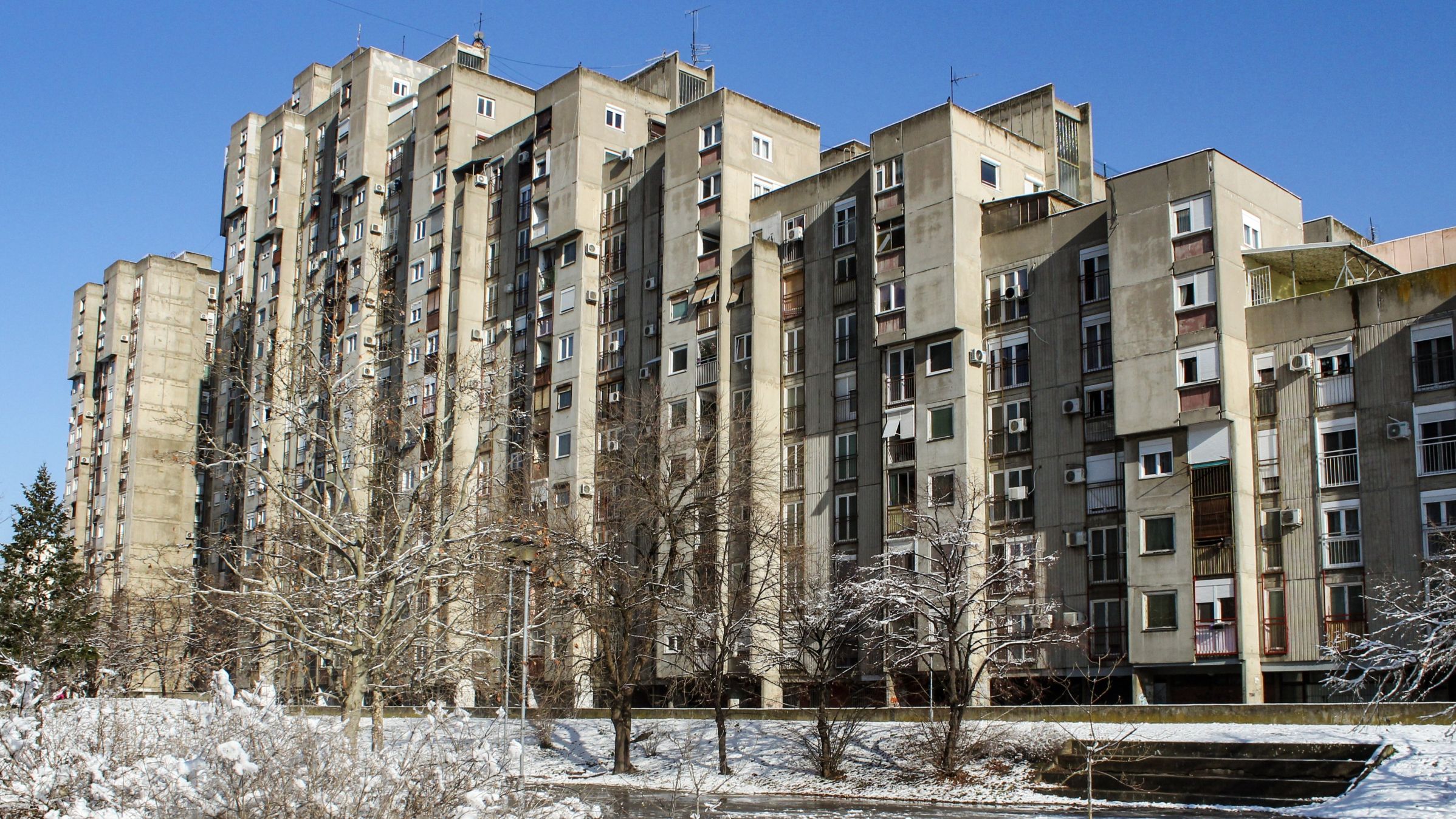
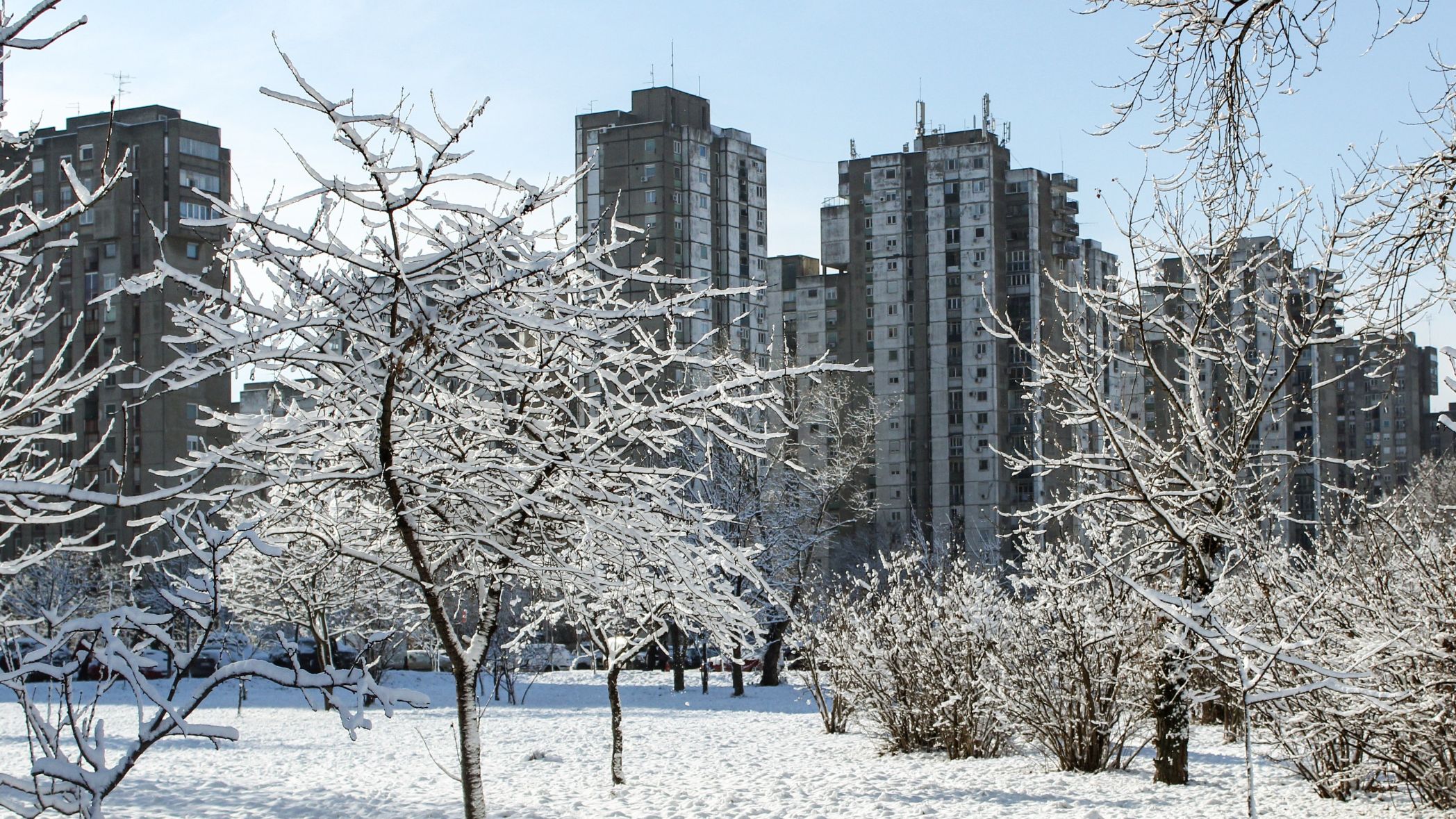
The “Stepenice” (Terraces) residential complex in blocks 61–62–63–64 on New Belgrade was built between 1973 and the mid-1980s. The complex is based on an urban plan from 1965 by Josip Svoboda, who envisioned large residential buildings arranged in stepped, staircase-like forms, surrounded by green spaces. This stepped megastructure was part of a broader European experiment in collective housing during the late 1950s and 1960s.
The project was commissioned by the Yugoslav People’s Army (JNA), so the apartments were mainly intended for the families of military and civilian personnel.
Construction of blocks 61 and 62 began in 1973, block 63 was built between 1977 and 1979, and block 64, completed in the 1980s, was the last to be realized.
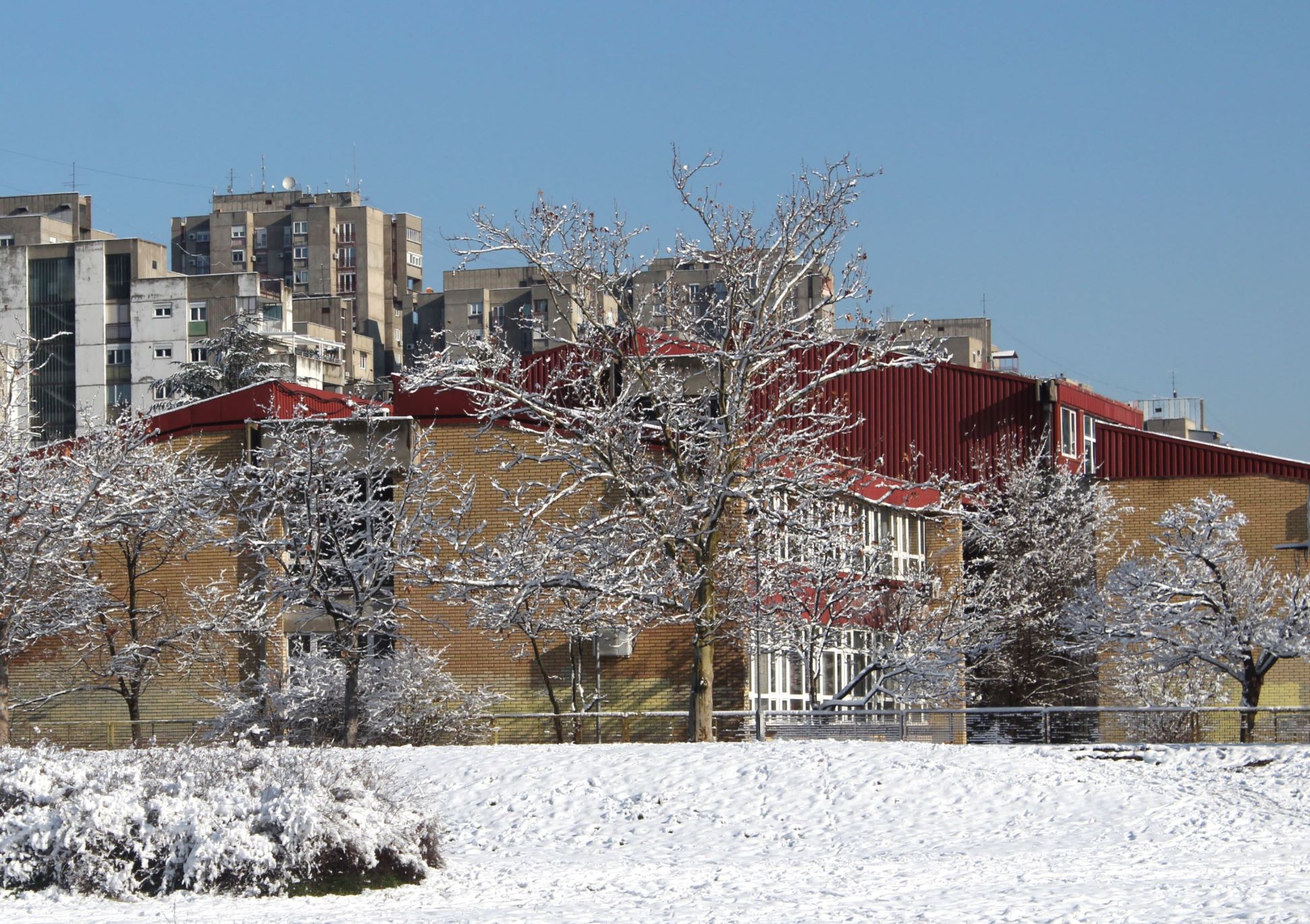

Significant changes to the appearance of the blocks along Evropska Street began in the 1990s, with large commercial buildings constructed in the middle of the block during the 2000s.
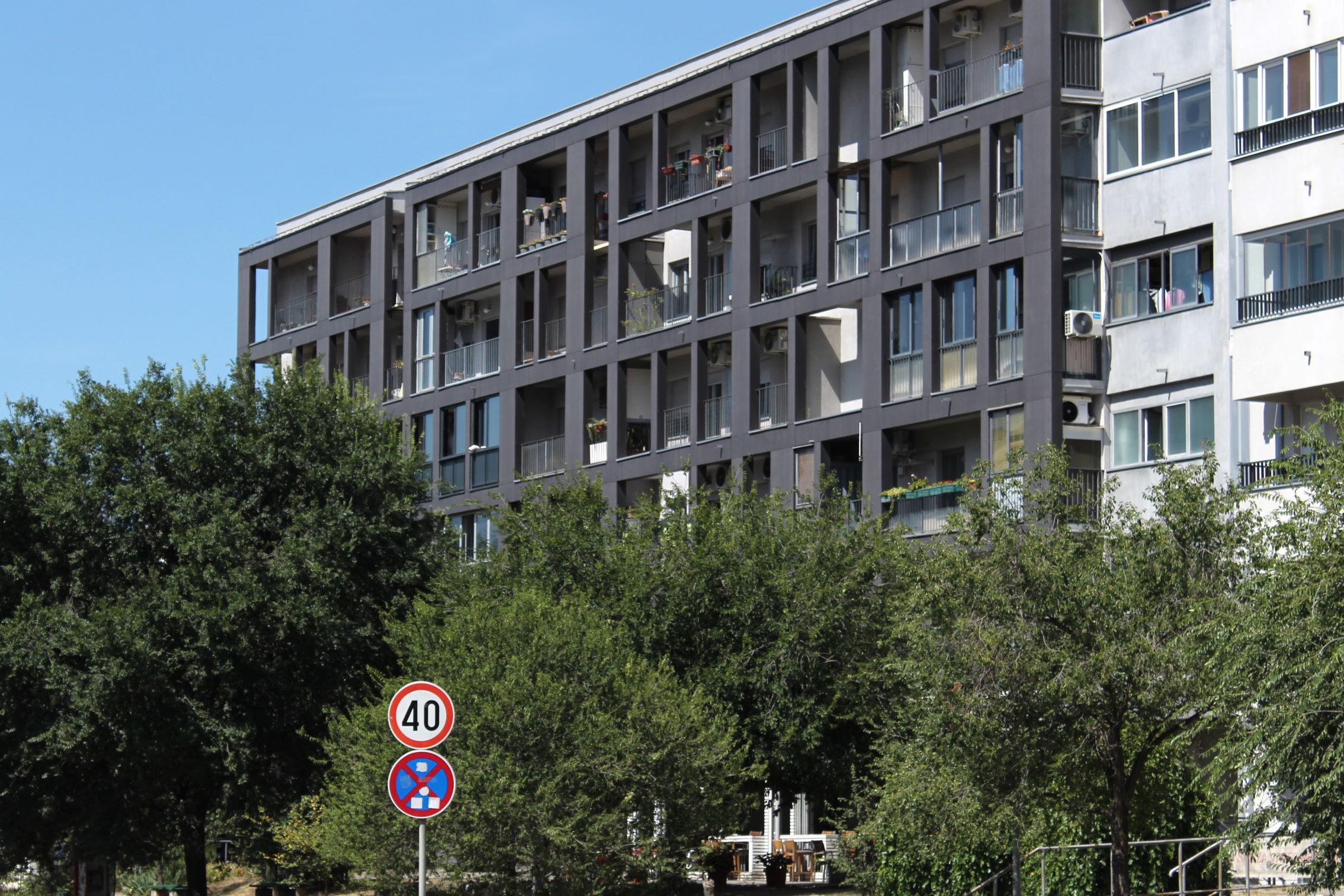
Block 64, due to its large area, has seen its appearance altered by various types of buildings from the 1980s to the present.
THE DESIGN
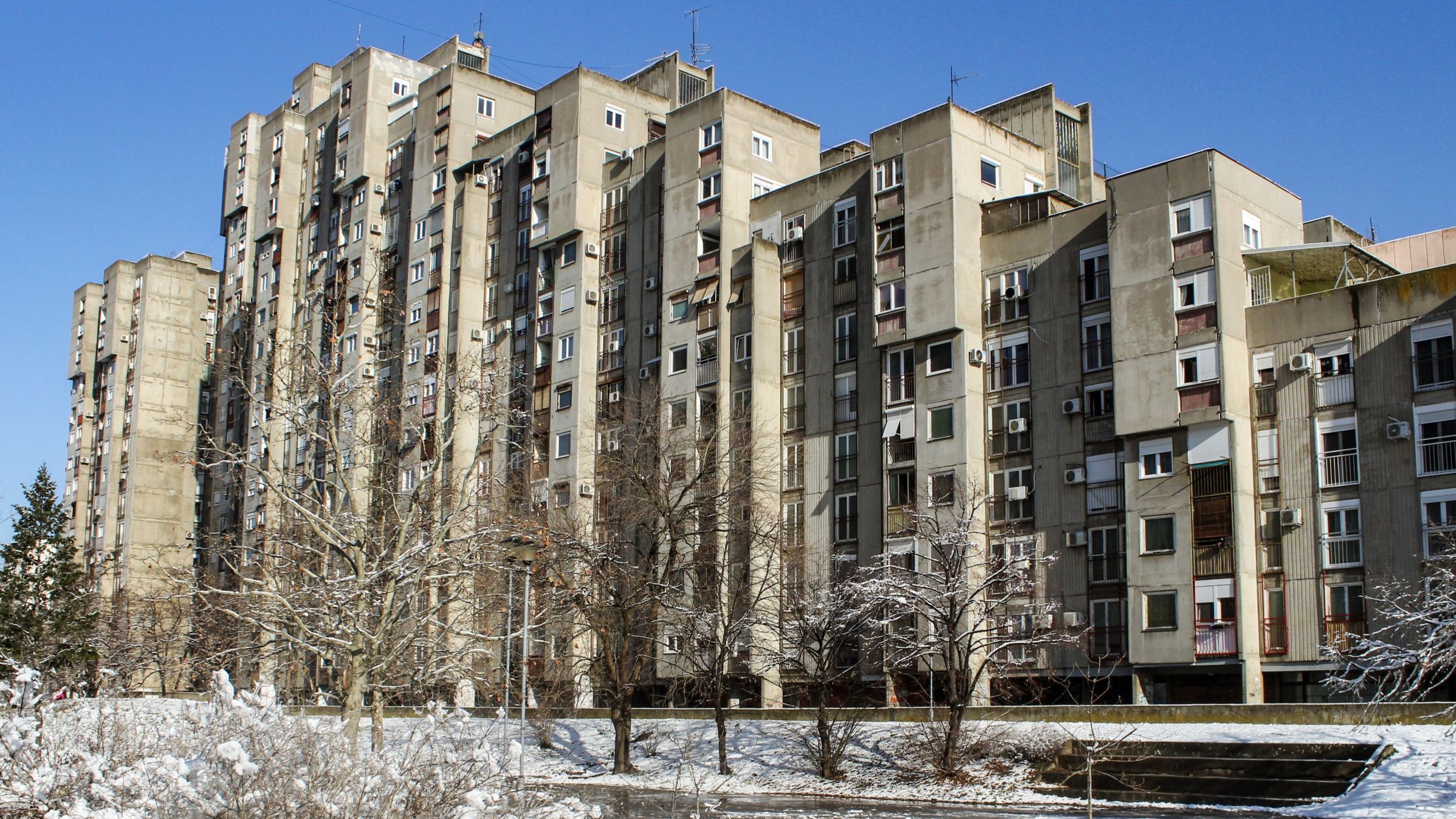
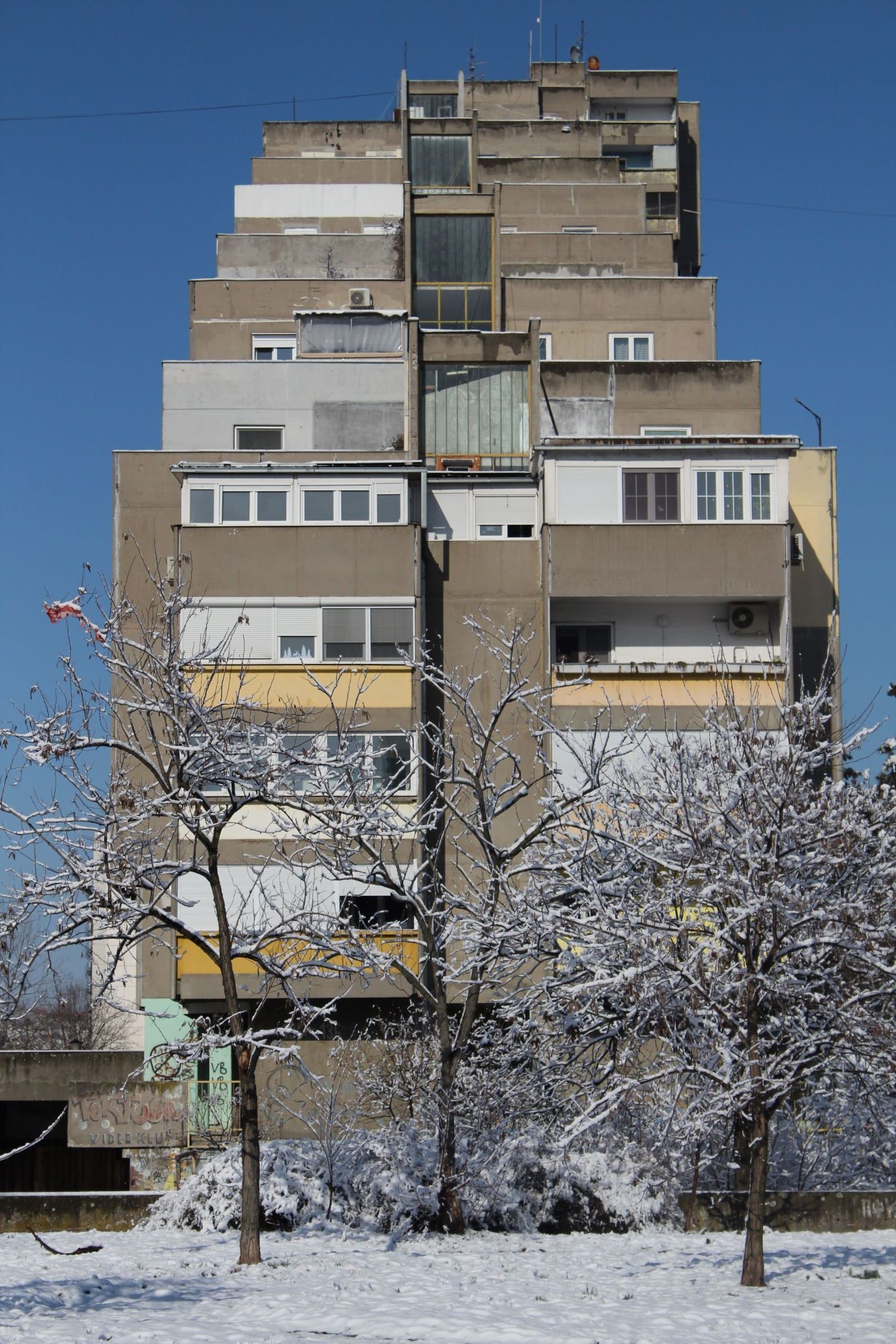
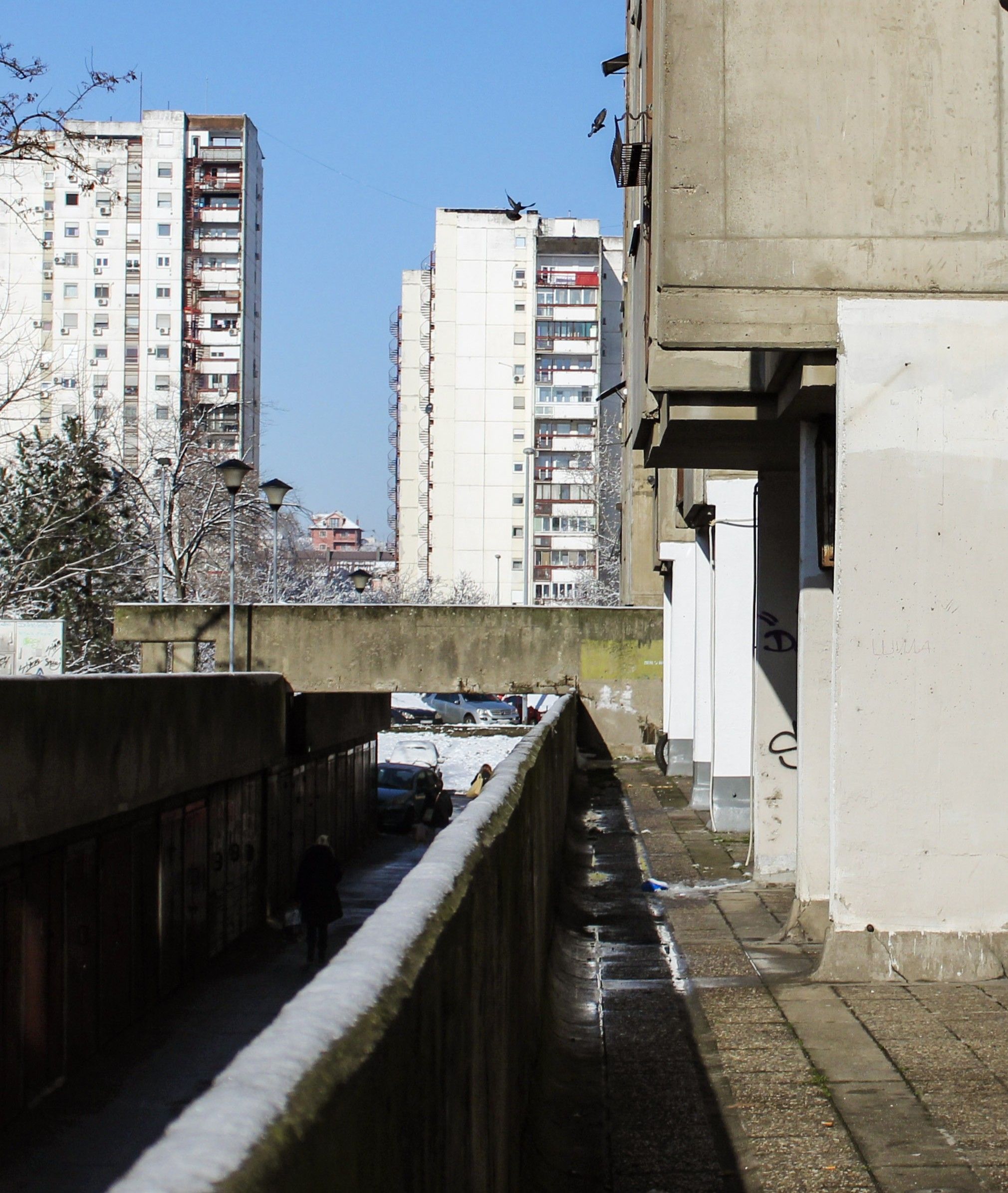
The main concept of the complex was a cascading form of giant stair-like structures, oriented toward the sunny southern side. The flat roofs, designed in a stepped layout, were intended for rooftop gardens, so vegetation was meant to play an important role in the overall experience of the space. Although this concept was never fully realized, it can still serve as an inspiration for future renovations of the block.
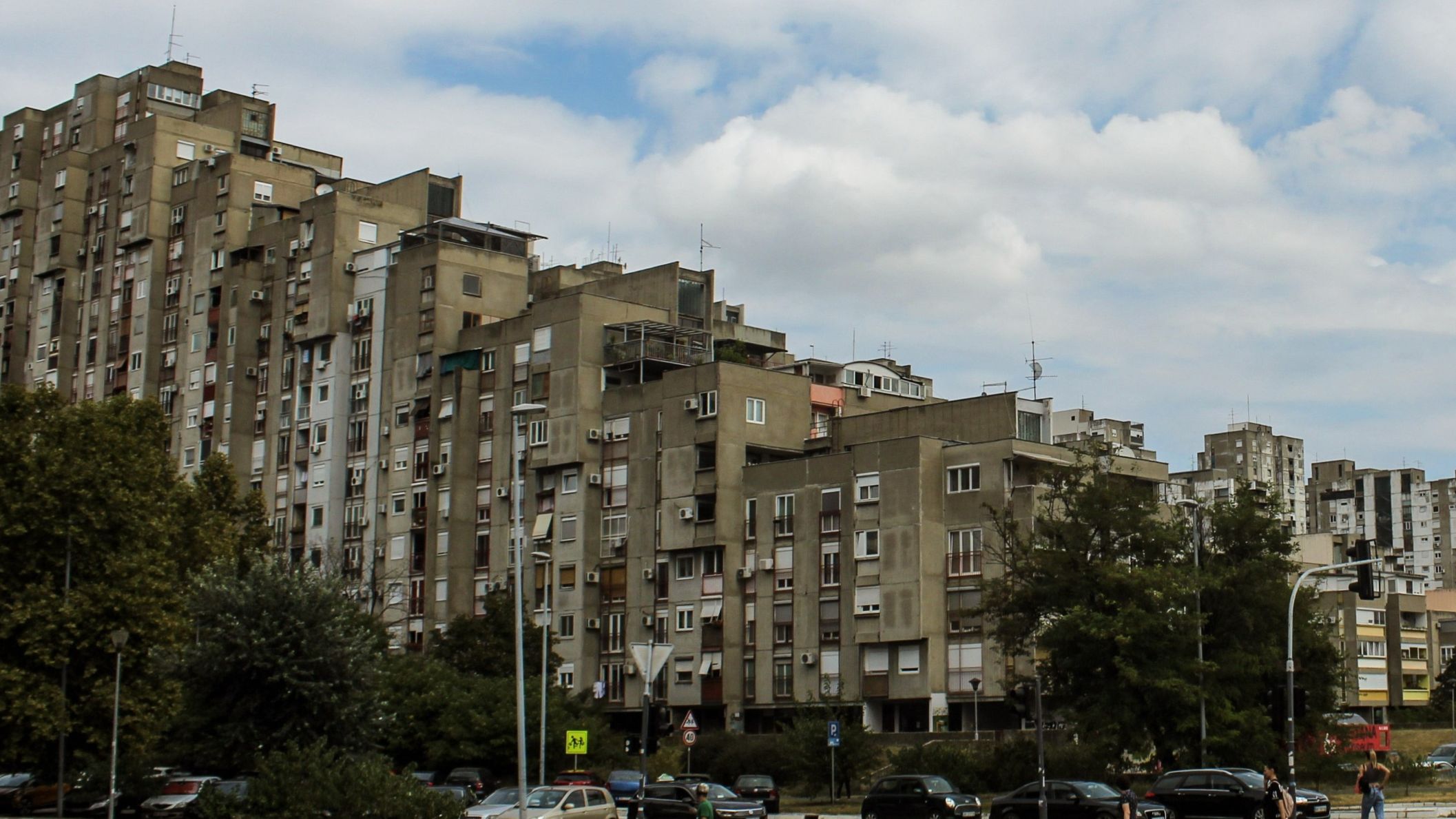
Blocks 61 and 62 represent the height of brutalist architecture in Belgrade, while the later-built blocks 63 and 64 reflect the late phase of brutalism, during which the city’s urban planning challenges had already become apparent.
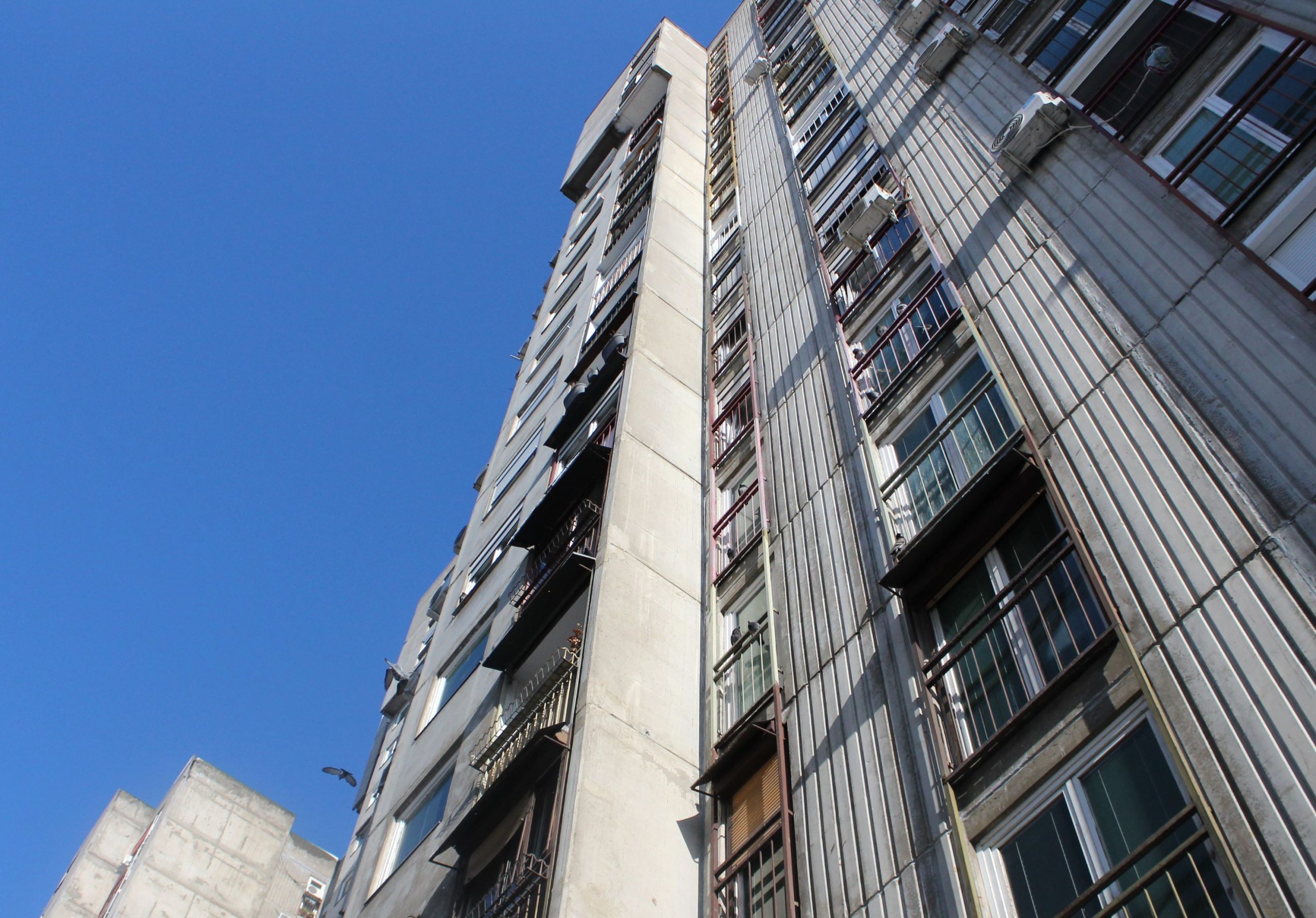
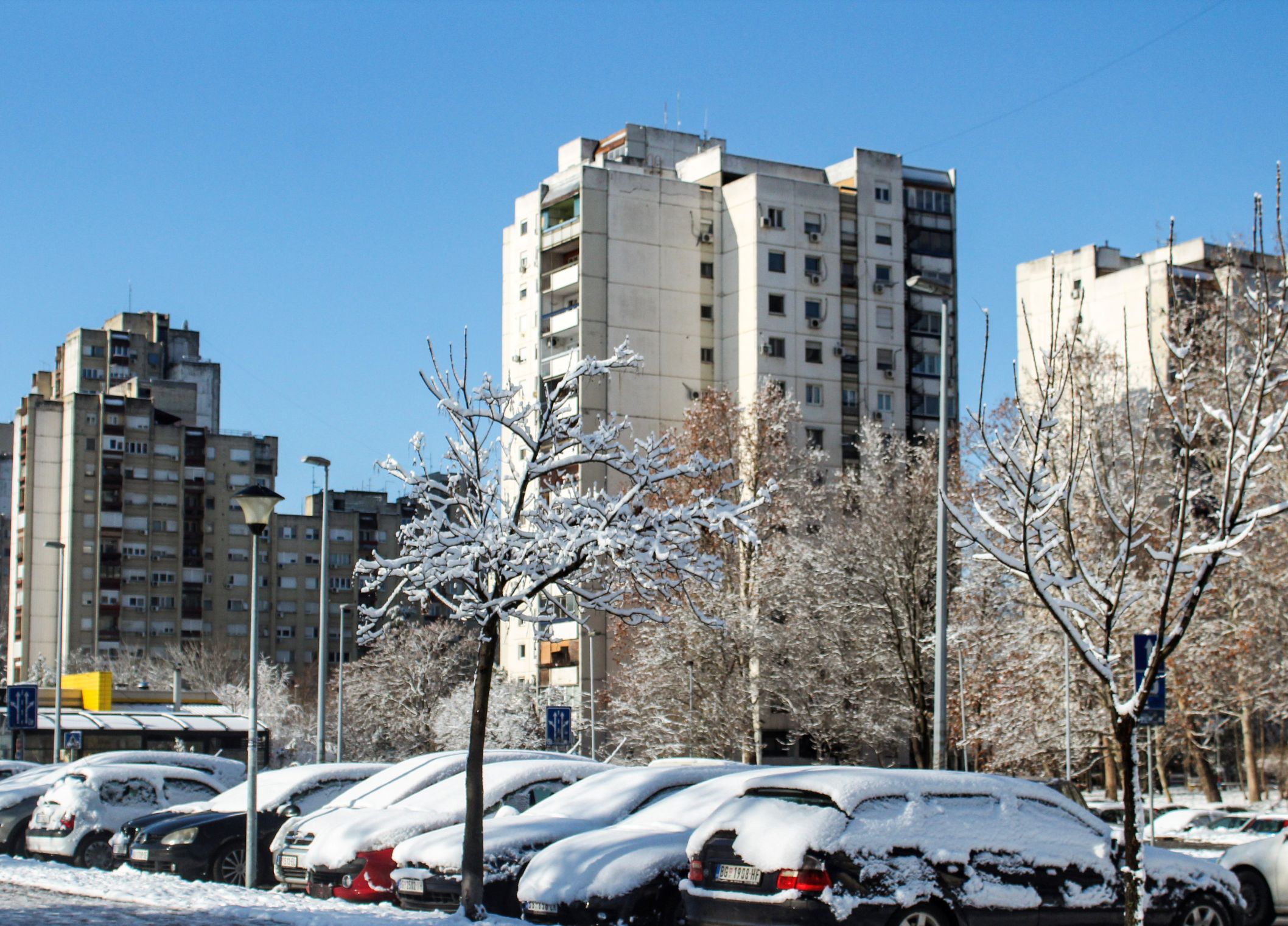
The height of the buildings in blocks 61 and 62 ranges from 4 to 20 floors, and there are two types of residential buildings: Type A and Type B.
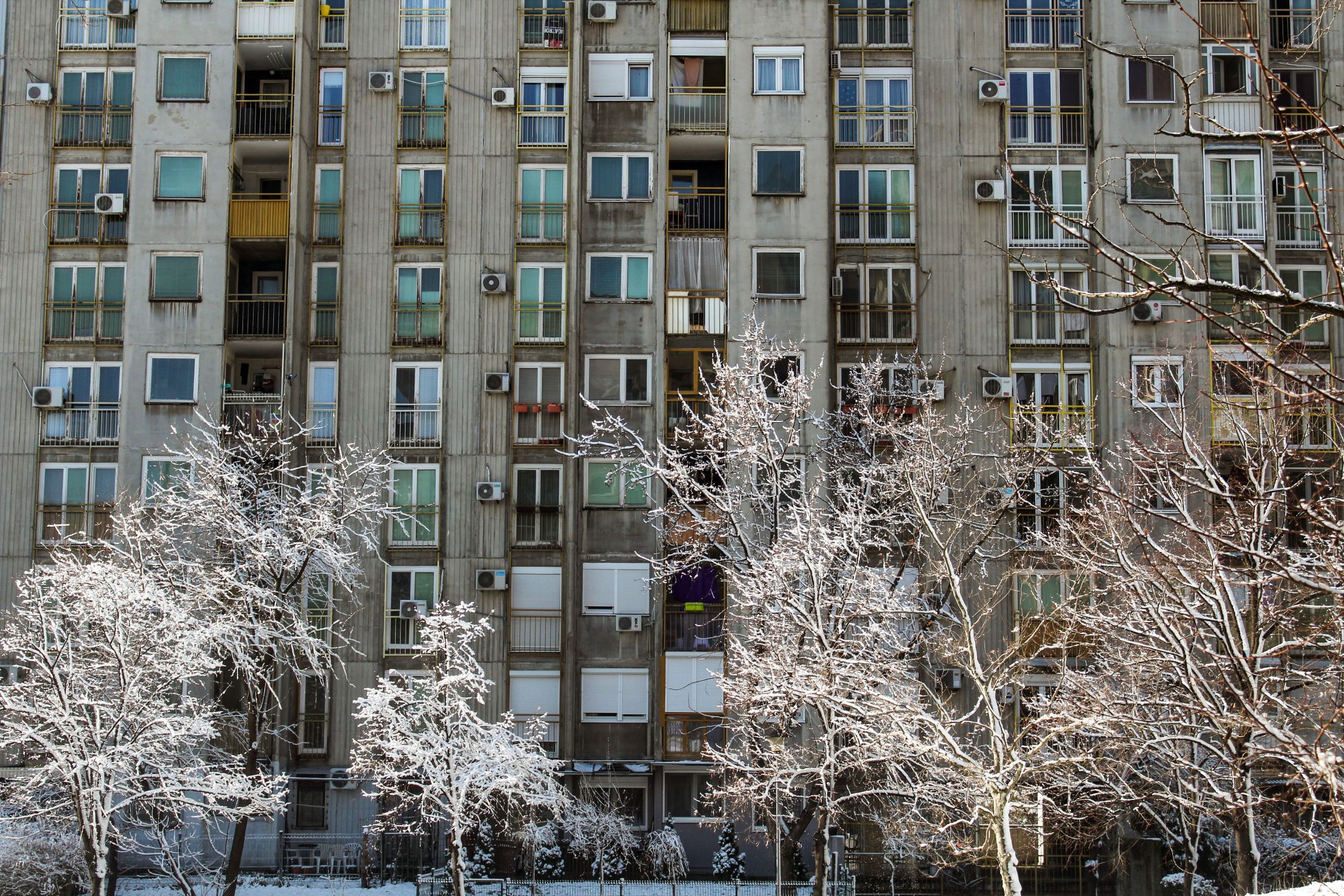
The buildings range in height from four to twenty floors. There are two types of residential buildings in Blocks 61 and 62 – Type A and Type B. Type A consists of groups of three buildings left in the natural color of concrete, while Type B consists of pairs of buildings with colored sections on their façades. Type A buildings are made up of six segments, with four apartments on each floor. Type B buildings appear in pairs, each containing four segments.
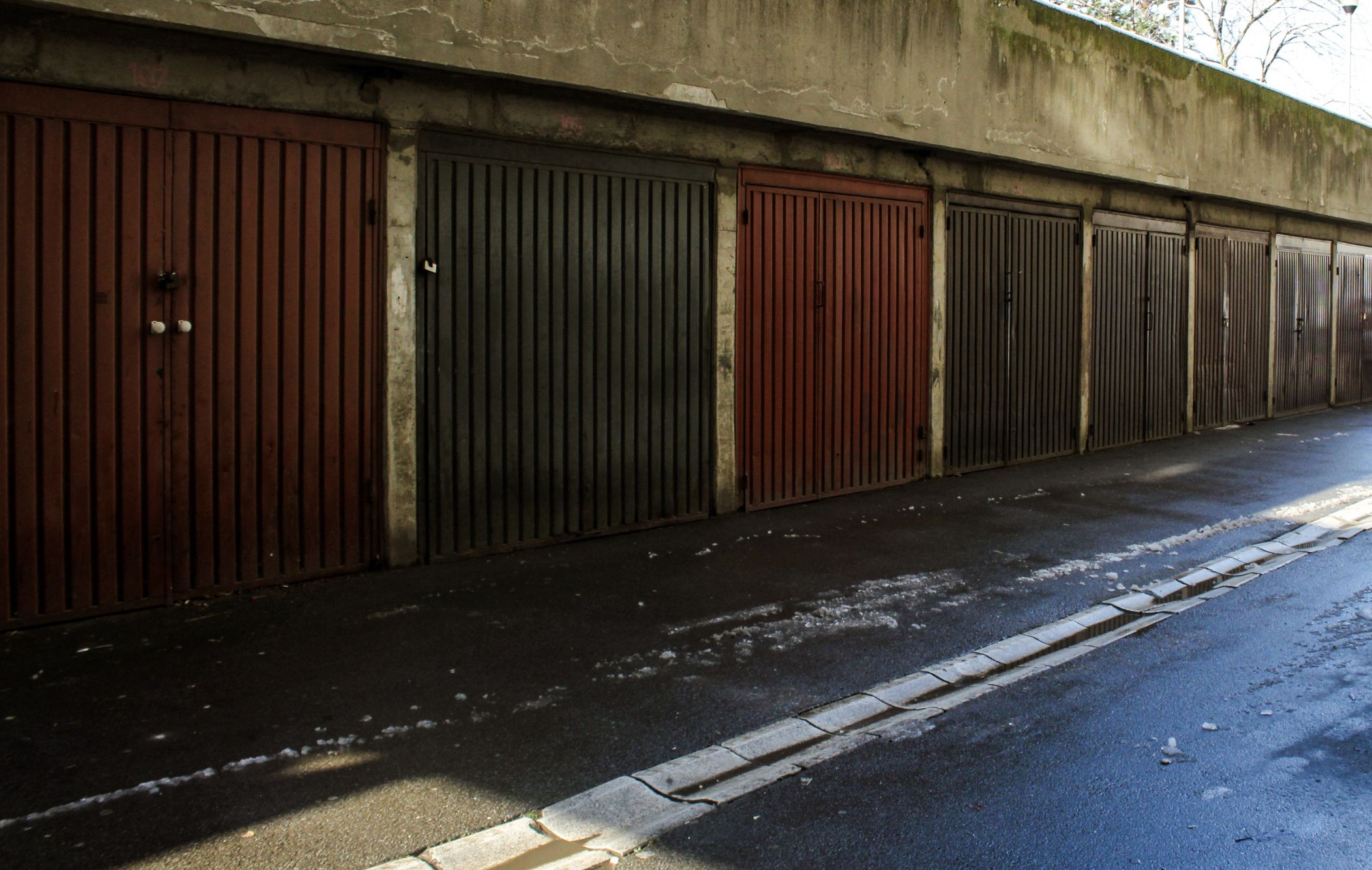
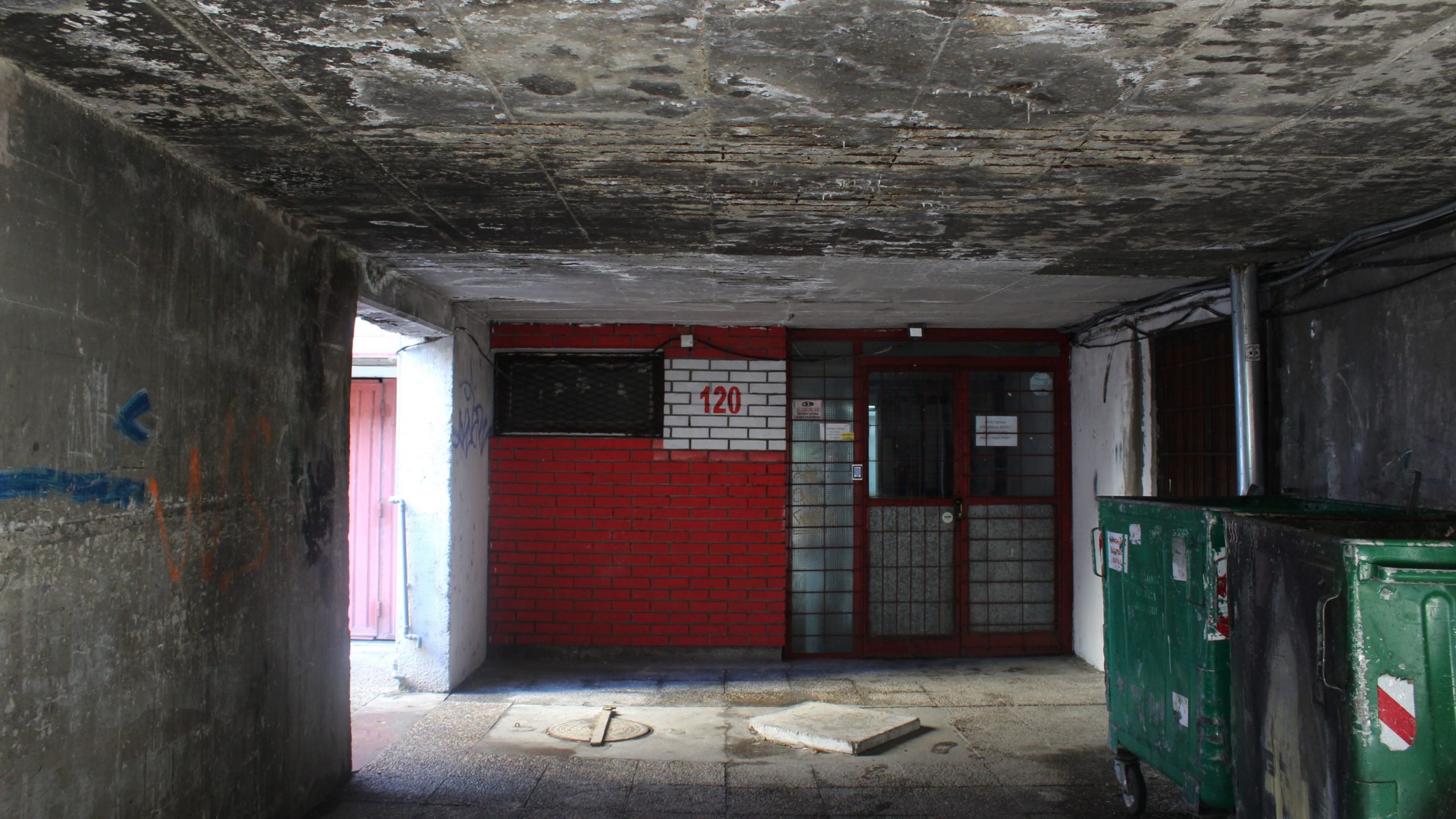
A special feature of these blocks is the separation of pedestrian and vehicular zones. The garage ceiling actually serves as a walkway connecting the school and kindergarten, situated between the residential blocks.
As in other parts of New Belgrade, this area also features numerous graffiti and commemorative murals