THE HISTORY
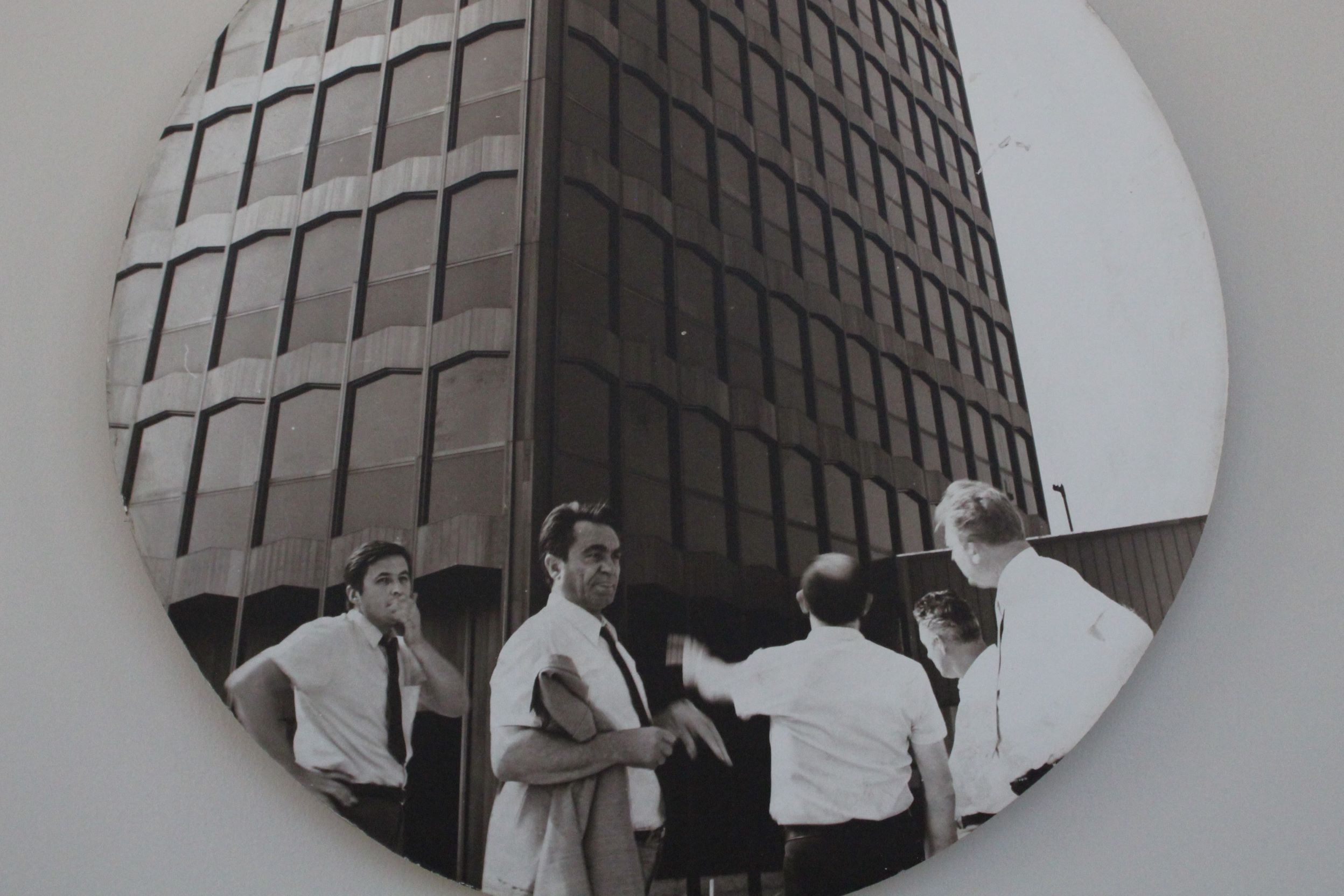
The planning for a high-rise building at the corner of Masarikova and Maršala Tita Streets (now Kralja Milana Street) began with the announcement of a competition in 1961 for the construction of a commercial building. Before World War II, there had been plans to build a high-rise tower, the "Teokarević Palace," designed by architect Grigorije Samojlov in 1940. However, the outbreak of the war halted the realization of this 12-story tower.
The winning design for Beograđanka was created by architect Branko Pešić. After several modifications to the initial project plan, construction began in March 1969 and was completed in 1974. Collaborating on the project were architects Mirko Kašanin and Žorž Popović.
Beograđanka housed the largest department store in Yugoslavia at the time, covering 17,000 square meters, as well as a self-service store in the second basement, occupying 2,500 square meters, also the largest in the SFRJ. According to reports, in the first week alone, one million people visited the building.
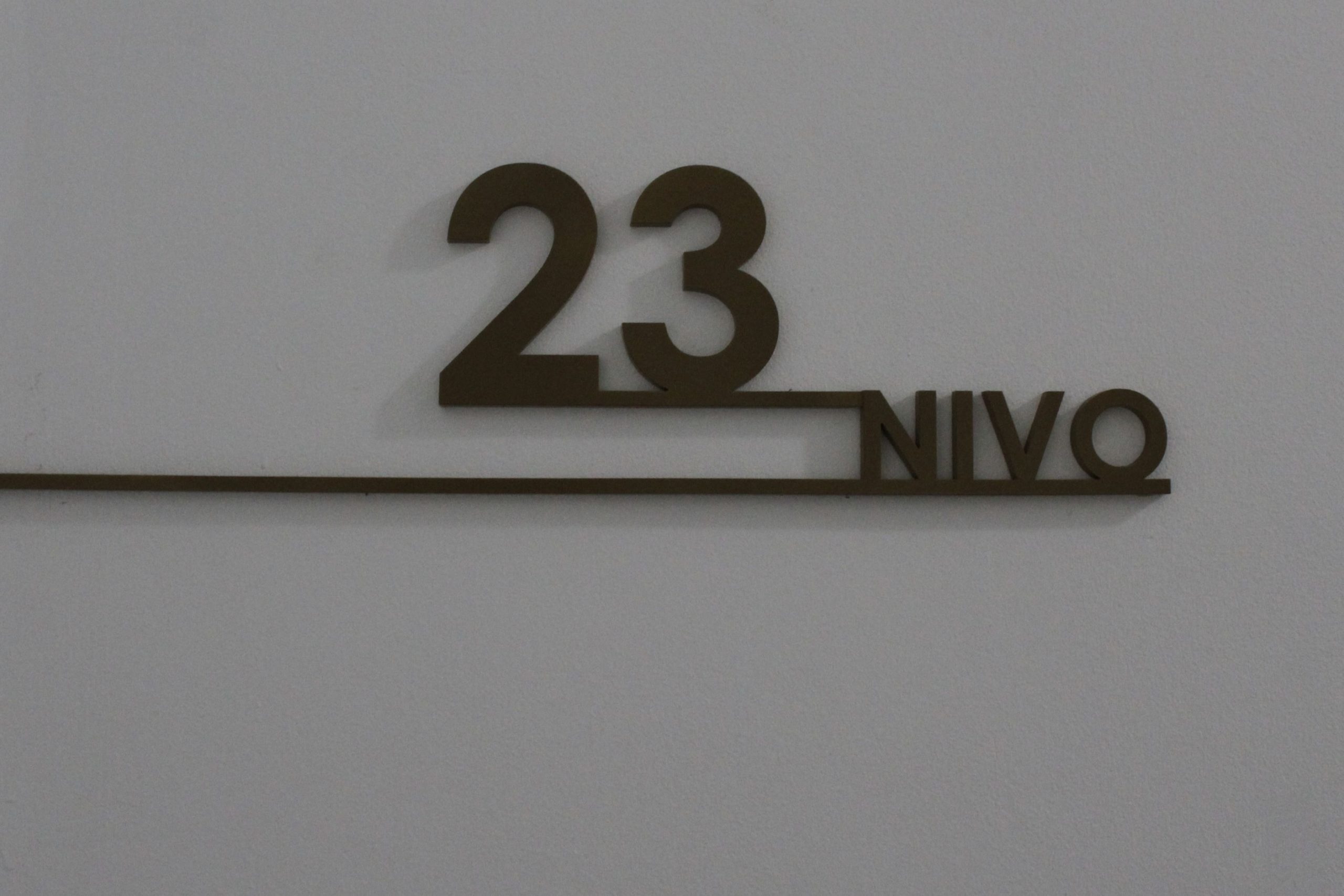
The "Studio B" radio station, opened in 1974 on the 23rd floor, was the first independent city radio station. Its iconic programs included Duško Radović's "Beograde dobro jutro," Velja Pavlović's "Nivo 23," Đoka Vještica's "Beogradska razglednica," and others. By the late 1970s, "Studio B" expanded to the 22nd floor, where, in the 1990s, Studio B Television began operations. After privatization, Studio B moved out of Beograđanka in 2021.
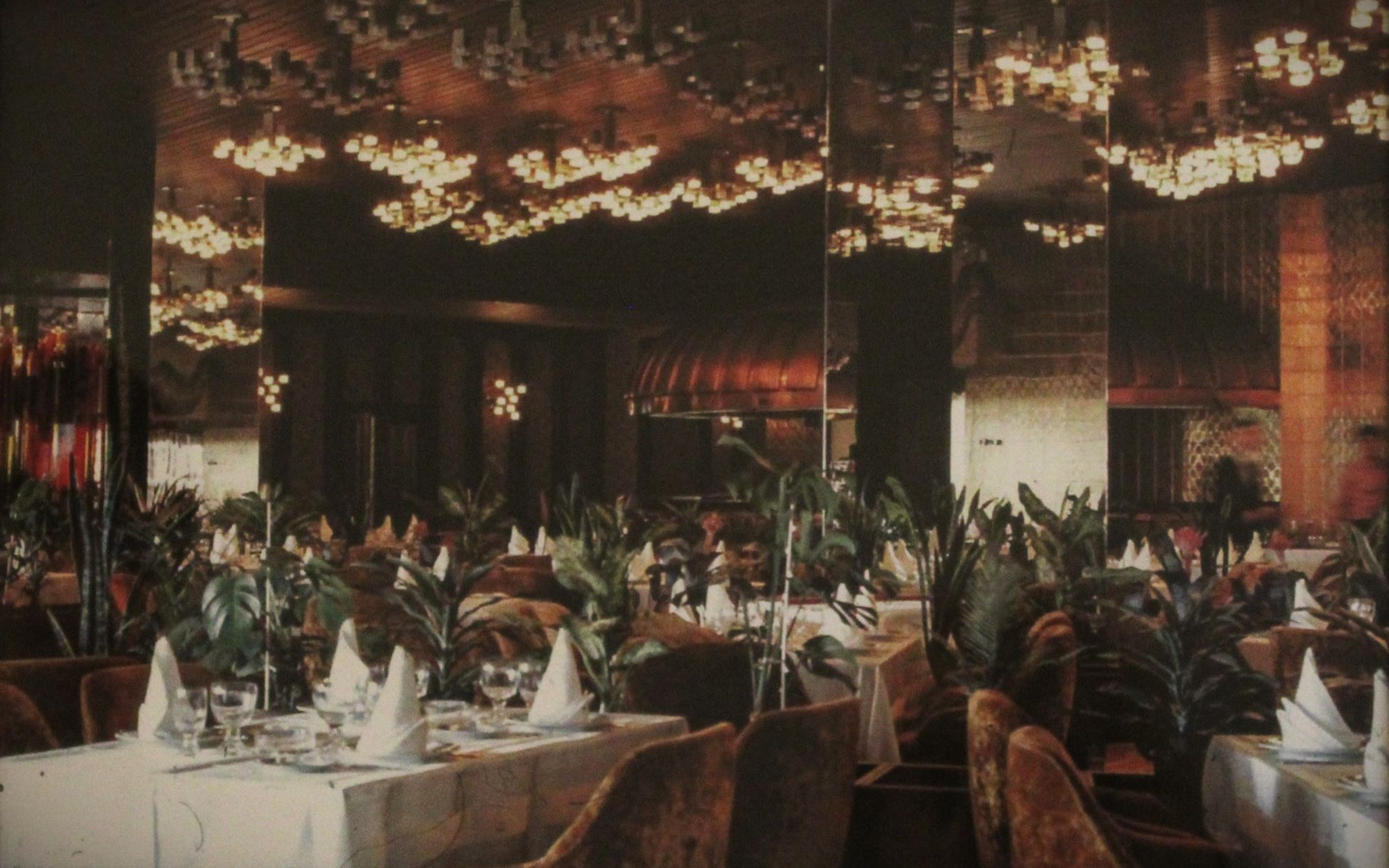
In the 1990s, the restaurant on the fifth floor and the club on the sixth floor ceased operations. The business spaces were leased to private companies and some government offices. During this period, much of the artwork that had been part of the interior design of the restaurant and club disappeared.
In 1997, two external "kiosks" were added near the business entrance from Masarikova Street, and in 1999, a separate commercial building (ground floor and first floor) was constructed in the passage leading to the square, replacing the original plan for a panoramic elevator.
During the NATO bombing in 1999, the facade of the annex on Masarikova Street was damaged, as well as part of the tower's facade on that side. The damage was repaired by installing a new facade.
When the "Robne kuće Beograd" company was privatized in 2007, the interior of the department store was adapted for new purposes, with spaces rented to individual tenants.
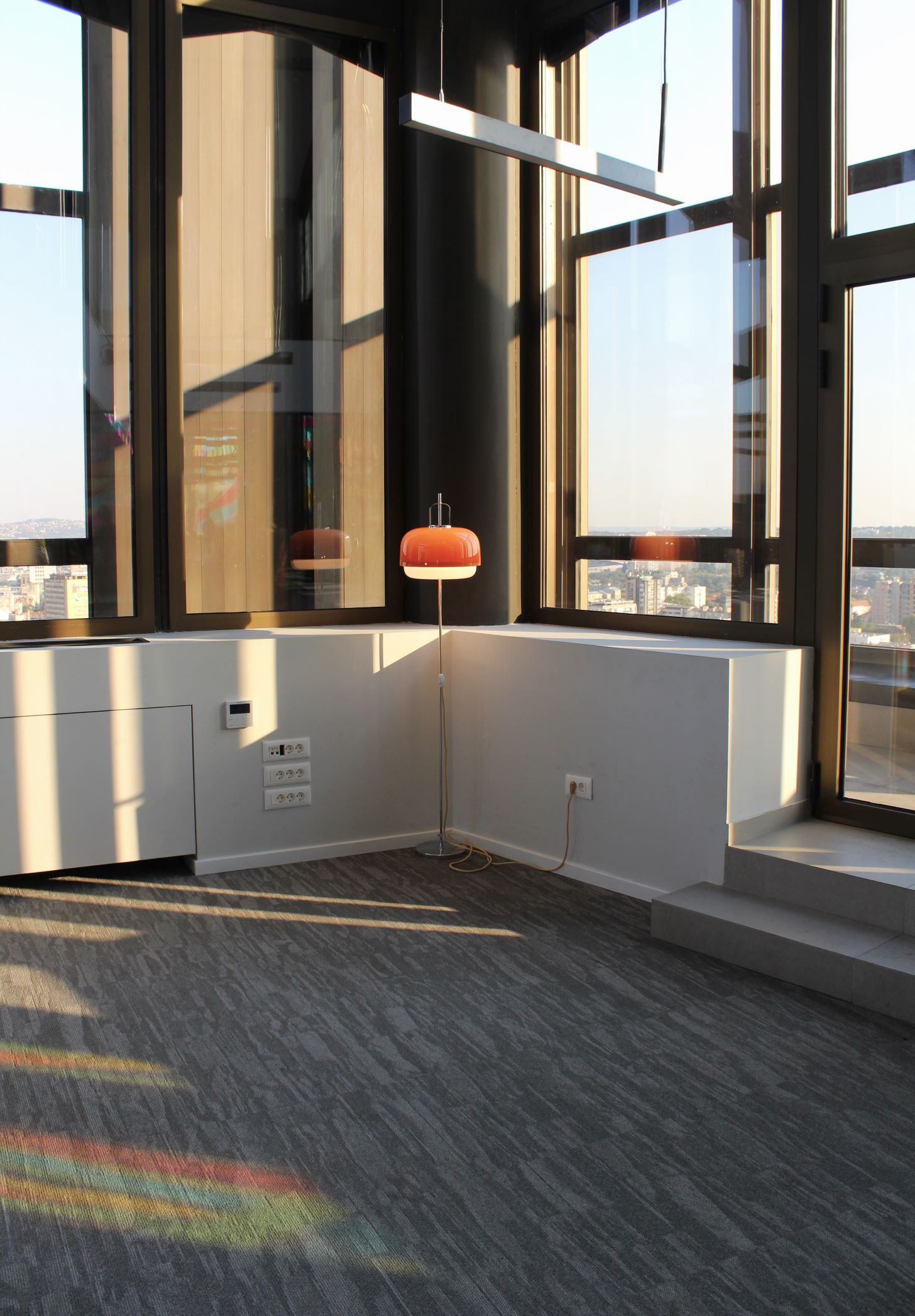
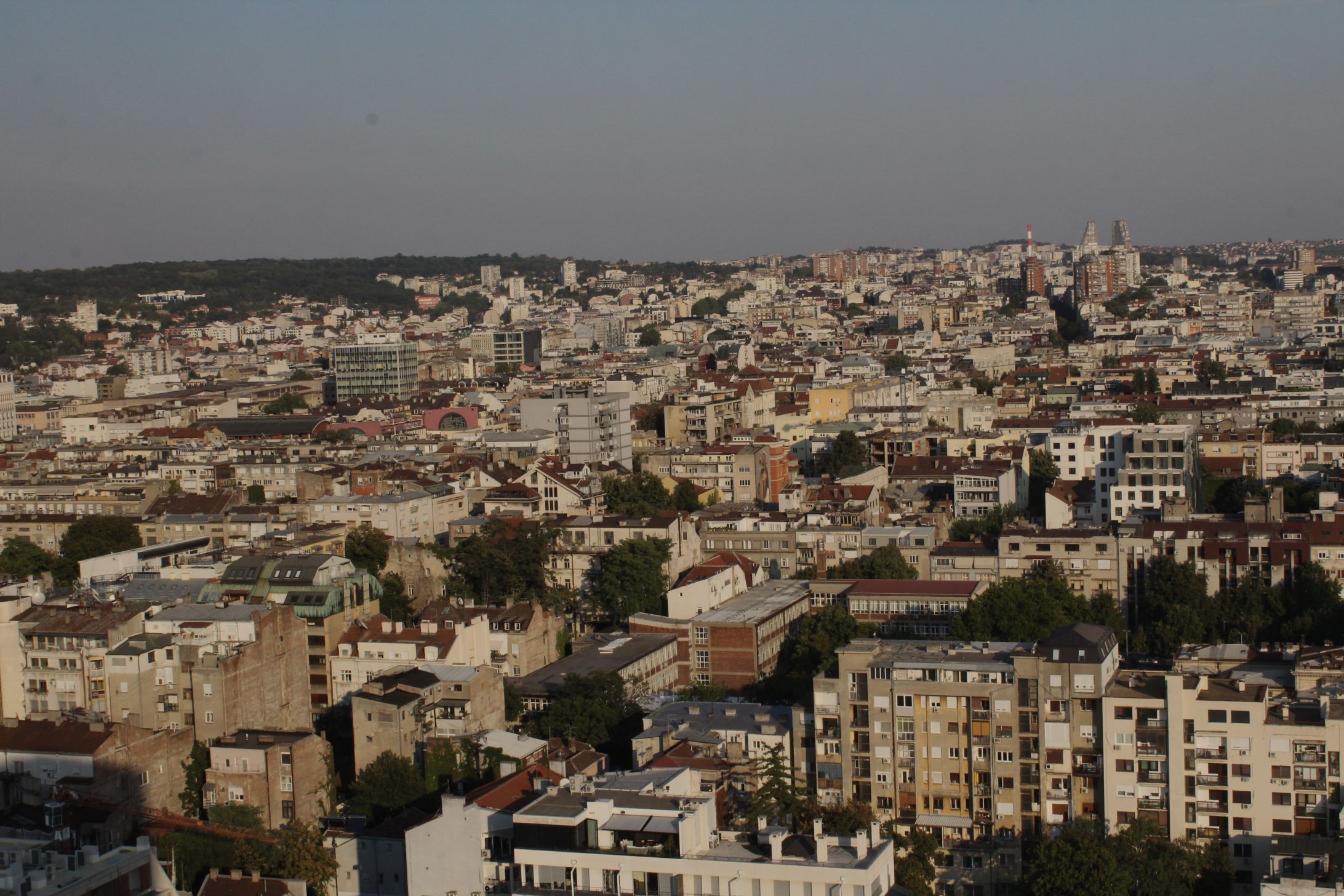
The building is protected by the Belgrade Institute for the Protection of Cultural Monuments, as a property under preliminary protection status. A major reconstruction in 2022 gave Beograđanka a modern new look. Today, with the opening of the observation deck on the 22nd floor, visitors can explore part of the space (the Observation Deck) of Beograđanka.

THE DESIGN
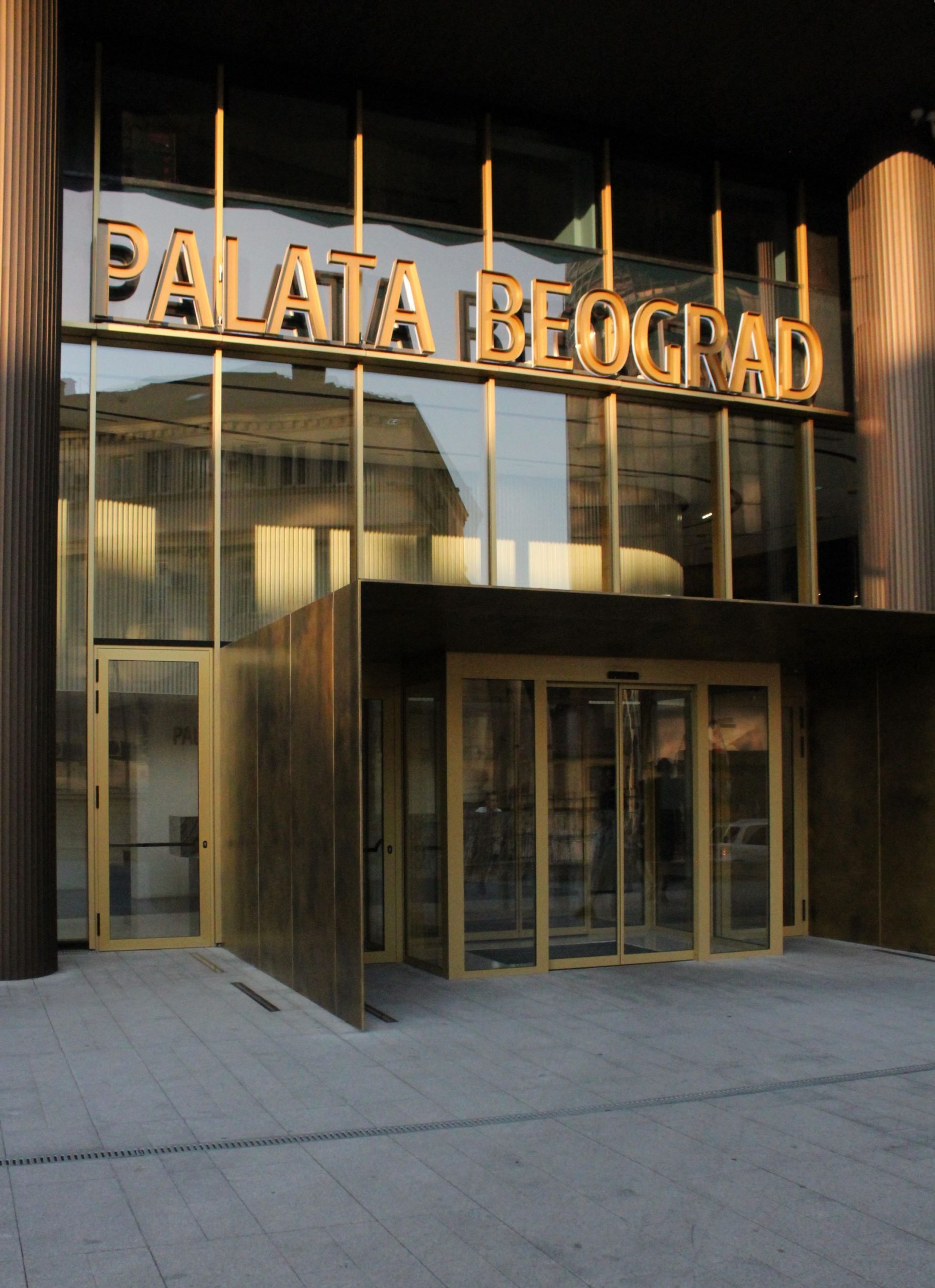
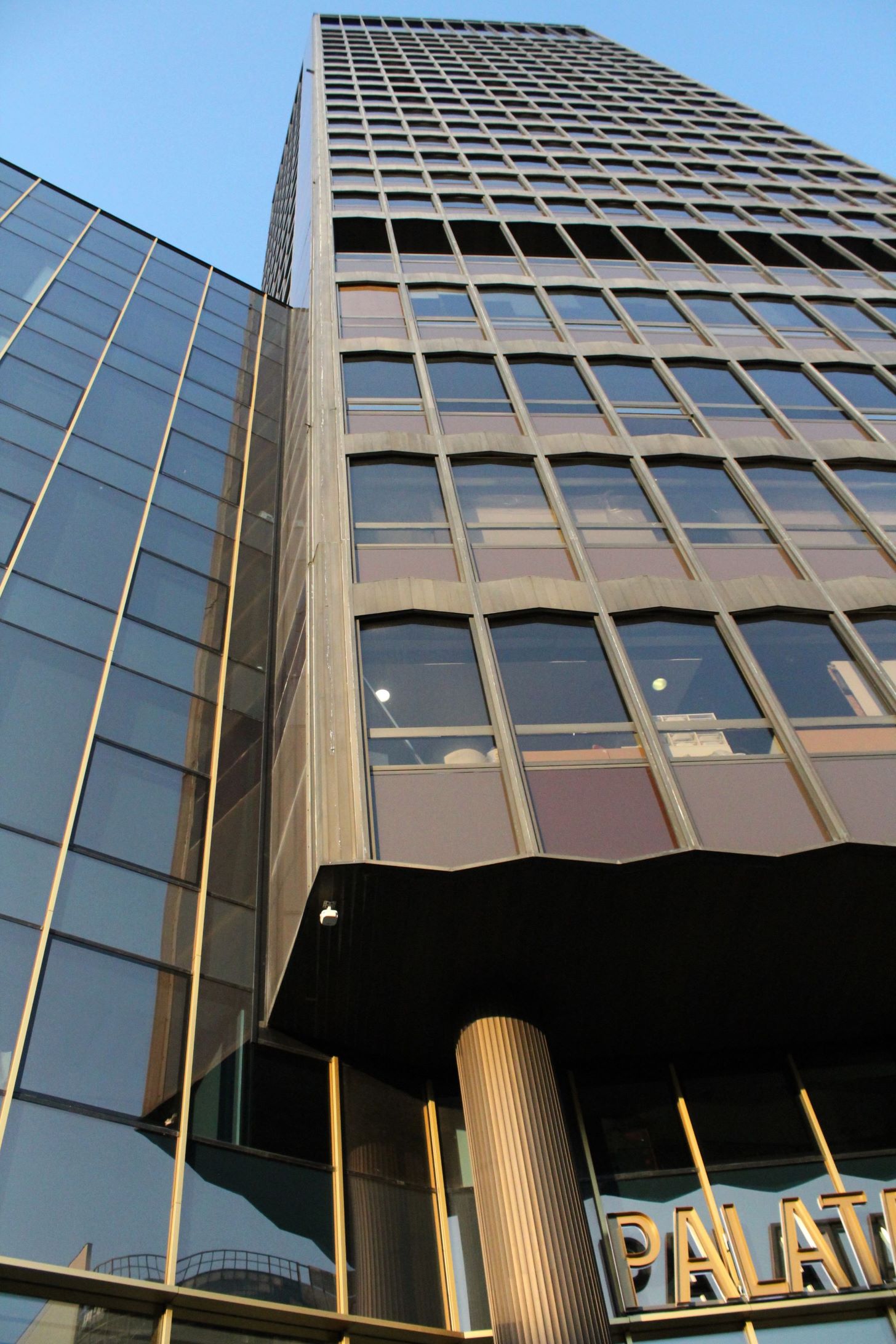
The building was designed in the international style, inspired by Chicago skyscrapers, with a distinctive dark-colored facade. This rare choice of color for Belgrade's architecture sparked considerable debate at the time. Known as a curtain wall in architectural terms, this style has since become a recognizable landmark in Belgrade. Standing at 100 meters, it was the tallest building in the former SFRJ at the time.
The Belgrade Palace consists of 27 floors, including 3 basements, the ground floor, and 23 floors in the main tower.
Beograđanka is distinguished by the proportional relationship between the towering structure and the lower annex (Department Store) in relation to the small newly created square in front.
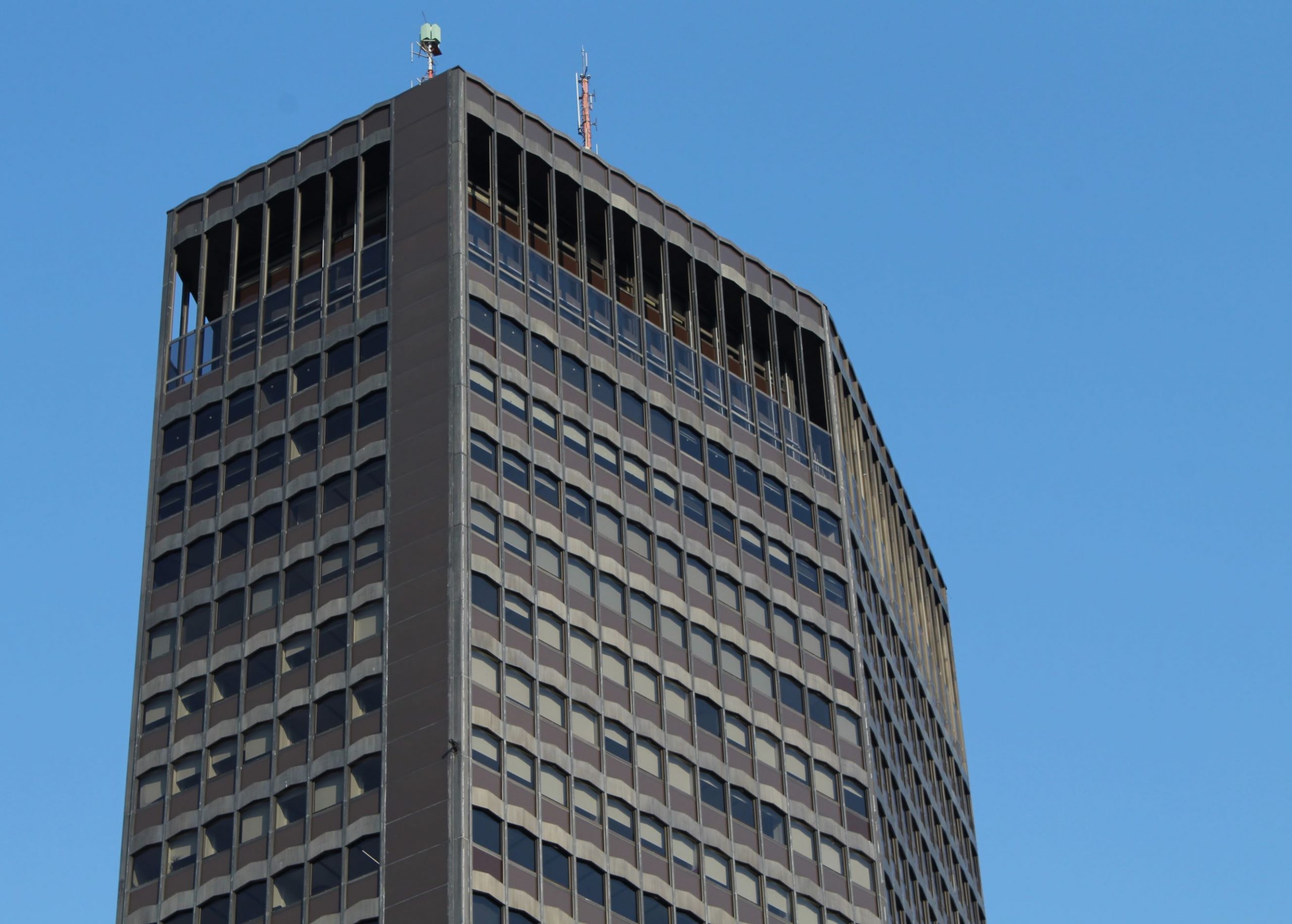
In 2020, following the sale of part of the building (the annex and tower) of the "Beograd" Palace, a reconstruction took place, slightly altering the original design. The most noticeable change was the removal of the external motorized shutters, which had previously contributed to the building's dynamic visual identity.
INTERIOR
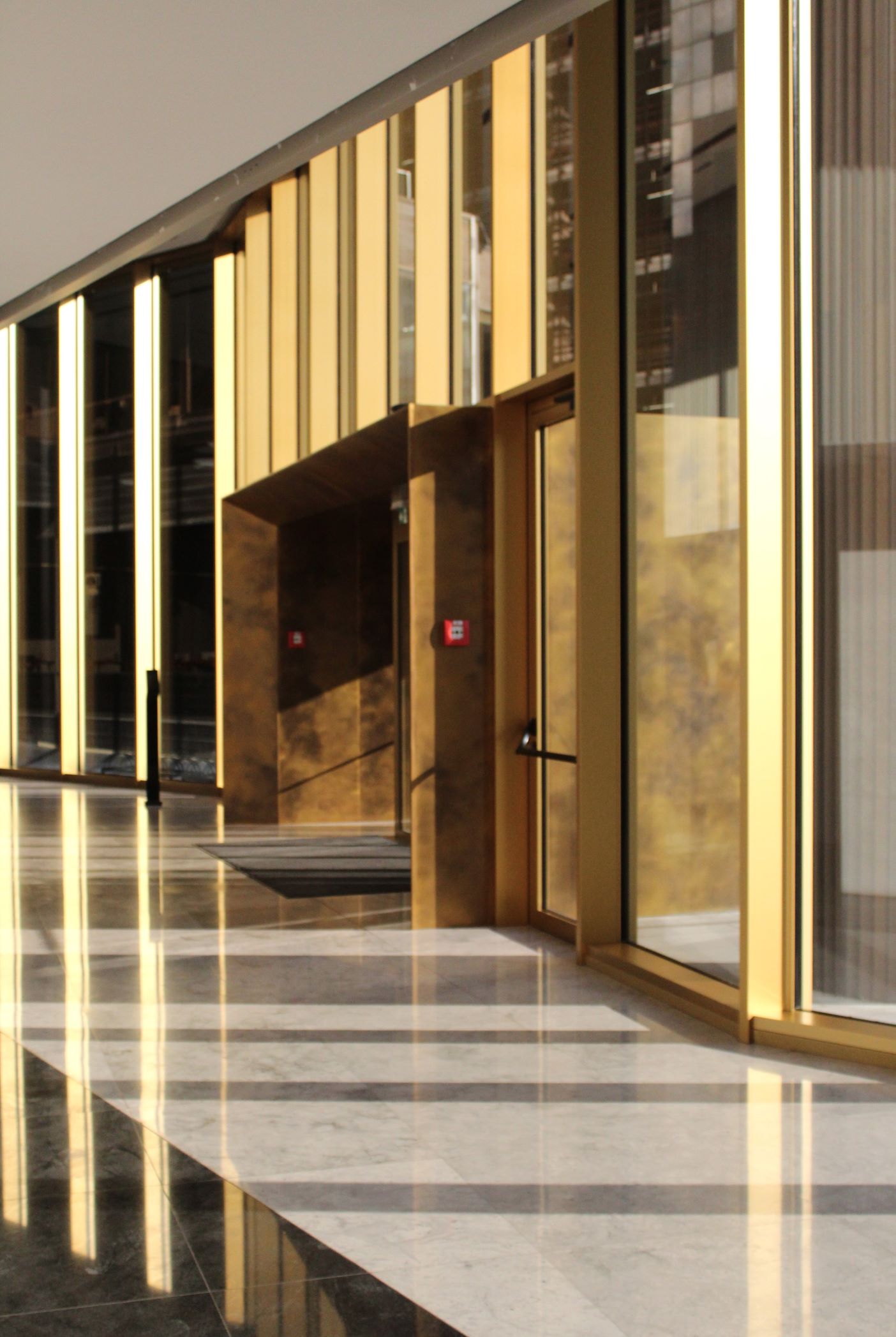
The luxurious interior of Beograđanka was once filled with valuable works of art, though today, only part of it has been preserved.
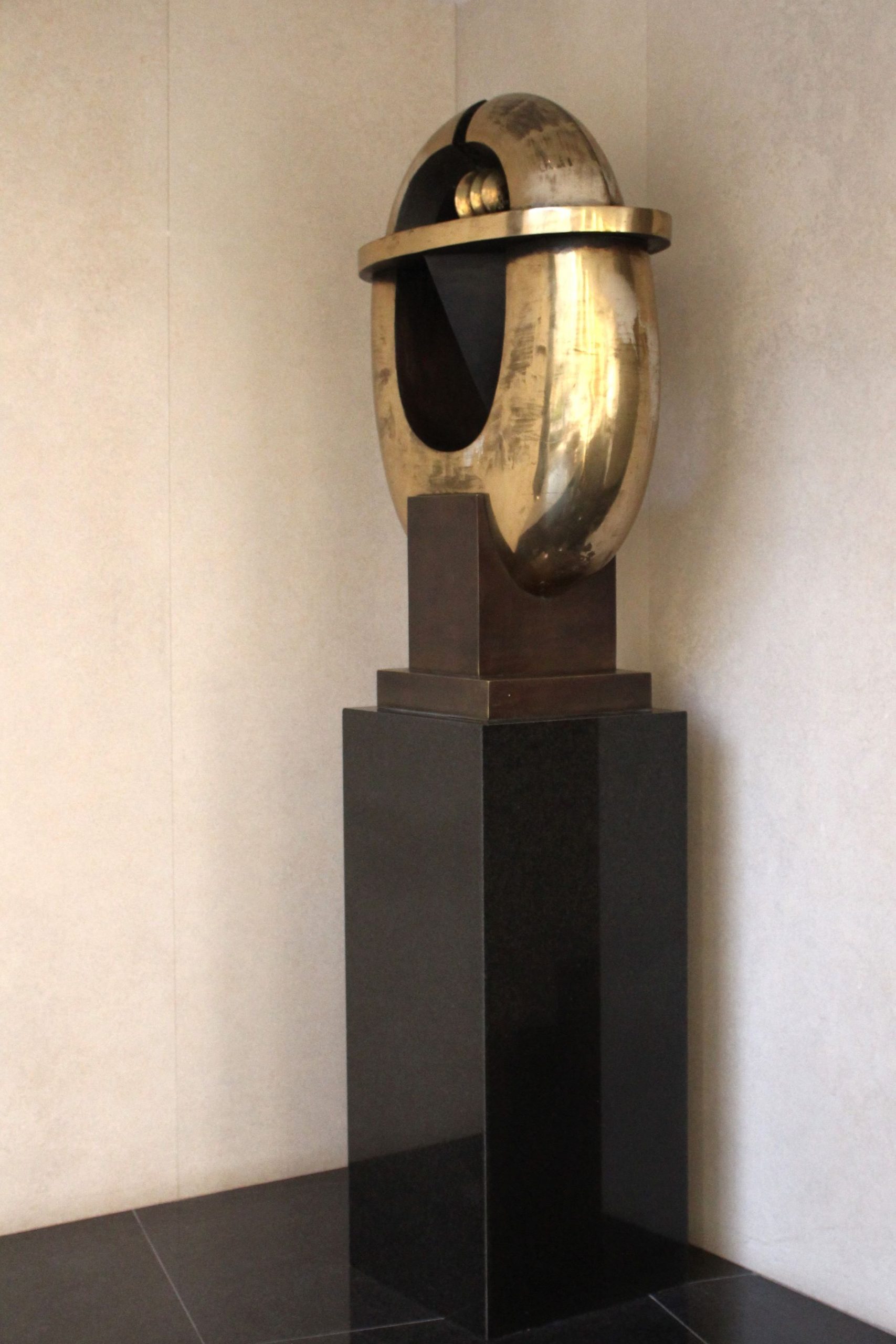
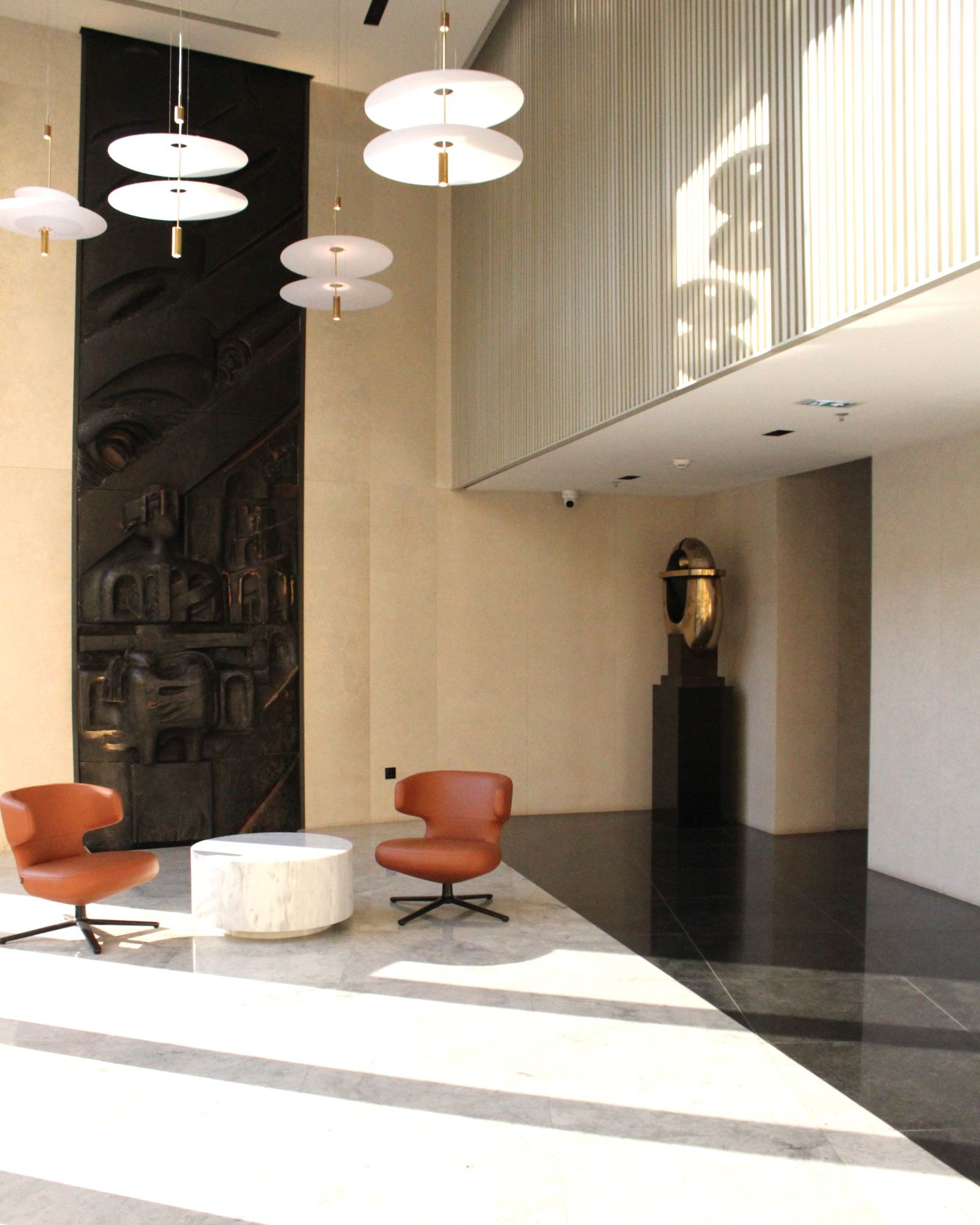
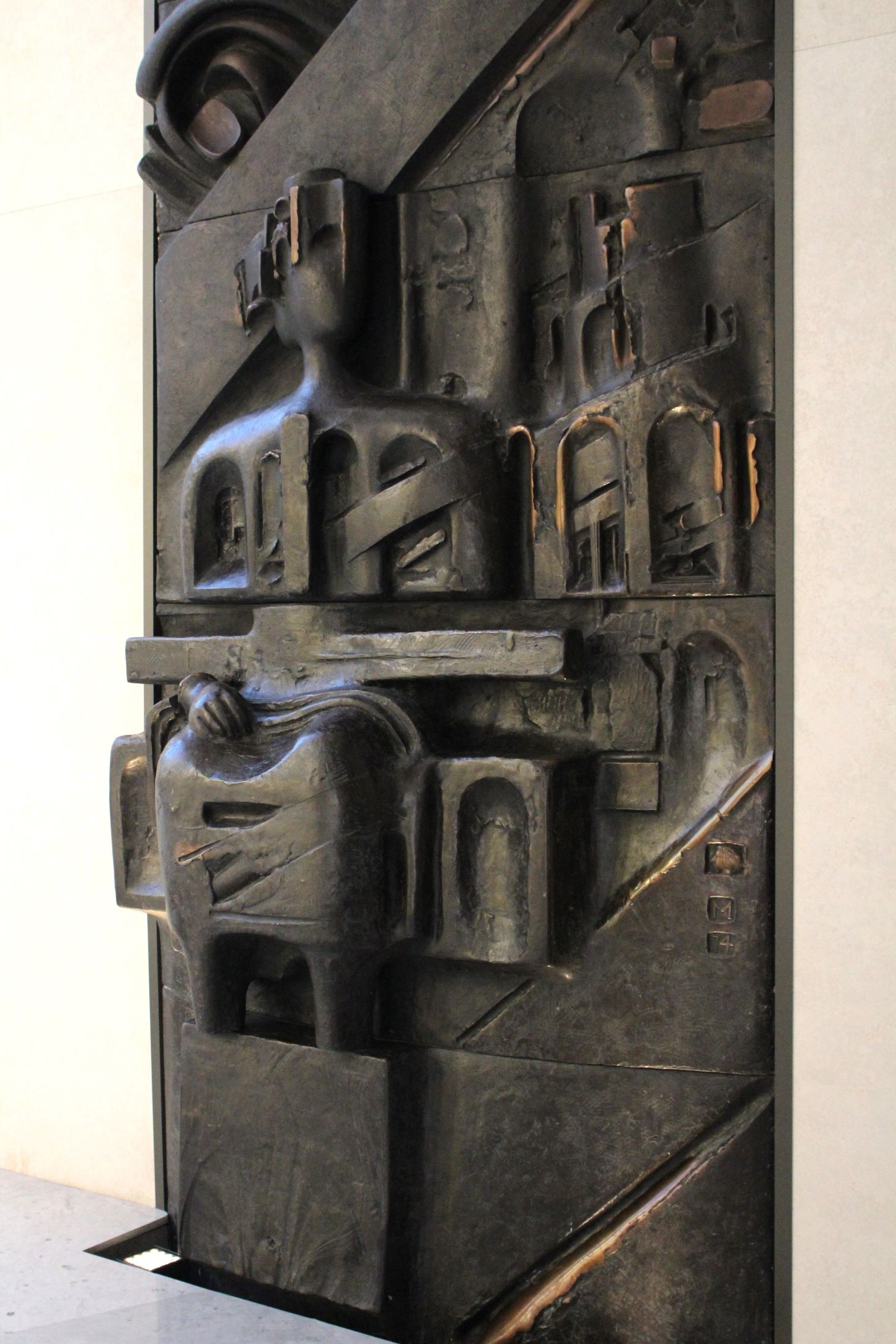
In the entrance hall of Beograđanka, there is a tall bronze wall relief depicting Despot Stefan Lazarević, created by sculptor Nebojša Mitrić, standing eight meters high. The hall also features a bronze sculpture by sculptor Oto Loga, symbolizing the personification of construction.
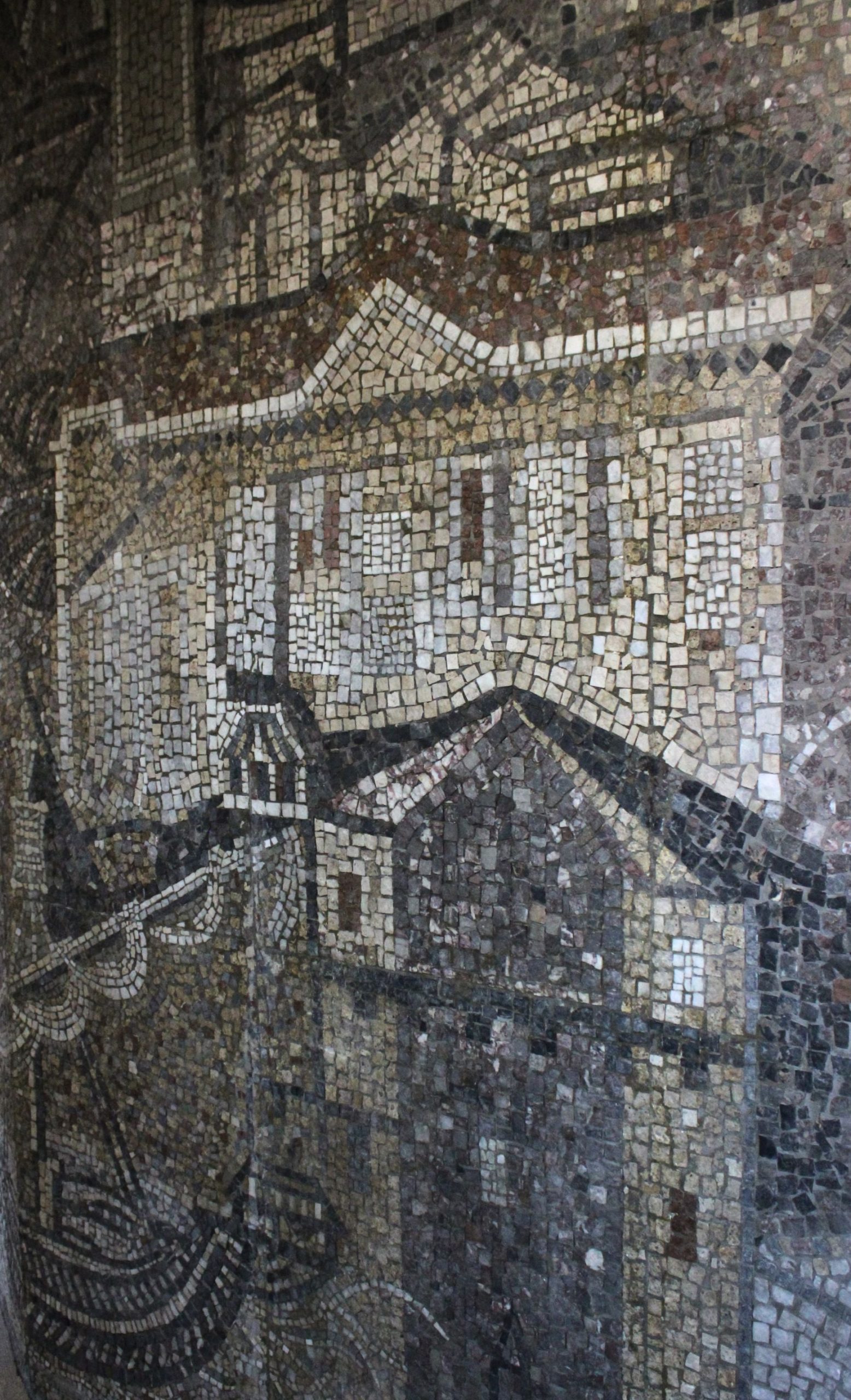
On the 22nd floor, at the Observation Deck, a mosaic by Krsta Andrejević has been preserved. The piece partially depicts old Belgrade, while the other part portrays the city’s modern, contemporary identity.
The exclusive restaurant on the fifth floor housed artworks by prominent creators from the contemporary Yugoslav art scene, many of which have not been preserved. The restaurant, featuring a state-of-the-art kitchen at the time, spanned nearly 3,000 m², with a terrace that extended to the roof of the fourth floor of the department store.