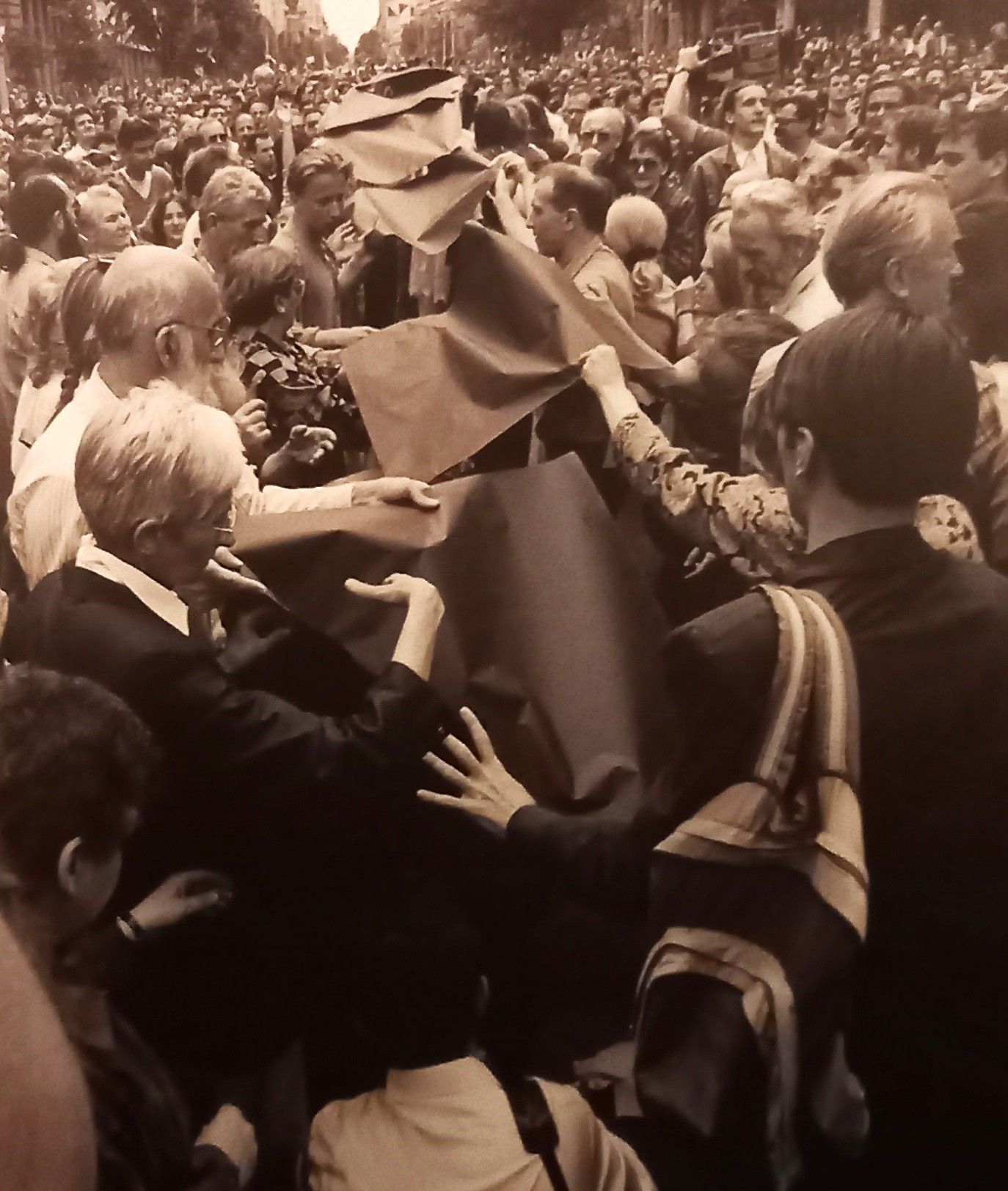
The 1992 student protests followed the imposition of United Nations Security Council sanctions in May of that year. The sanctions were introduced due to the involvement of the Army of the Federal Republic of Yugoslavia (Serbia and Montenegro) in the wars in Bosnia and Herzegovina and Croatia.
A few days later, a series of student demonstrations broke out, demanding the resignation of Slobodan Milošević, the dissolution of the Serbian Parliament, the scheduling of elections, and the formation of a coalition government. The protests were led by students from the Faculty of Electrical Engineering, with other faculties soon joining, culminating in the blockade of the Rectorate.
These demonstrations marked the first large-scale anti-war resistance to Slobodan Milošević’s regime and signaled the beginning of student and civic activism in the 1990s.
For the first time during these protests, marches were introduced as a form of demonstration. In one such march to Dedinje, students approached Milošević’s residence and handed flowers to police officers. The protests are also remembered for a dramatic incident in which right-wing extremist Vojislav Šešelj threatened the gathered students with a pistol.