THE HISTORY
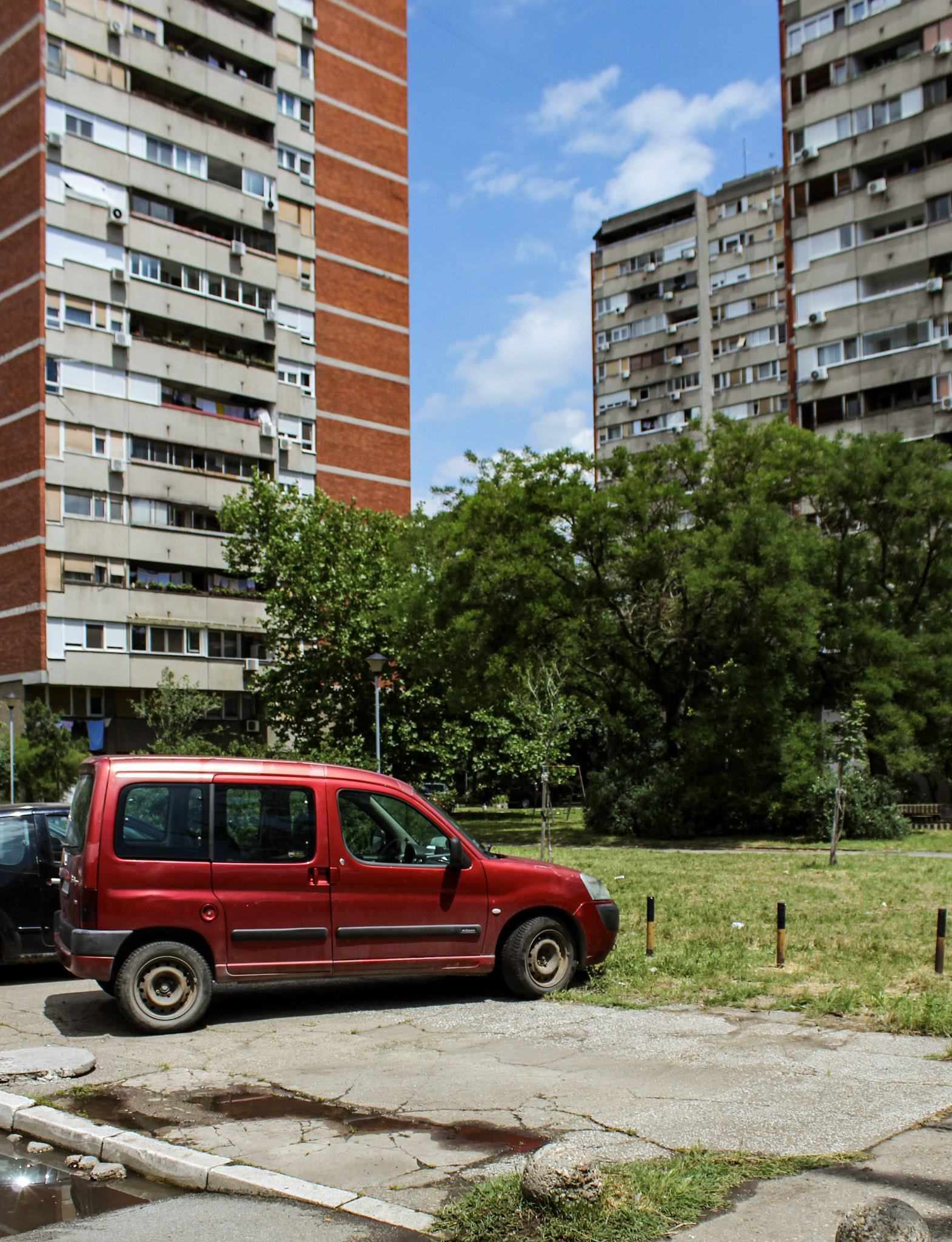
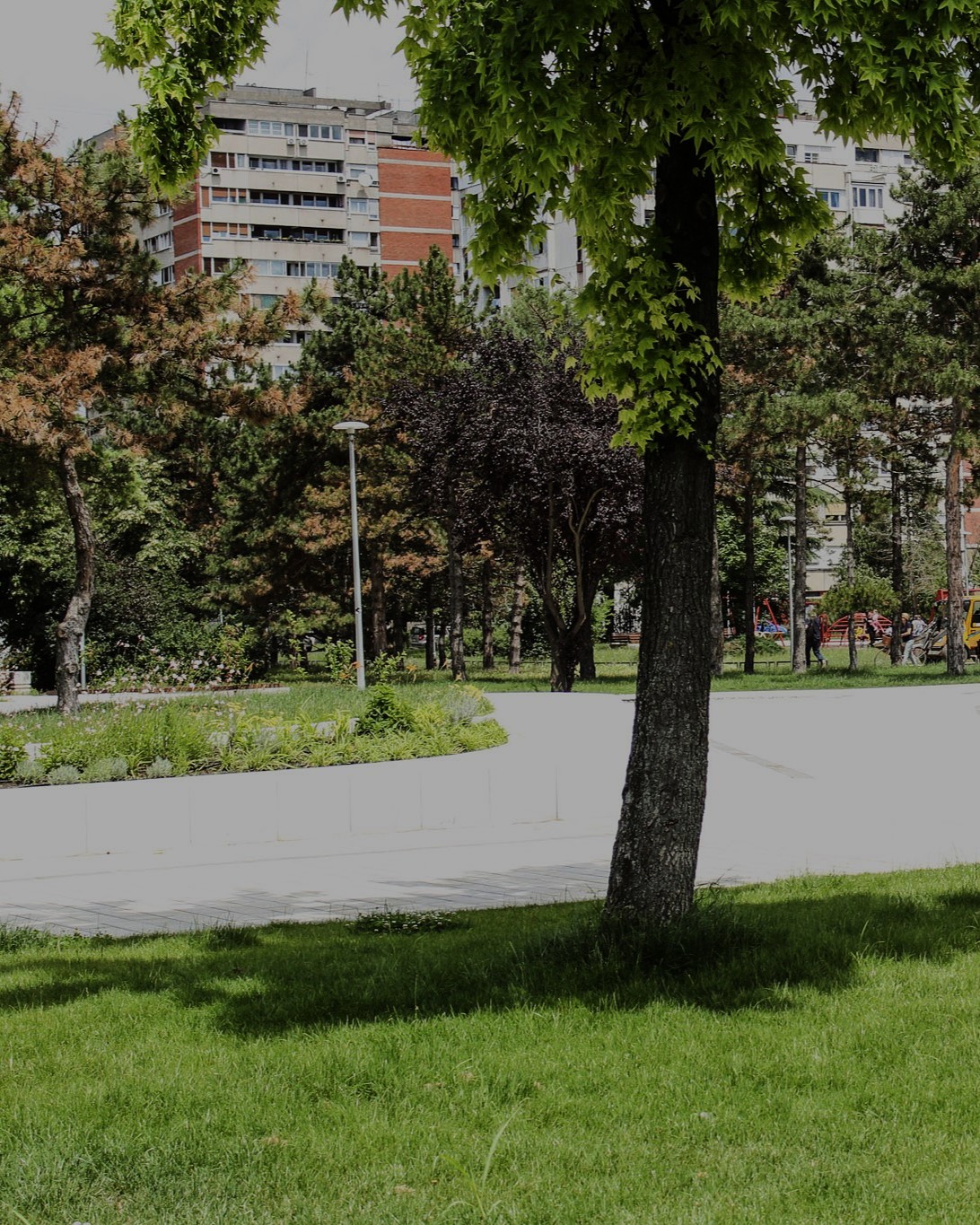
At first glance, Block 70 appears to share the same urban framework as Block 45. The layout of the buildings, housing types, and construction system are all similar, and the urban planners and architects behind it were the same.
Yet, Block 70 is a great example of how standardization doesn’t have to mean monotony. Built rapidly between 1973 and 1975, the area developed its own distinct character despite the uniformity of its plans.
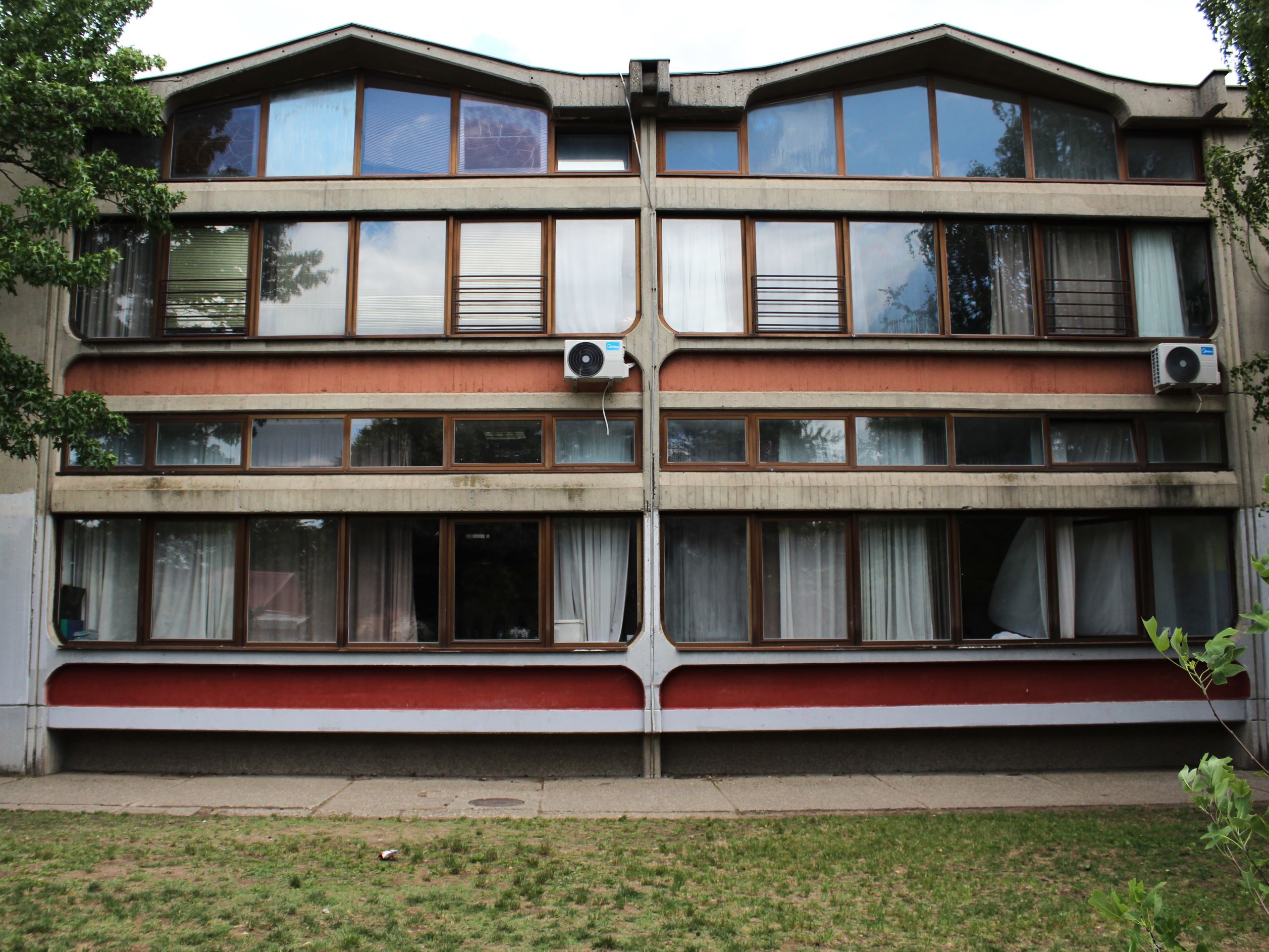
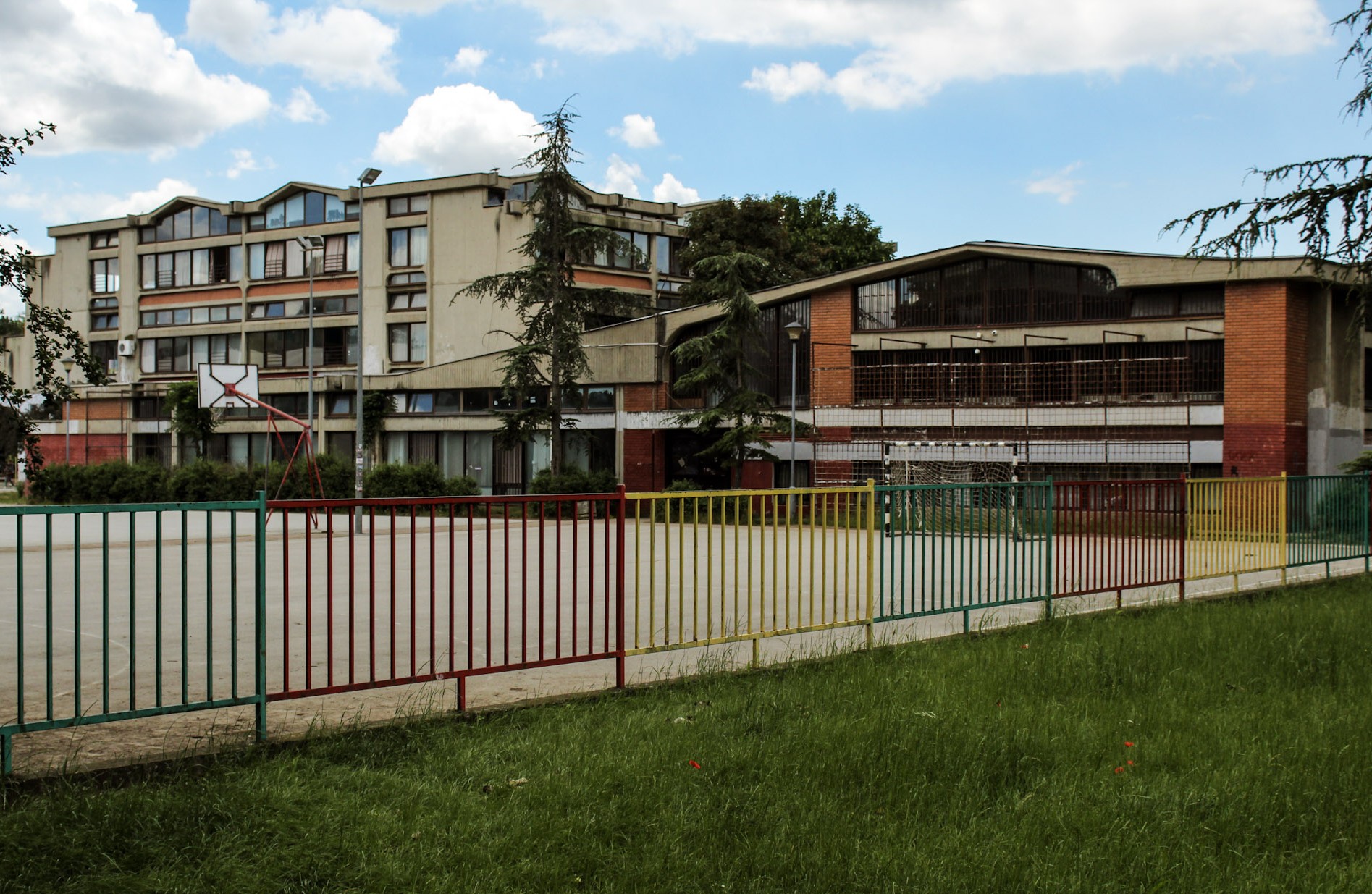
Schools and kindergartens weren’t just repeated as standard modules, they were designed as individual buildings, thoughtfully adapted to their specific locations within the block. The promenade also took on a unique character, evolving over time alongside the habits of the residents.
The block was part of the local community named “Brotherhood and Unity”, established in 1975. The community’s day was celebrated on October 20th.

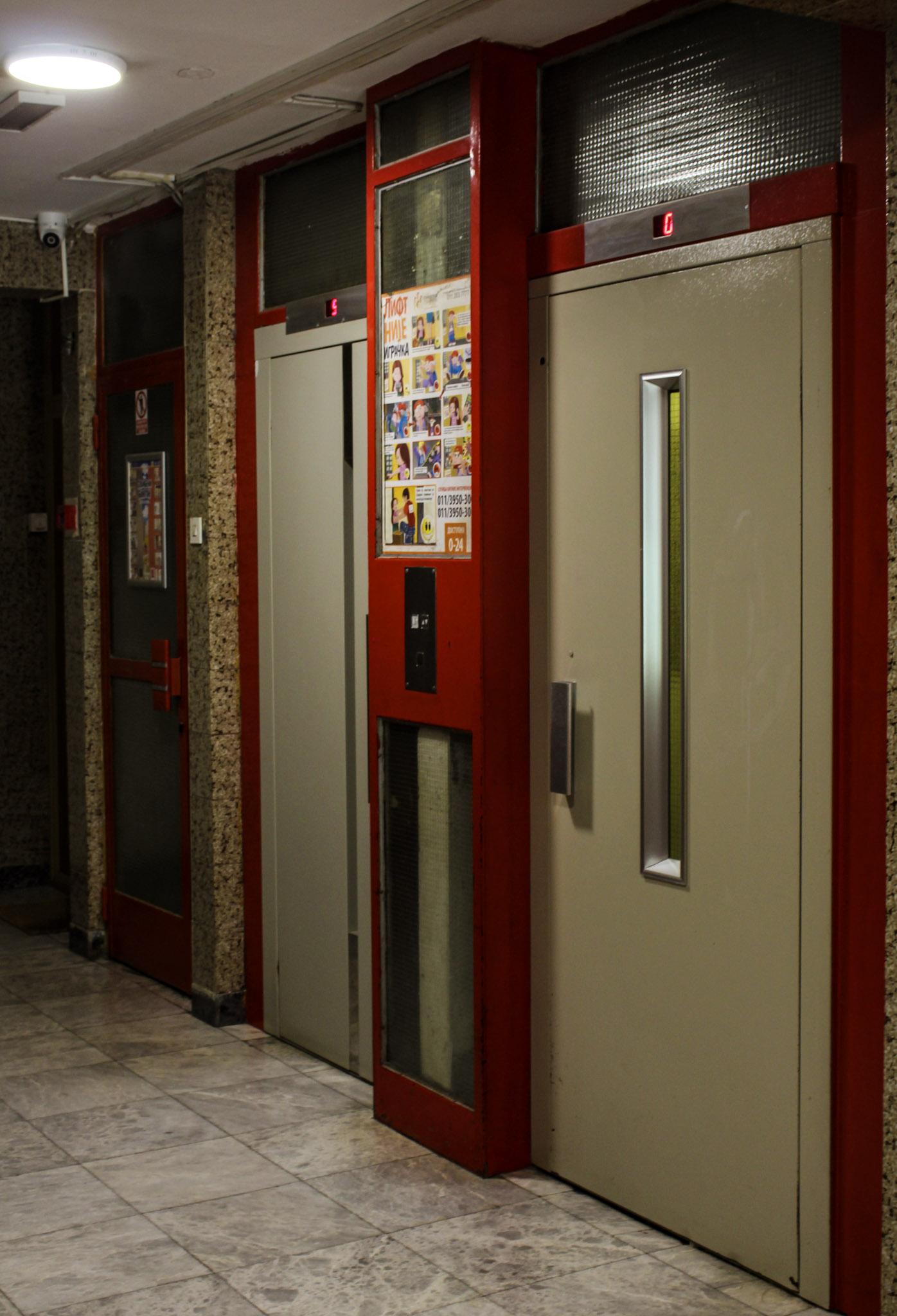
The urban planning unit of Block 70 was designed by architects Ivan Tepeš and Velimir Gredelj, who won the Yugoslav competition. The project executors were Jovan Mišković and Milutin Glavički. The residential high-rises were designed by architects Branko and Stana Aleksić (six-story buildings), Mihajlo Čanak (eight-story buildings), and Grgur Popović (buildings of 10 to 14 floors). All structures were constructed using the so-called IMS construction systems, based on a reinforced concrete prefabricated skeleton.
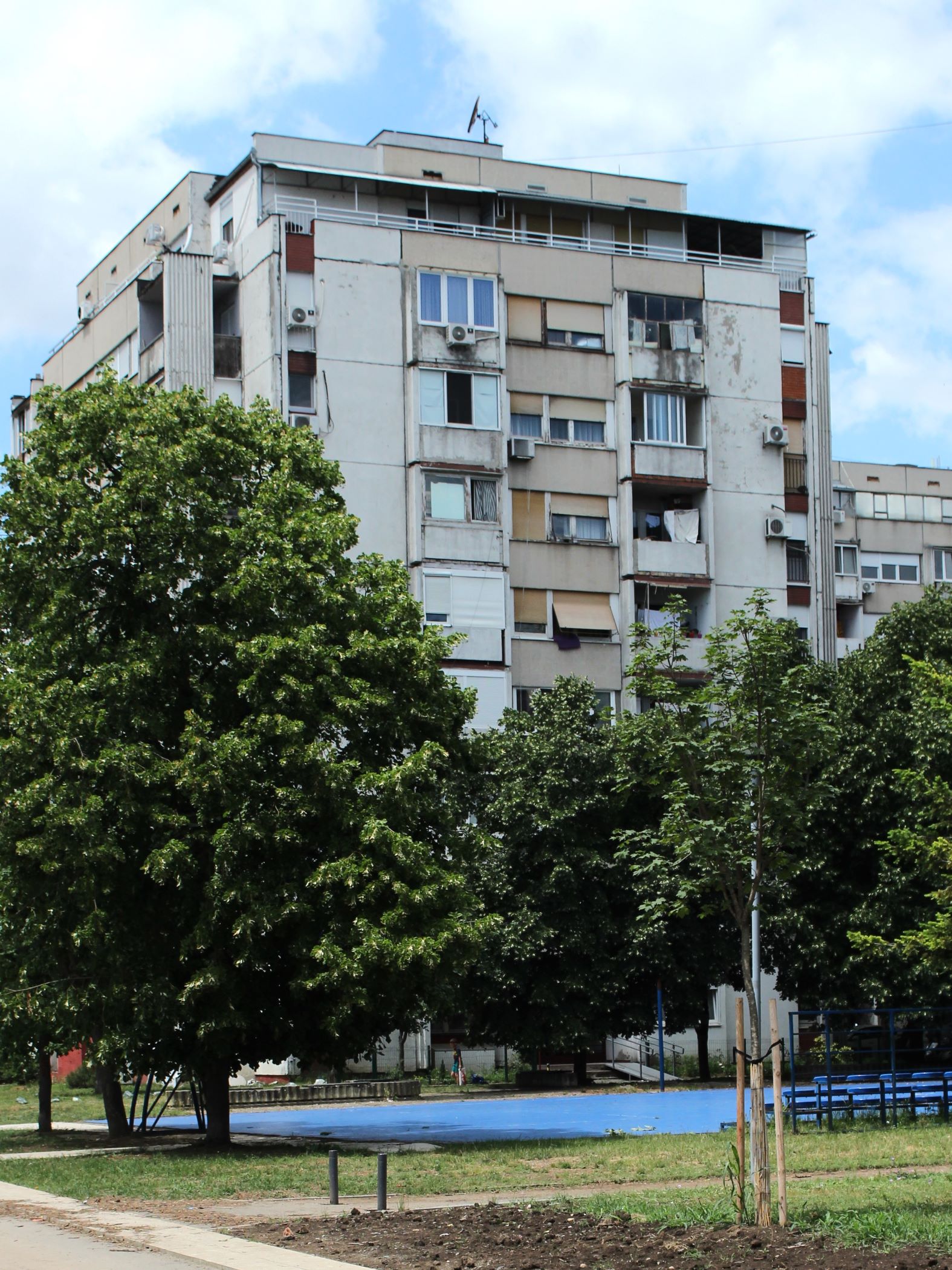
The rivalry between two similar blocks defined daily life in the 1970s. Block 70 was larger and built more quickly, but it was often seen as a kind of copy of Block 45. This similarity fueled competitiveness and a spirit of rivalry during the early urban history of both blocks.
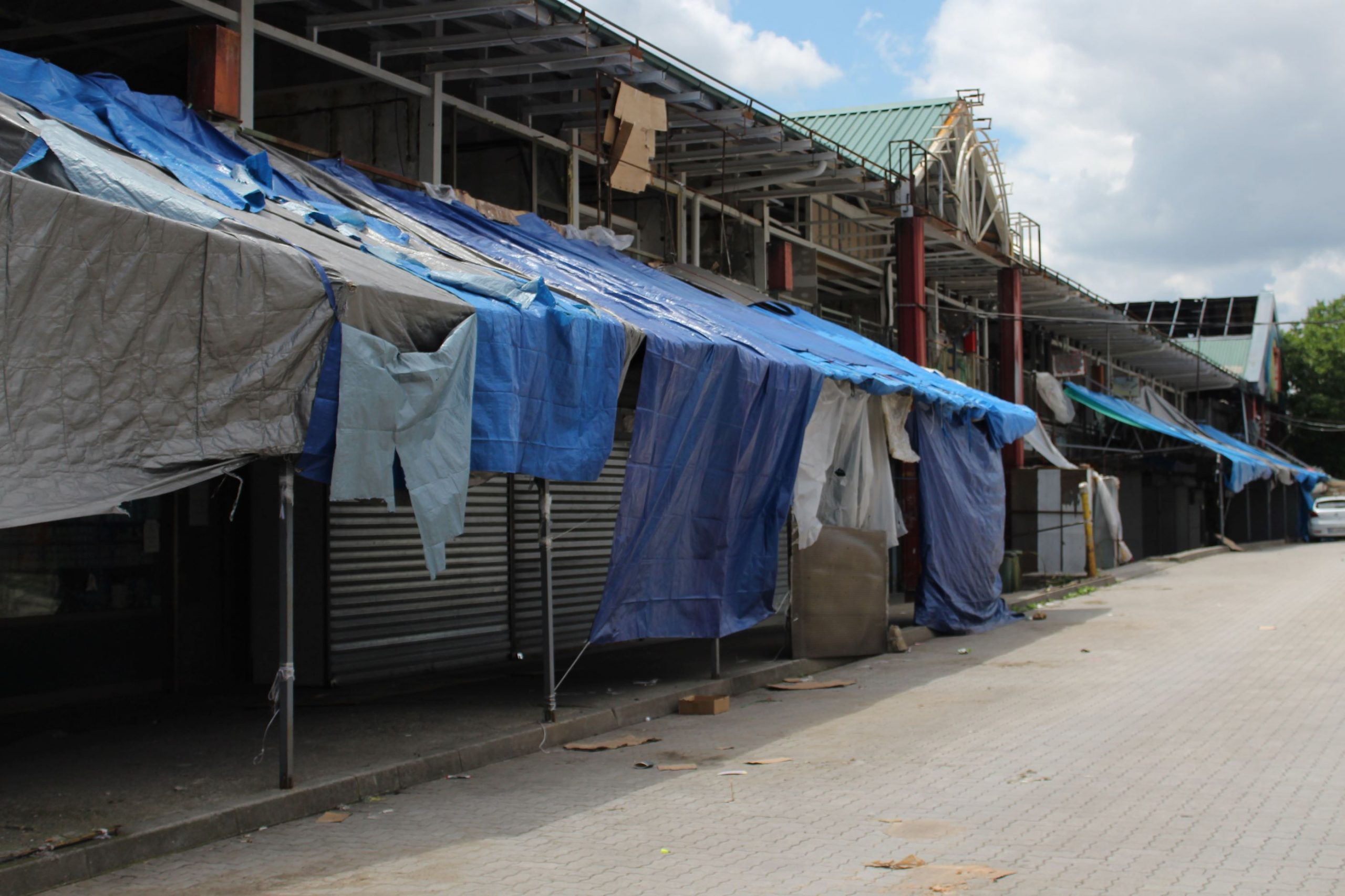
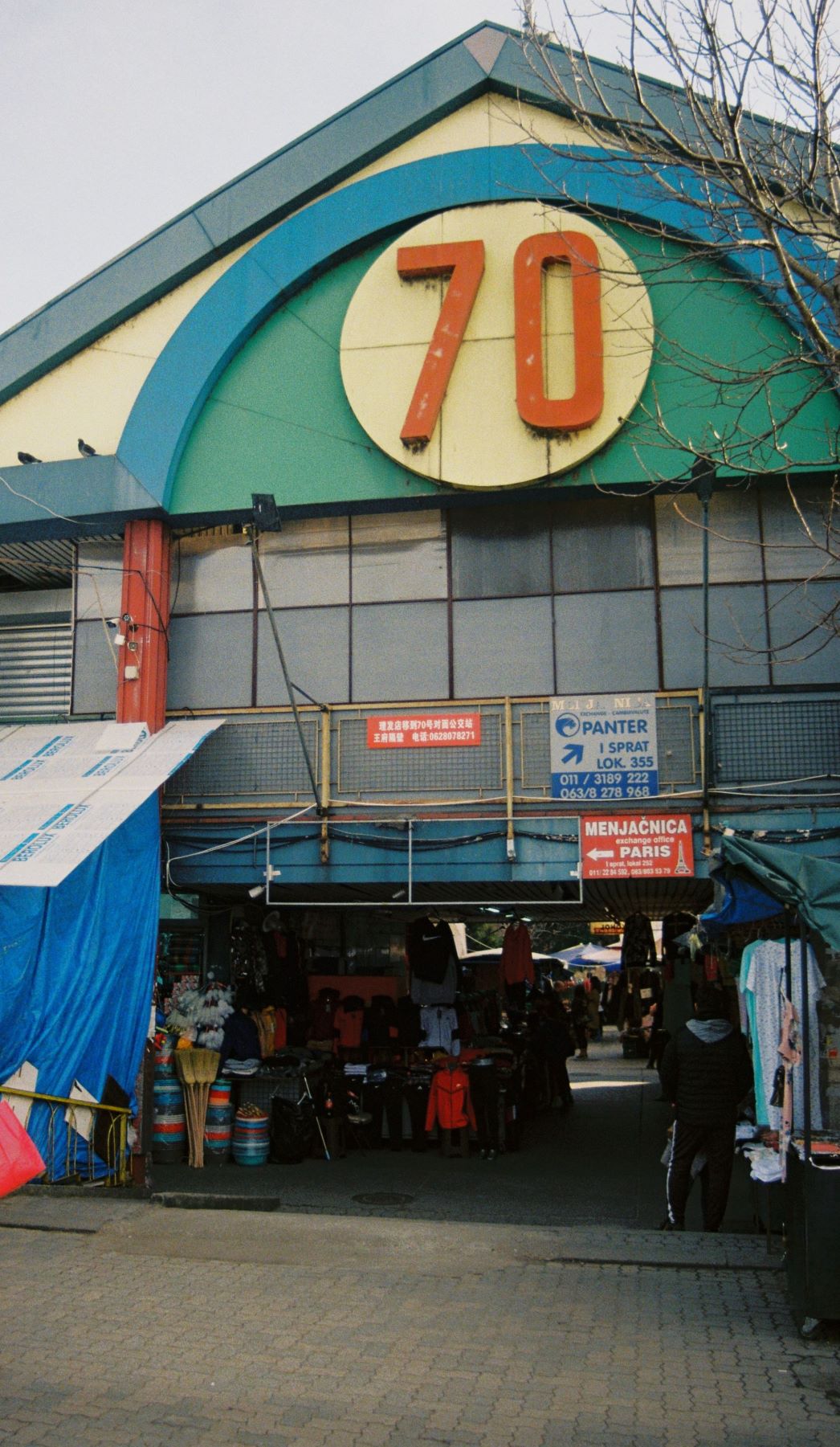
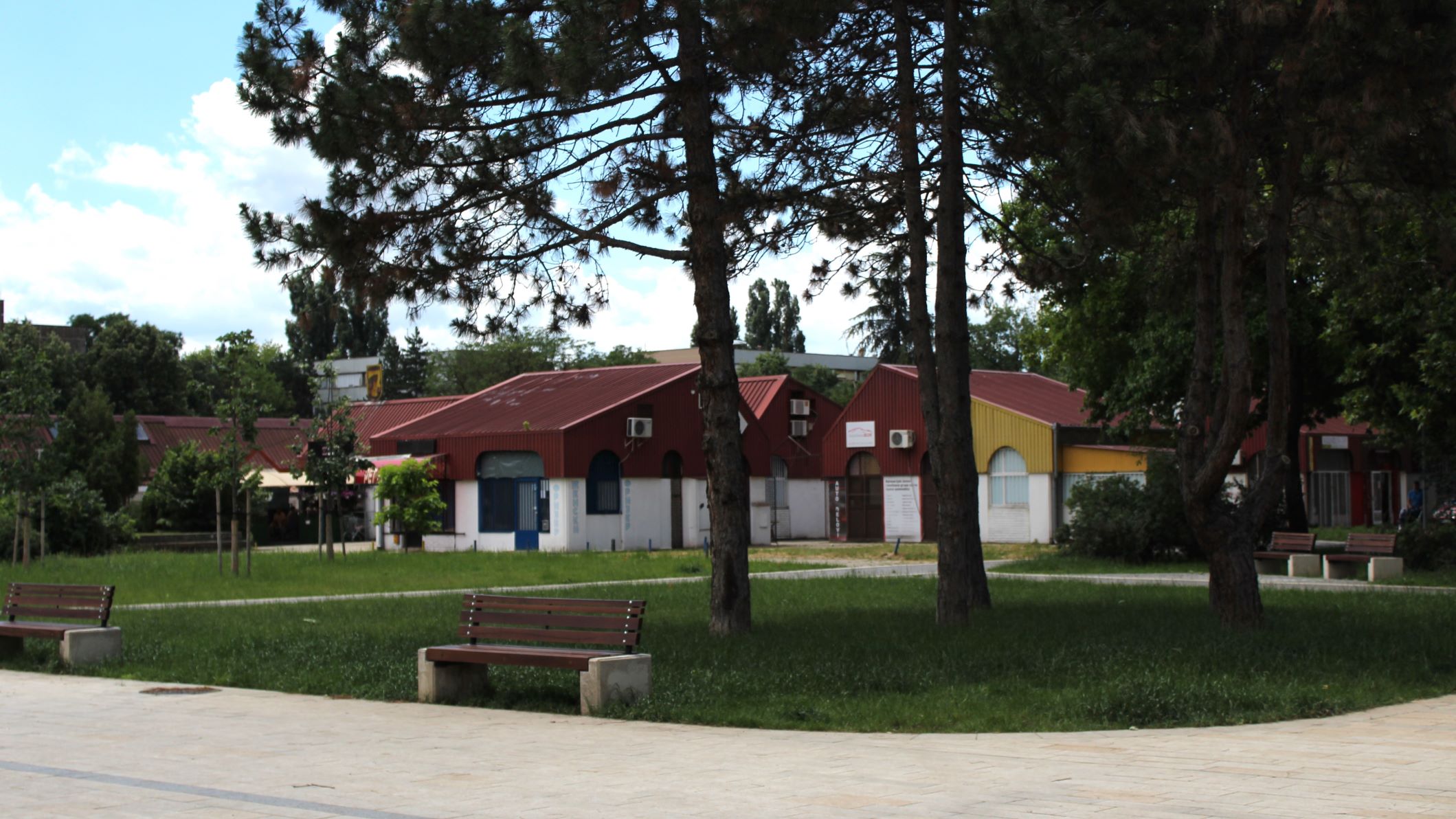
Over time, however, their shared heritage gradually diverged. In the 1990s, political decisions under Slobodan Milošević’s regime enabled the arrival of Chinese traders and the mass sale of low-cost goods, while Belgrade became a regional logistics hub for the distribution of Chinese products. The commercial zone in Block 70 thus became a symbol of new economic relations, but also of unregulated legal and urban frameworks, which over the years led to numerous problems, including several fires of unknown origin. The largest fire broke out on January 24, 2024, resulting in the permanent closure of all shops in the Chinese Market.
THE DESIGN
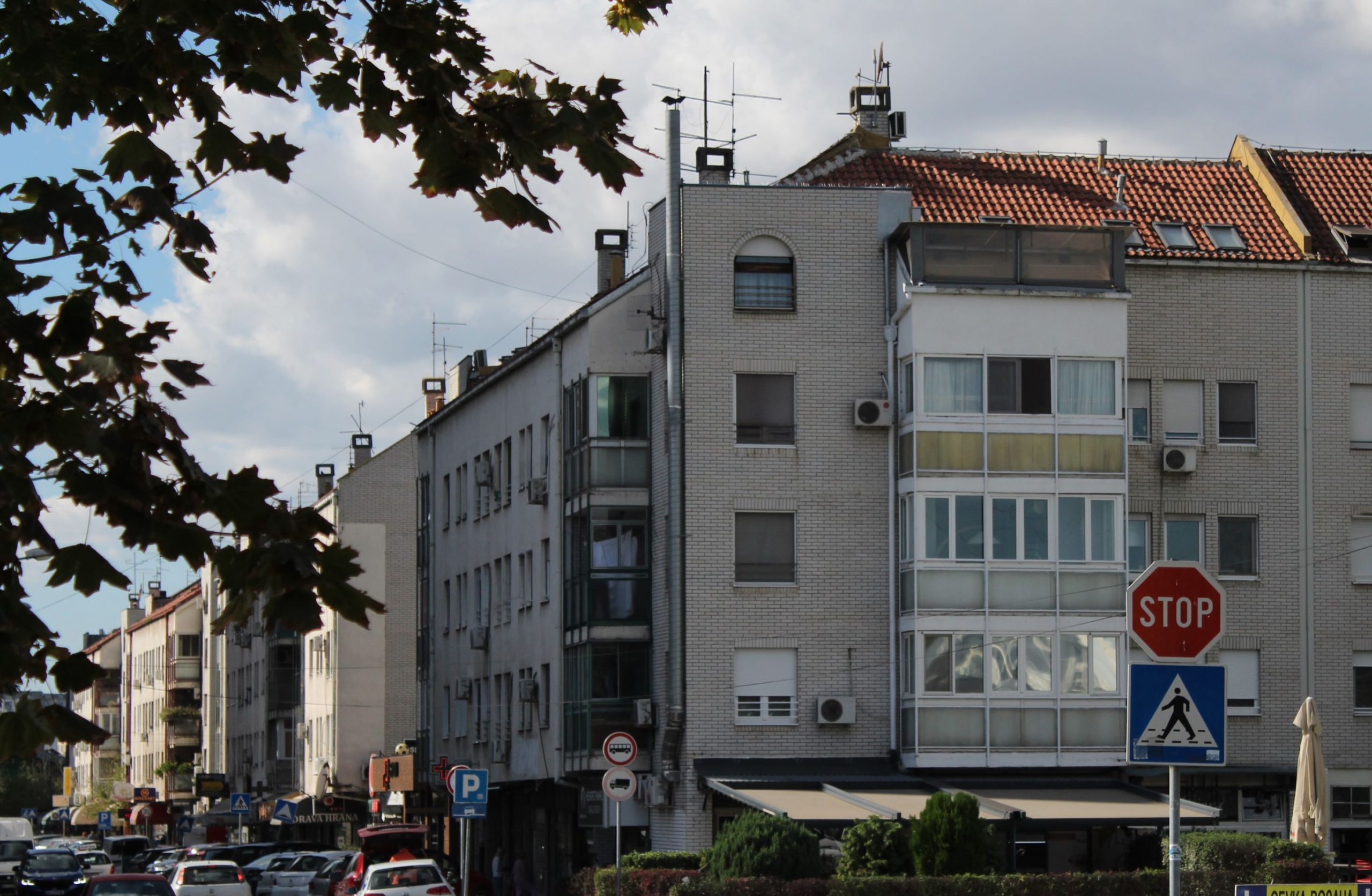
Block 70 is characterized by a strong brutalist architectural style, while in the 1990s, postmodernist elements were introduced along its edges, giving the block a layered and visually diverse identity. The central part of the block differs somewhat from Block 45, mainly due to the different layout of the school and kindergarten.
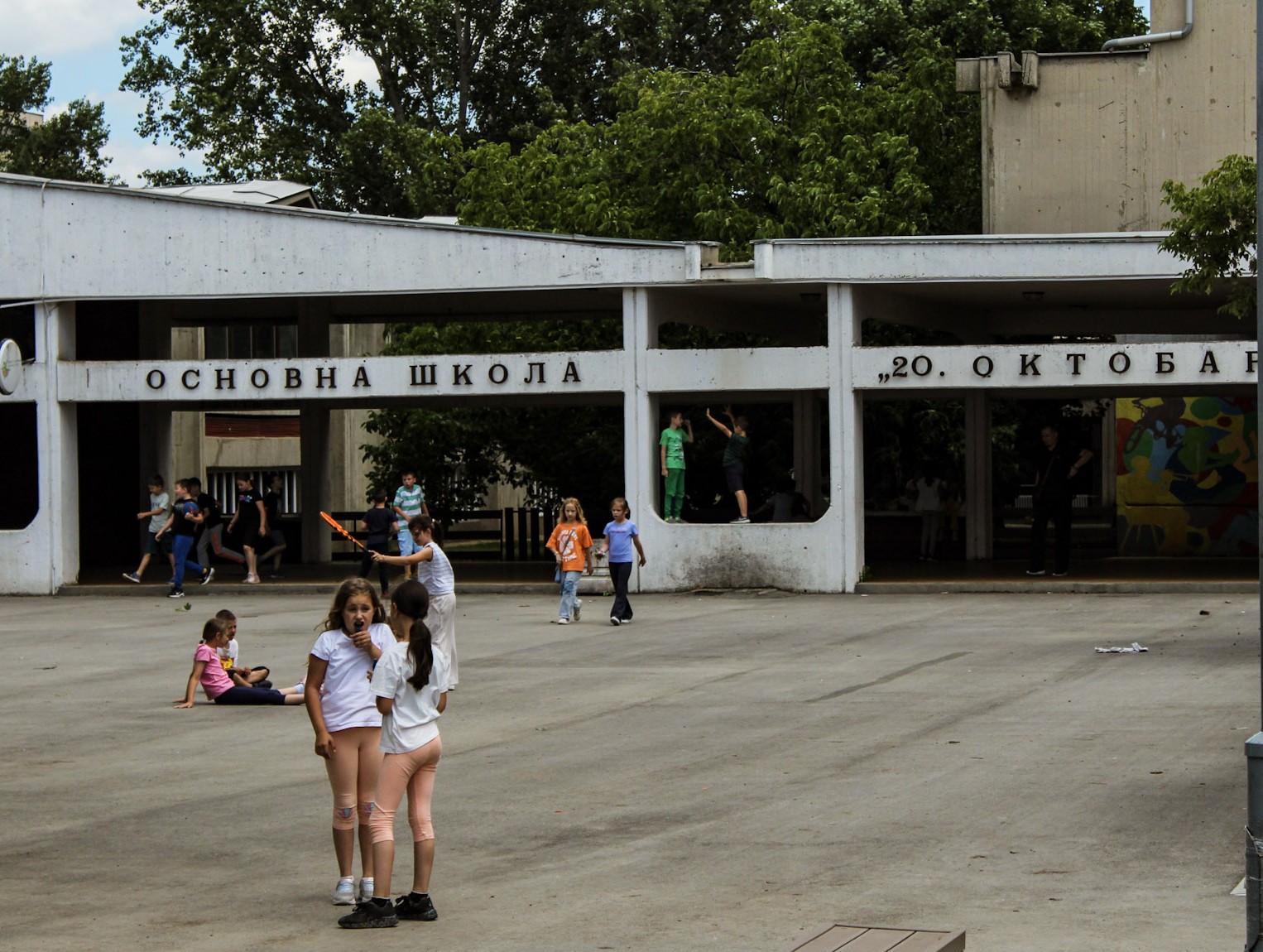
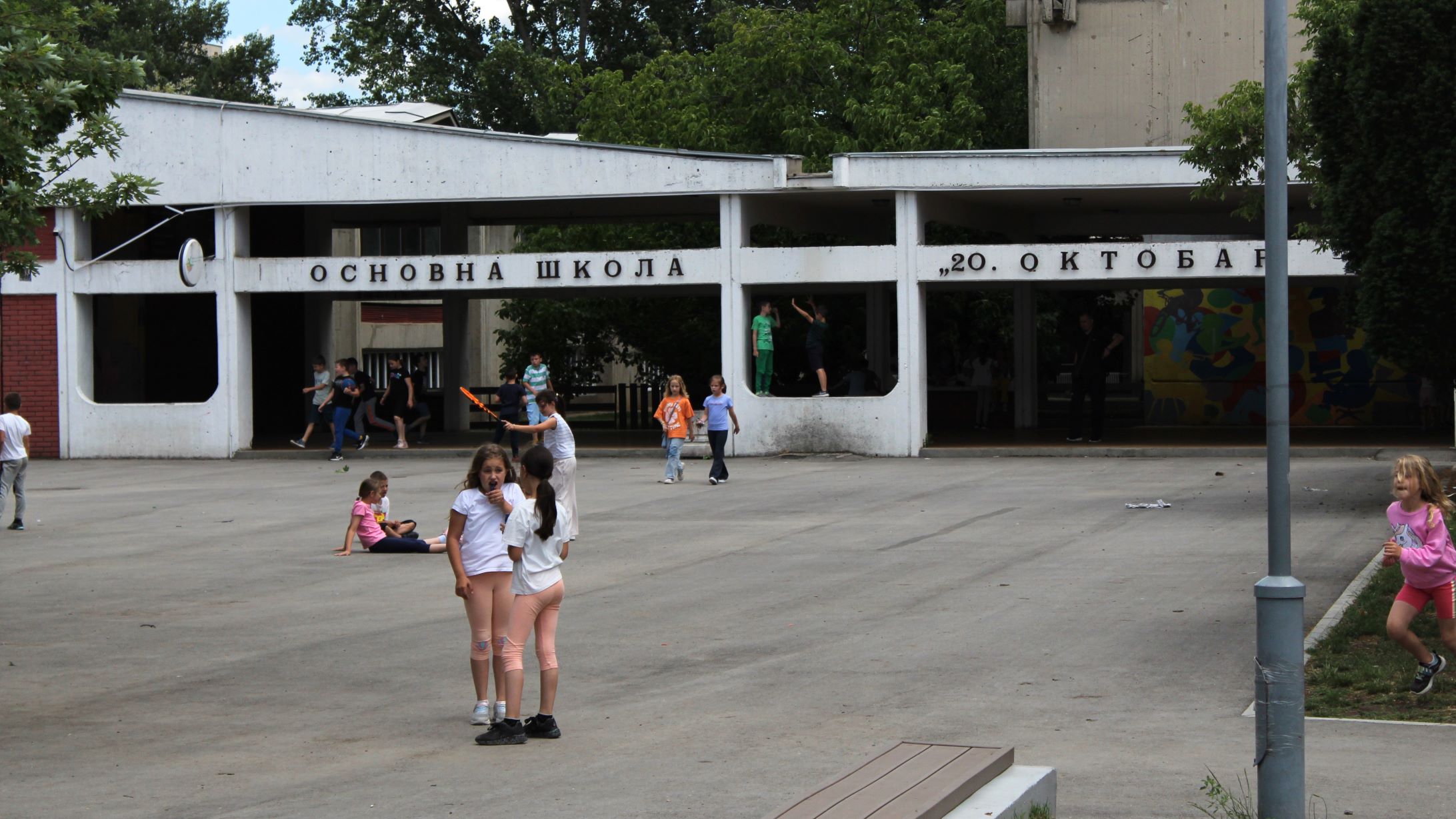
The “20. oktobar” School, opened in 1976, had 70 classes, making it one of the largest schools in the Balkans, with nearly 2,400 students. Nearby, the “Lane” Kindergarten was built, and the urban plan originally called for an additional school and two more kindergartens.

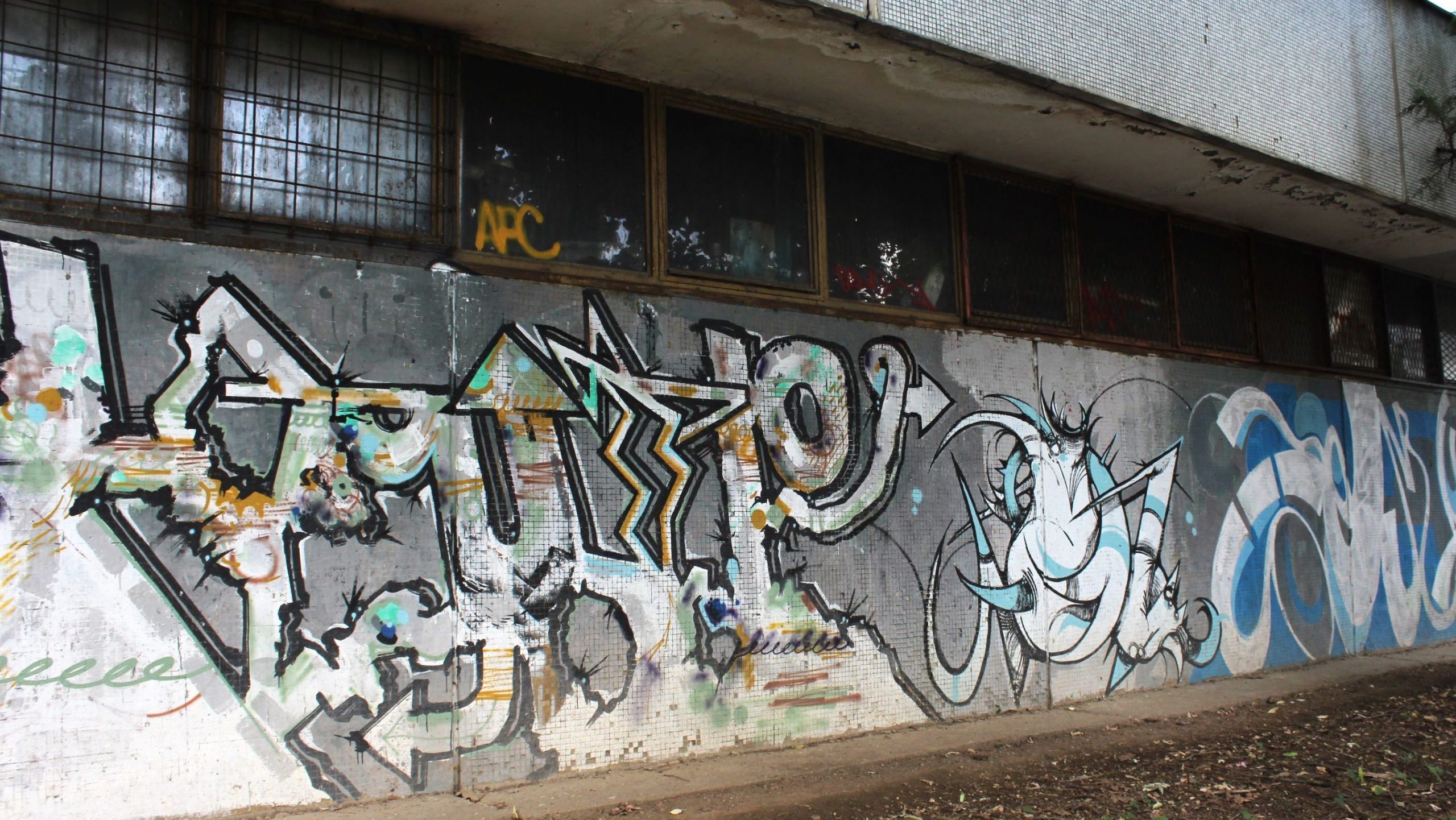
Although today Block 70 is often recognized as the “Chinese Quarter”, in the 1990s it was known as one of the hubs of Belgrade’s hip-hop scene, while also being home to numerous famous basketball players. This combination of urban culture and sports strongly shaped the spirit of the block and left a lasting mark on its identity.