

Historical events that had taken place in the late 14th and early 15th century greatly altered the political circumstances in the Balkans, especially following the defeat of the Ottoman army at the battle of Angora in 1402. The defeat and captivity of Sultan Bayezid I caused a political crisis in the Ottoman Empire. Those historical circumstances went in favor of Prince Stefan Lazarević, the ruler of Moravian Serbia, who was honored with the title of Despot by the Byzantine emperor. Despot was the highest rank one could be awarded other than emperor, so the act of awarding such a high honor was of great political significance.


Hungarian King Sigismund was persuaded to forge an agreement with the Serbian monarch, aiming to safeguard Hungary’s borders against Ottoman incursions. As part of this arrangement, the Despot assumed control of Belgrade while accepting vassal obligations to the Hungarian Kingdom. Although direct records are scarce, historians believe this agreement was reached around 1403–1404.
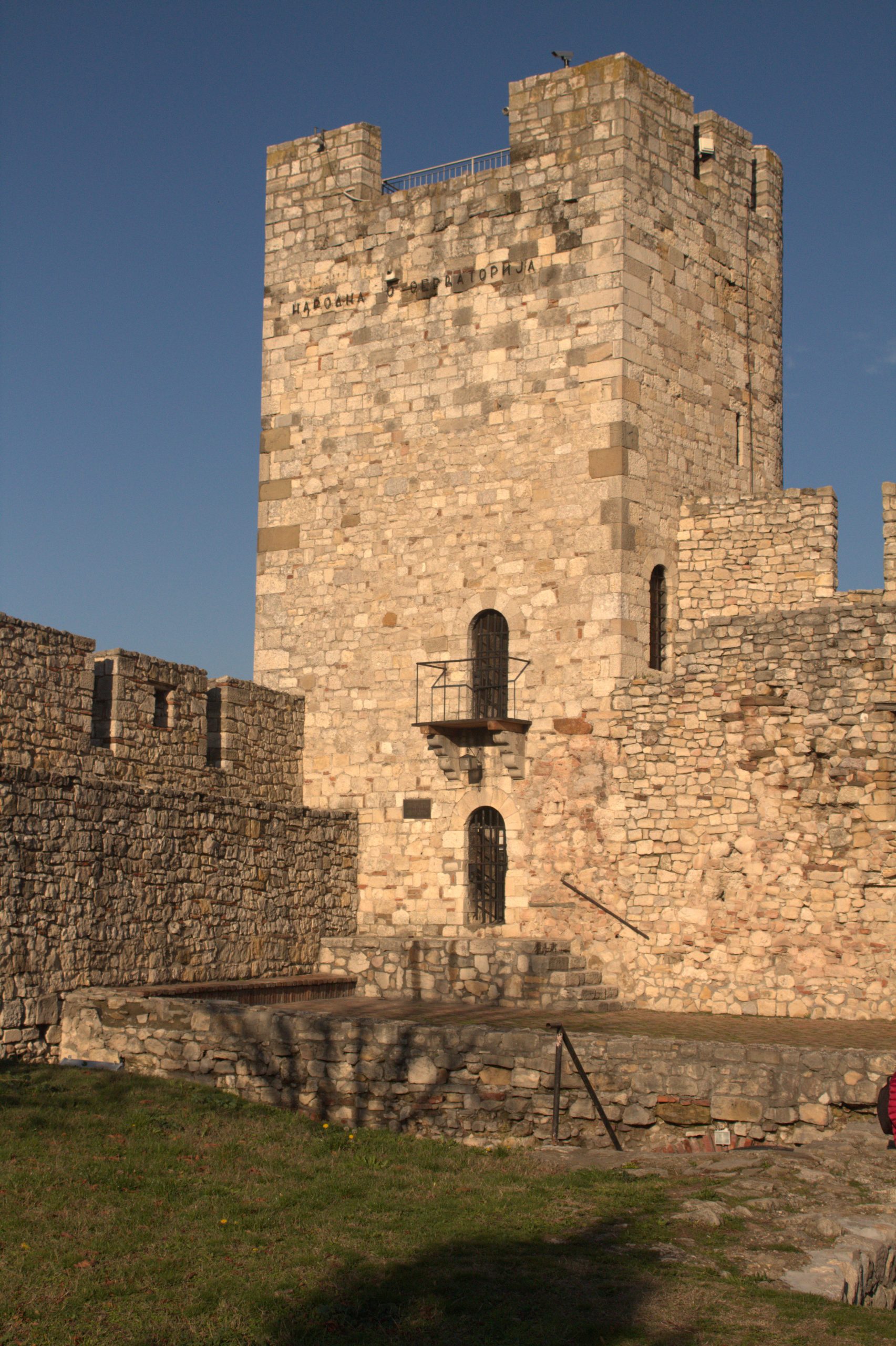
In the Upper Town, Despot Stefan’s court stood out, and nearby was the original Nebojša Tower, which no longer exists. It occupied an area close to today’s Defterdar Gate and the Mehmed Paša Sokolović Fountain. The despot’s treasury was also located in the Upper Town, probably near the court.
In the Lower Town, there was a large urban settlement with houses of merchants, artisans, and residents of Belgrade. There were several churches, the largest being the Church of the Assumption of the Virgin, which was originally located in the area where the Ružica Church stands today. Other notable buildings included a hospital and a guesthouse for foreigners. The river port was on the Danube, on the northern side, in the area of today’s Nebojša Tower.
During the Ottoman siege, the city was destroyed by fire, and after their conquest, Belgrade became a typical oriental town with narrow, winding streets. Only the Belgrade Fortress managed to preserve part of its urban structure.
Stefan’s appreciation for art and literature was reflected in his poetic works, the creation of the court library, encouragement of monastic scriptoria, and the cultural elevation of the state.

Stefan Lazarević (1377-1427) was a Serbian medieval ruler, poet, legislator, warrior, patron, and saint of the Serbian Orthodox Church. He was the son of Prince Lazar, who perished in the Battle of Kosovo in 1389 (near the city of Priština) fighting against the Ottoman forces opposing their conquest of Serbian lands. In the early 15th century, Despot Stefan stabilized Serbia through political manoeuvring and reforms, earning the title of despot from the Byzantine emperor. The Hungarian king made him the knight and granted him lands, including Belgrade, which became Serbia’s capital for the first time. After his death, Serbia existed in independent or semi-dependent status for another three decades before falling under Ottoman rule. Stefan’s inclination towards art and literature was reflected in his poetic works, creation of a court library, incitement of monastic scriptoriums, and cultural rise in the state.The strong connection between Despot Stefan and the Serbian Orthodox Church is exemplified his canonization as a saint in 1927.
The reign of Stefan Lazarević is deeply connected with the legacy of his father and the Battle of Kosovo, which became important for the affirmation of Serbian national identity. In Serbian tradition, the battle is often depicted as a decisive conflict between Christianity and Islam, a sacrifice for the faith, and a struggle between good and evil. This narrative developed strong cults of national martyrdom, which were later utilized for political purposes, especially during the commemoration of the 600th anniversary of the battle in 1989.
In recent years, Serbian authorities have increasingly emphasized the Battle of Kosovo, its legacy, and key historical figures in national memory. Numerous monuments to medieval rulers have been erected to assert historical continuity and Serbian “historical” rights, as well as to raise awareness of the status of the Serbian population in Kosovo and Metohija.
These monuments symbolize the idea of reclaiming the “temporarily lost” territories of Kosovo and Metohija, positioning Despot Stefan as the heir who will avenge his father’s death and restore full authority over the Serbian state in the southern province.

In recent years, amid stuck political negotiations and unresolved ethnic tensions in Kosovo* Serbian state authorities have increasingly emphasized the Battle of Kosovo and its legacy and key historical figures in national recollection. Monuments to medieval rulers like Stefan Lazarević have been erected to assert historical continuity and the Serbian “historical” rights and raise awareness about the status of the Serbian population in seceded province of Kosovo and Metohija. These monuments symbolize the idea of reclaiming the “temporarily lost” territories of Kosovo and Metohija, positioning Despot Stefan as the successor who will avenge his father’s death and restore full control of Serbian state in its southern province.

There are currently two statues dedicated to Despot Stefan Lazarević in Belgrade. The first is the Despot Stefan Monument located at Kalemegdan, created by sculptor Nebojša Mitrić and unveiled in 1982. The second is the Stefan Lazarević Statue in Belgrade, created by sculptor Svetomir Arsić-Basara and erected in 2021.