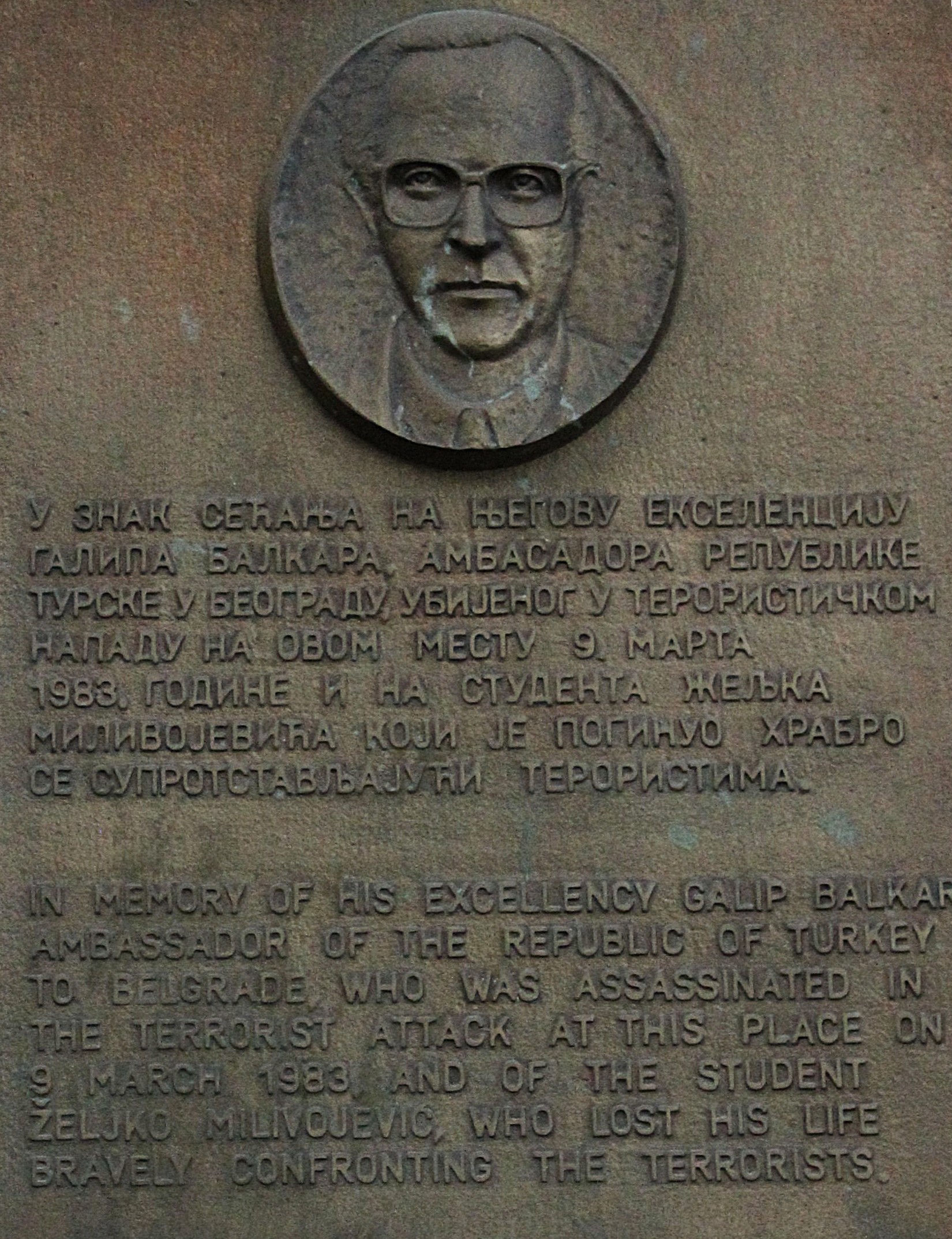
On 9 March 1983, at the corner of present-day Resavska Street and King Aleksandar Boulevard, the only act of international terrorism in socialist Yugoslavia took place, resulting in the death of Turkish Ambassador Galip Balkar.
On that day, two young Armenians, Harutiun Kirkor Levonian and Aleksandar Rafi Elbekian, opened fire on the official vehicle carrying the Ambassador of the Republic of Turkey to Yugoslavia. The ambassador was seriously wounded in the attack, while his driver also sustained injuries. Balkar died two days later as a result of his wounds.
Following the assassination attempt, the attackers tried to flee, but were courageously confronted by passers-by and eyewitnesses. Several people were injured in the ensuing chaos. Retired army colonel Slobodan Brajović attempted to overpower one of the assailants, while Željko Milivojević, an engineering student from Inđija, was killed while trying to prevent the escape of the other attacker.
During his flight, Levonian ran along the boulevard toward Tašmajdan, where he was eventually subdued after being seriously wounded. Elbekian was arrested later the same day. Both men were subsequently sentenced to lengthy prison terms.
The assassination formed part of a broader wave of attacks against Turkish diplomats around the world during the 1970s and 1980s. Responsibility for such attacks was claimed by Armenian militant organisations ASALA (Armenian Secret Army for the Liberation of Armenia) and JCAG (Justice Commandos of the Armenian Genocide), which sought international recognition of the suffering of Armenians in the Ottoman Empire during the First World War.
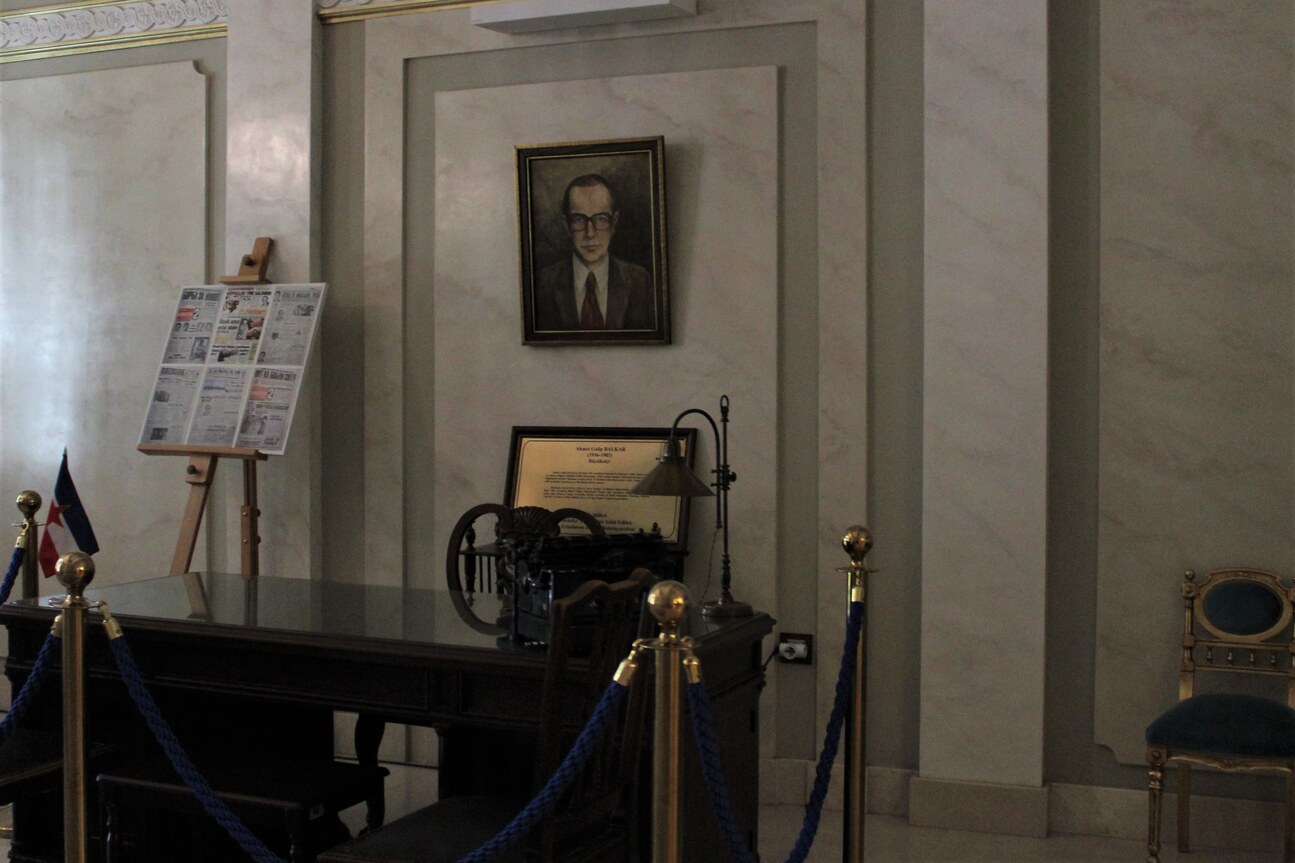
A memorial plaque dedicated to Galip Balkar was unveiled at the site of the attack in October 2019, commemorating an event that left a lasting mark on the history of Belgrade. Within the Embassy of the Republic of Turkey, part of one of the representative reception rooms is dedicated to the memory of the ambassador.