THE HISTORY
The idea of building a church in Dorćol emerged just before the Serbo-Turkish Wars of 1876–1878, at a time when Serbia was on high alert and seeking the support of the great powers. The arrival of Russian volunteers had both military and symbolic significance: it expressed Pan-Slavic and Pan-Orthodox solidarity and provided moral and logistical support to the small Serbian army, which was significantly weaker than the Ottoman forces. Although the First Serbo-Turkish War did not end in victory, the presence of Russian officers, soldiers, and medical personnel strengthened Serbia’s international position.
In 1876, along with the Russian volunteer corps led by General Černjajev, a mobile Russian military church—a cast-iron chapel dedicated to Saint Alexander Nevsky—arrived in Belgrade. The chapel was used for worship services, funerals of fallen soldiers, and other religious rites, and its location moved according to the course of the war. The iconostasis with icons, painted by the Russian artist A. Kolchin in 1876, has been preserved and is still kept today at the Rajinovac Monastery near Grocka.
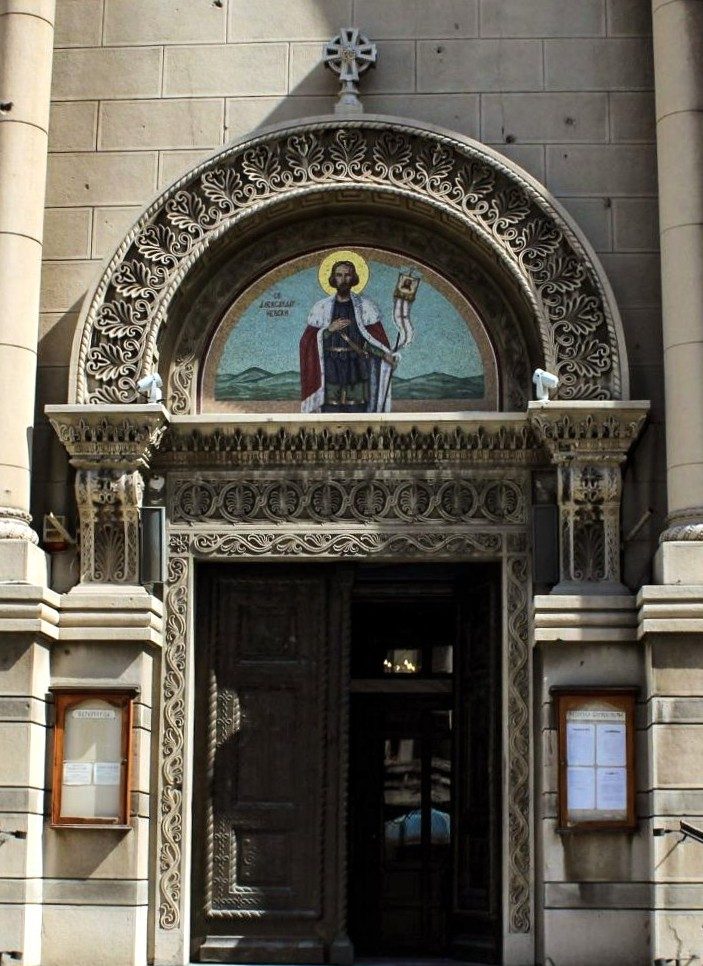
The cult of Alexander Nevsky emerged within the framework of Russian medieval tradition, yet from its inception it carried a strong political and ideological dimension. As a thirteenth-century prince and military leader, Nevsky was depicted in historical and religious narratives as a defender of Orthodoxy and a pillar of state order, a role further reinforced by his canonization in the sixteenth century. From the reign of Peter the Great onward, the cult of Alexander Nevsky was systematically employed to affirm the continuity of Russian state power. This interpretation endured into the Soviet period, when Nevsky was reappropriated as a symbol of patriotism and resistance to foreign enemies.
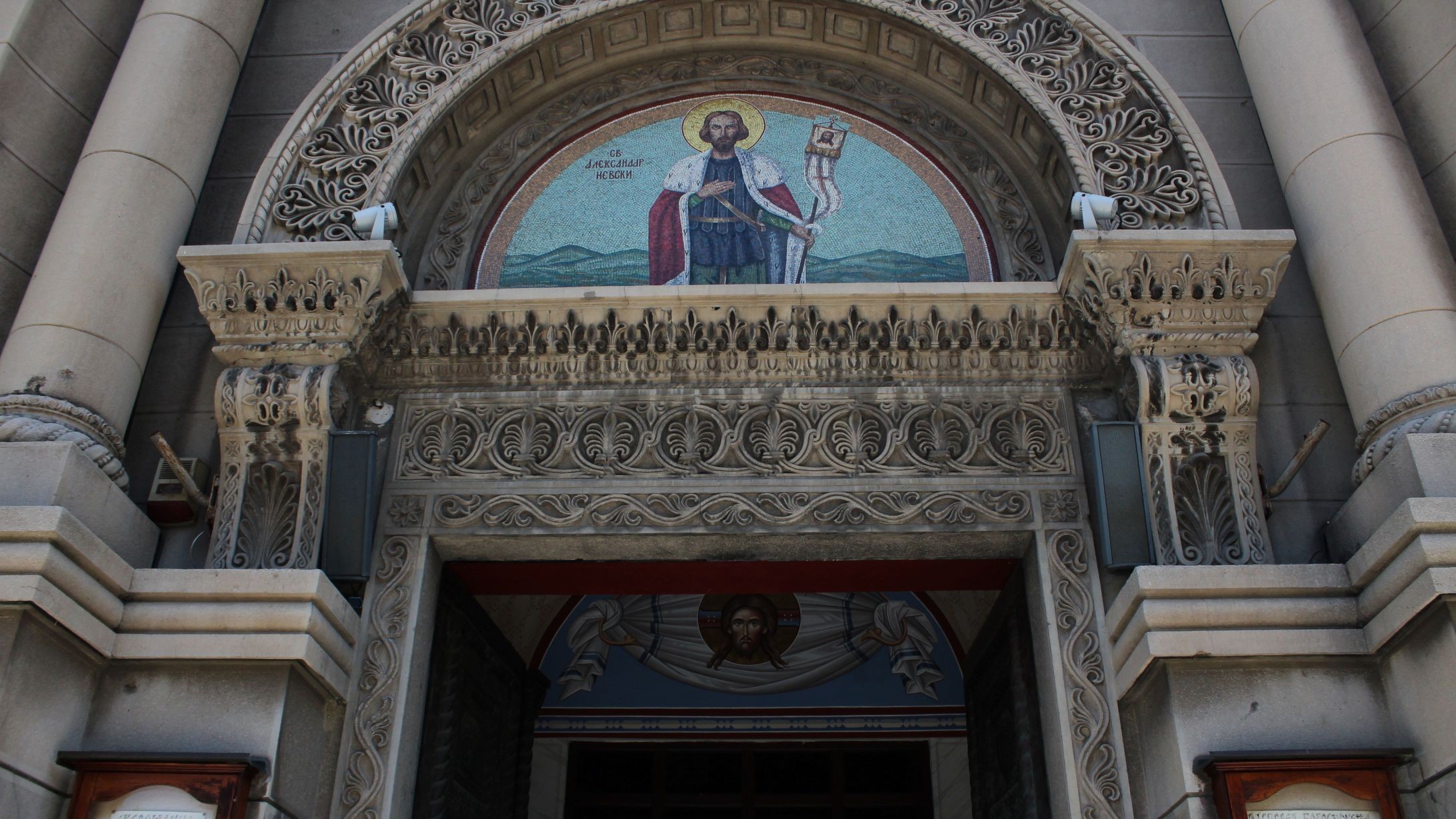
In the Serbian context, Alexander Nevsky has no direct historical connection; rather, his cult was cultivated within the Pan-Slavic and Pan-Orthodox ideas of the 19th and 20th centuries. The Church of Saint Alexander Nevsky in Belgrade reflects that Nevsky’s figure symbolized the spiritual and historical closeness of Serbia and Russia, embodying the protective role that Russia historically played in Serbian affairs.

As Dorćol expanded and the Orthodox population grew, a citizens’ committee was formed that same year to build a permanent church. The Belgrade municipality allocated land on the site of a former mosque, between today’s Cara Dušana, Dubrovačka, and Skenderbegova streets. The first modest Church of Saint Alexander Nevsky was completed in 1877 and consecrated on October 1, using liturgical items from the Russian chapel.
This church served the Dorćol faithful until 1891, when it was demolished to make way for an elementary school, with the municipality promising to build a new church. Church items were temporarily stored in the Cathedral Church, while services were held in the chapel at the House of Saint Sava and later in a school at the Danube end.
In 1892–1893, the municipality purchased a new plot and began construction based on a design by architect Mihailo Milovanović, in the Serbian-Byzantine style. However, due to problems with underground water and foundation cracking, construction was halted, and the plot was eventually sold. A private one-story house was later built on the site, which still stands today, oriented eastward with a rounded section reminiscent of a church apse.
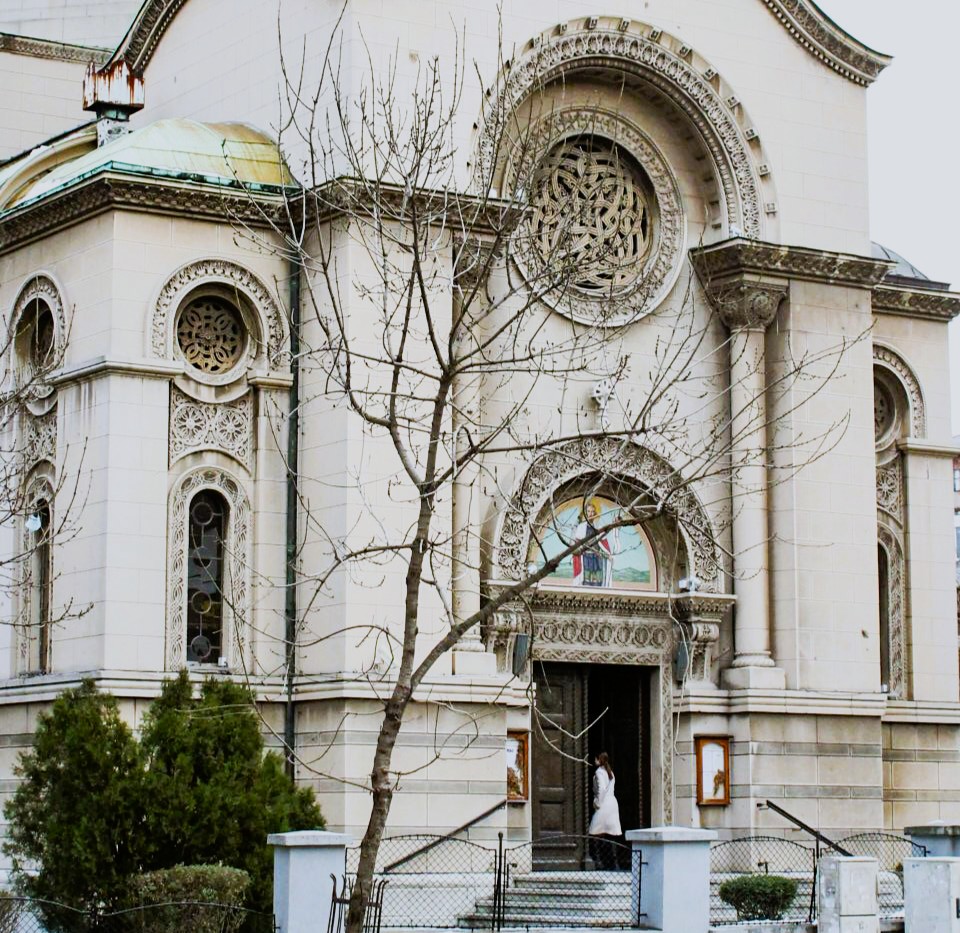
A new plot was subsequently acquired at the location where the Church of Saint Alexander Nevsky now stands. The design for the new church was created by Jelisaveta Načić, the first female architect in Serbia and the architect of the Belgrade municipality, marking the conclusion of a long and complex process of planning and finding a permanent site for the church in Dorćol.
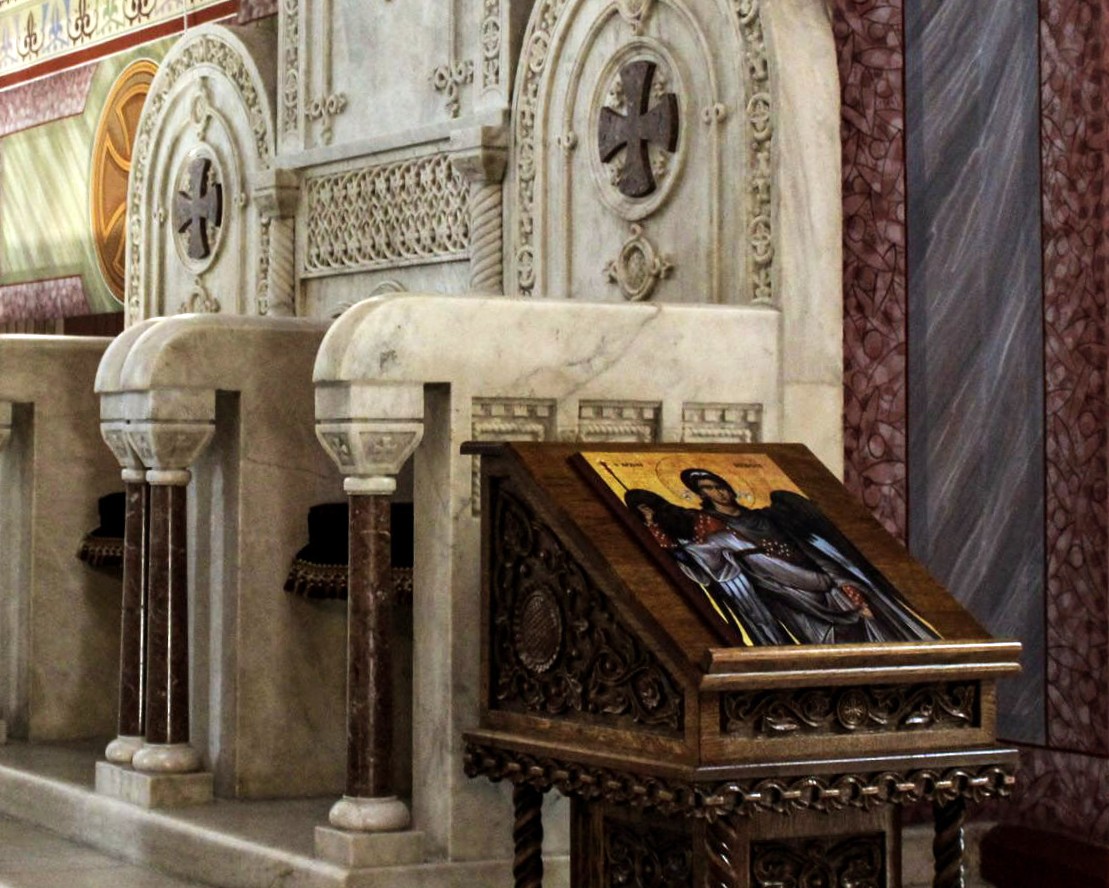
Construction was again delayed due to the outbreak of the war with Turkey in 1912. Work resumed in 1927, with some modifications to Načić’s original design made by architects Pera Popović and Vasilije Androsov. These changes mainly involved technical improvements, materials, and richer decoration of the facades and interior. That same year, the church received a gift of a marble iconostasis, two altars, and an ambo from the church at Oplenac, made of white Venčac marble. In 1928, the church was built up and roofed; in 1929, the remaining construction work was completed; and in 1930, the iconostasis and bells were installed, a marble floor was laid, the walls were painted, and the churchyard was arranged.
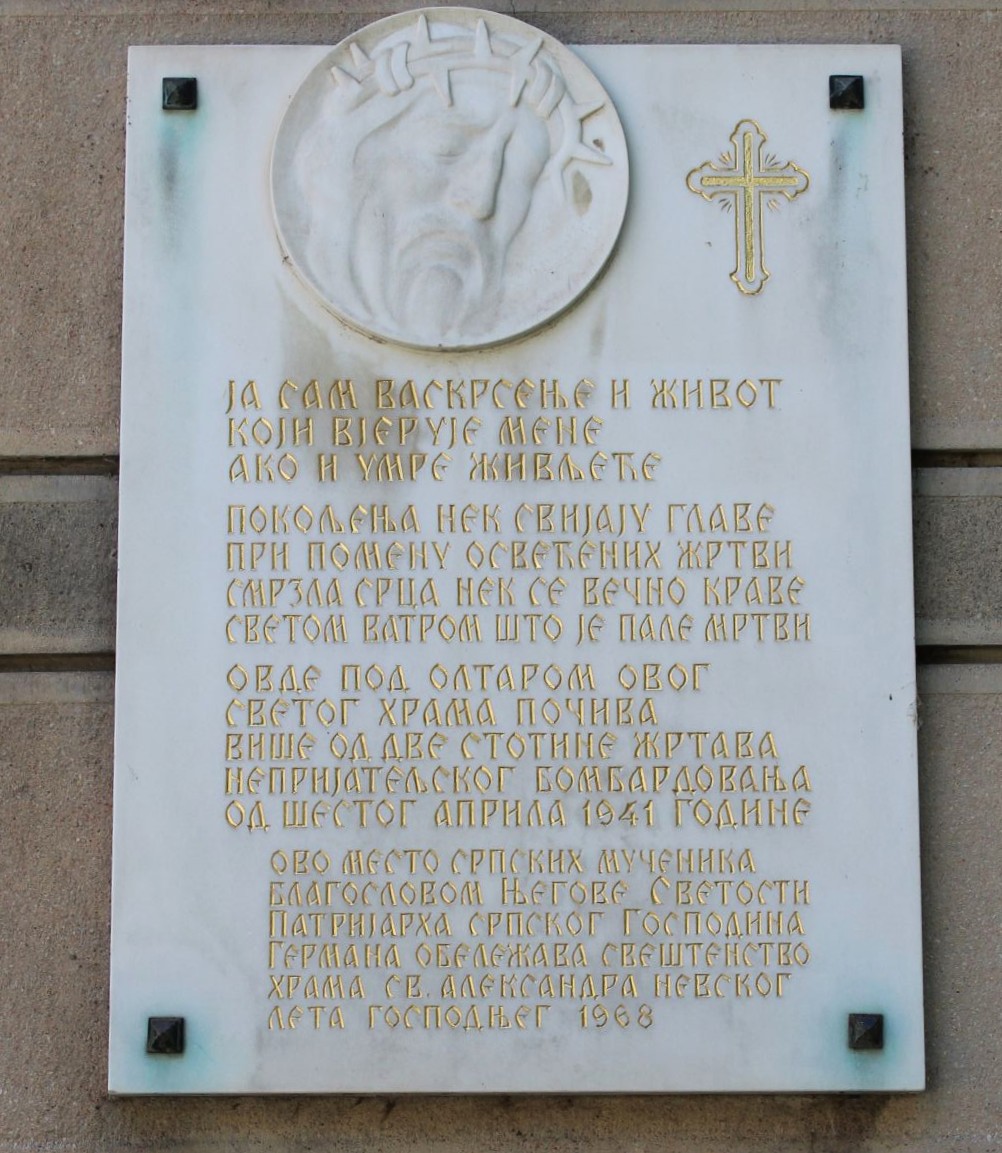
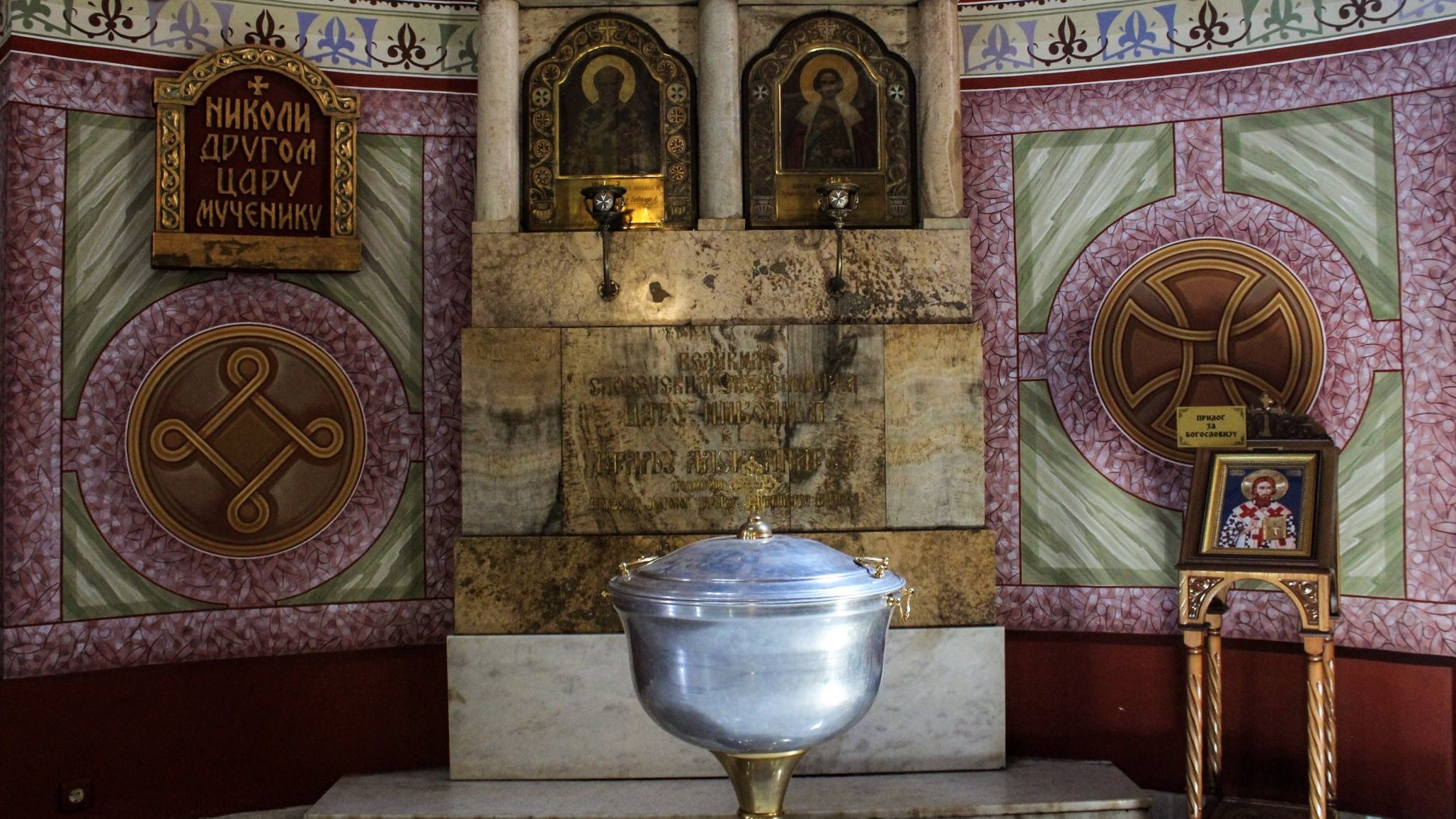
In the northern choir, a memorial ossuary was built dedicated to fallen soldiers from the liberation wars of 1876–1878, the Balkan Wars of 1912–1913, and World War I (1914–1918), based on a design by Mihailo Milojković.
THE DESIGN
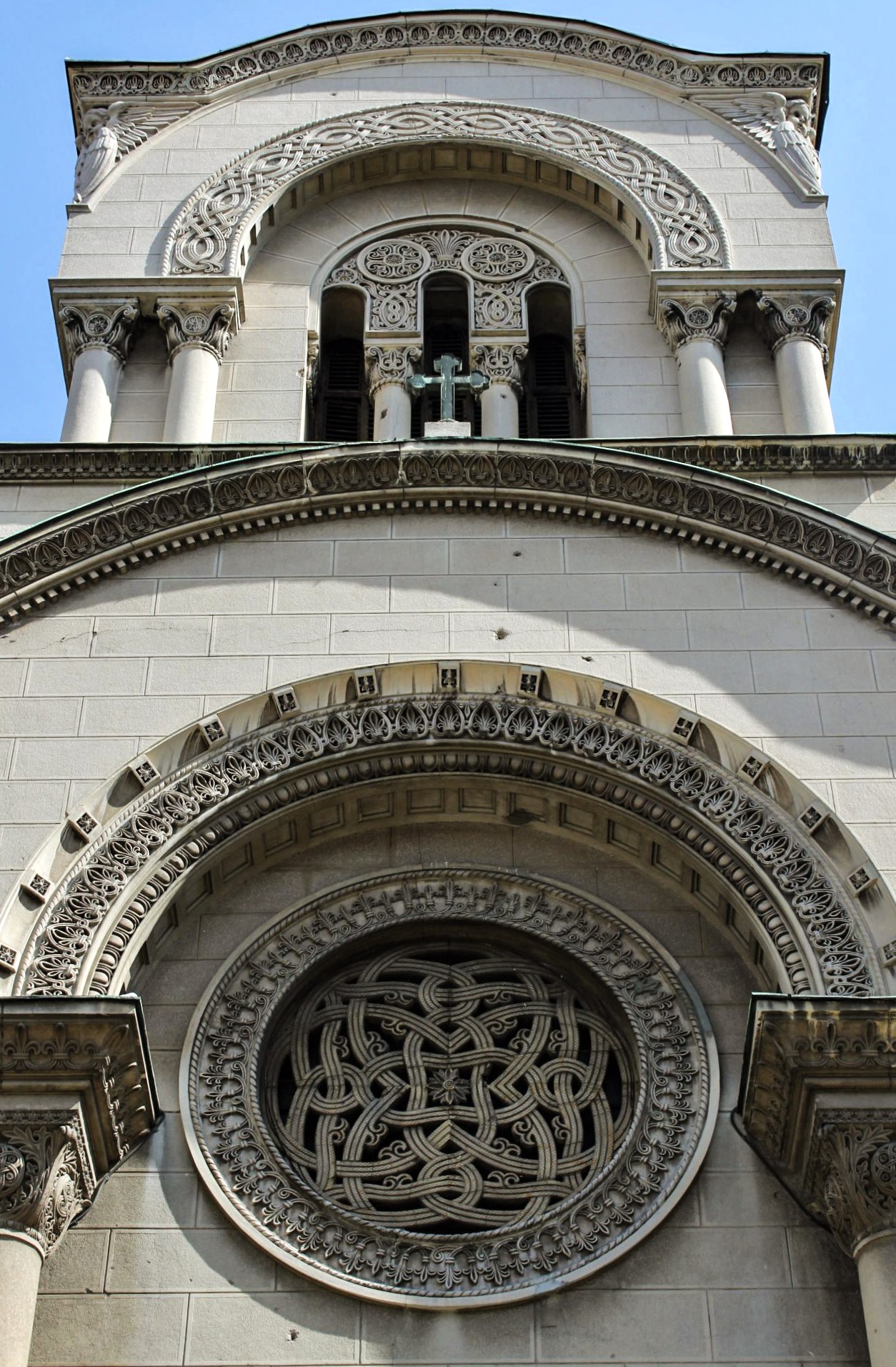
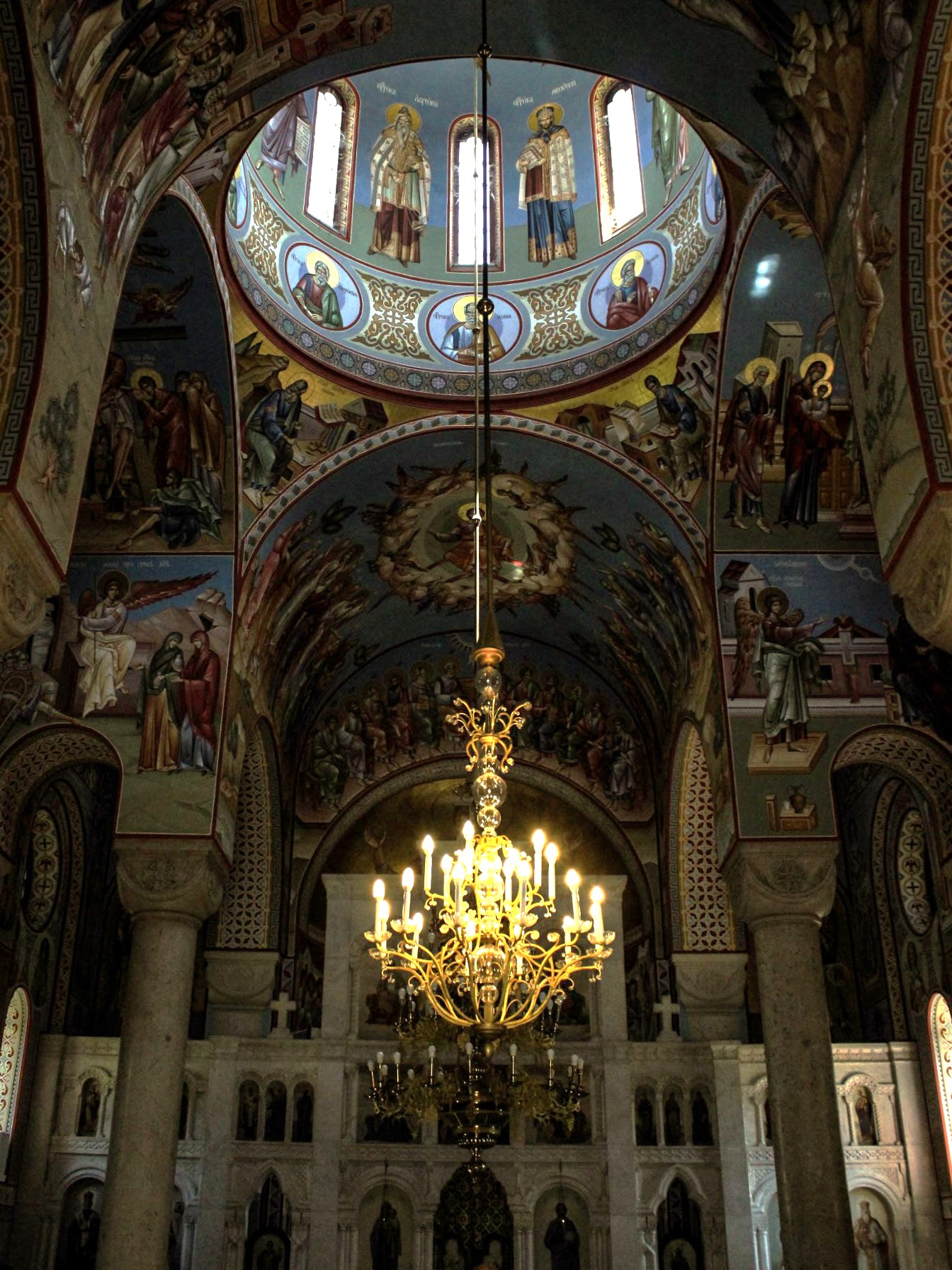
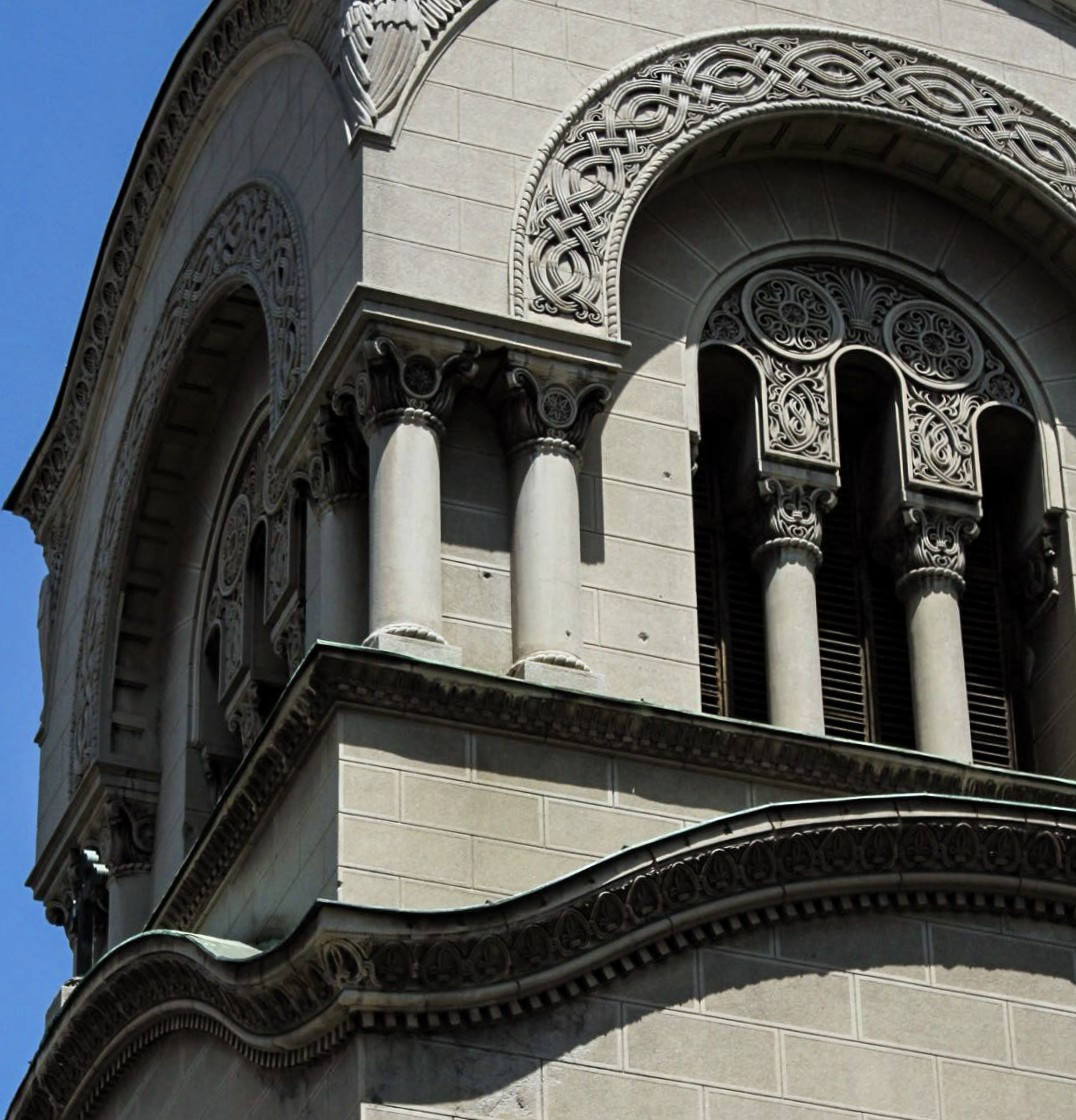
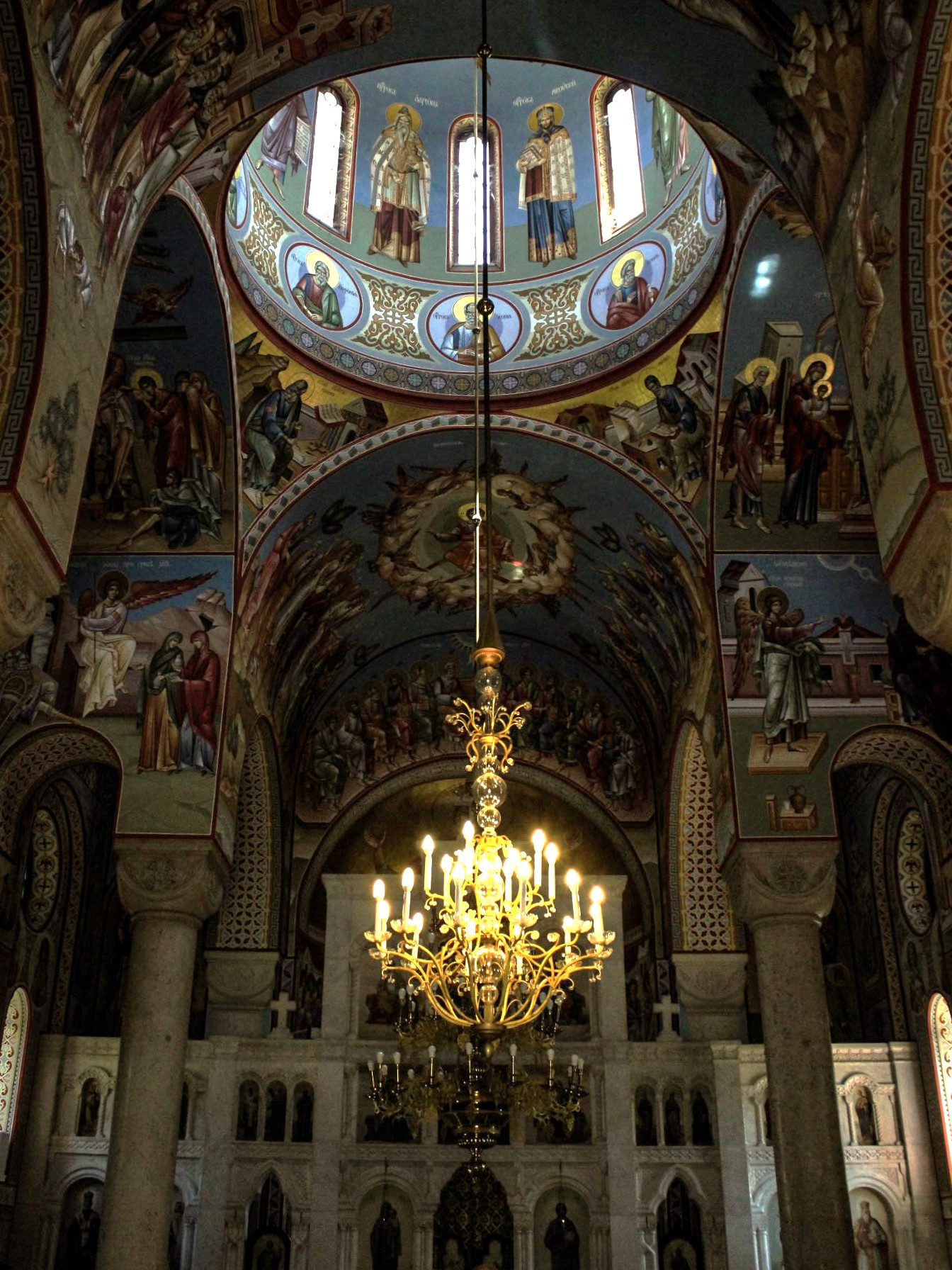
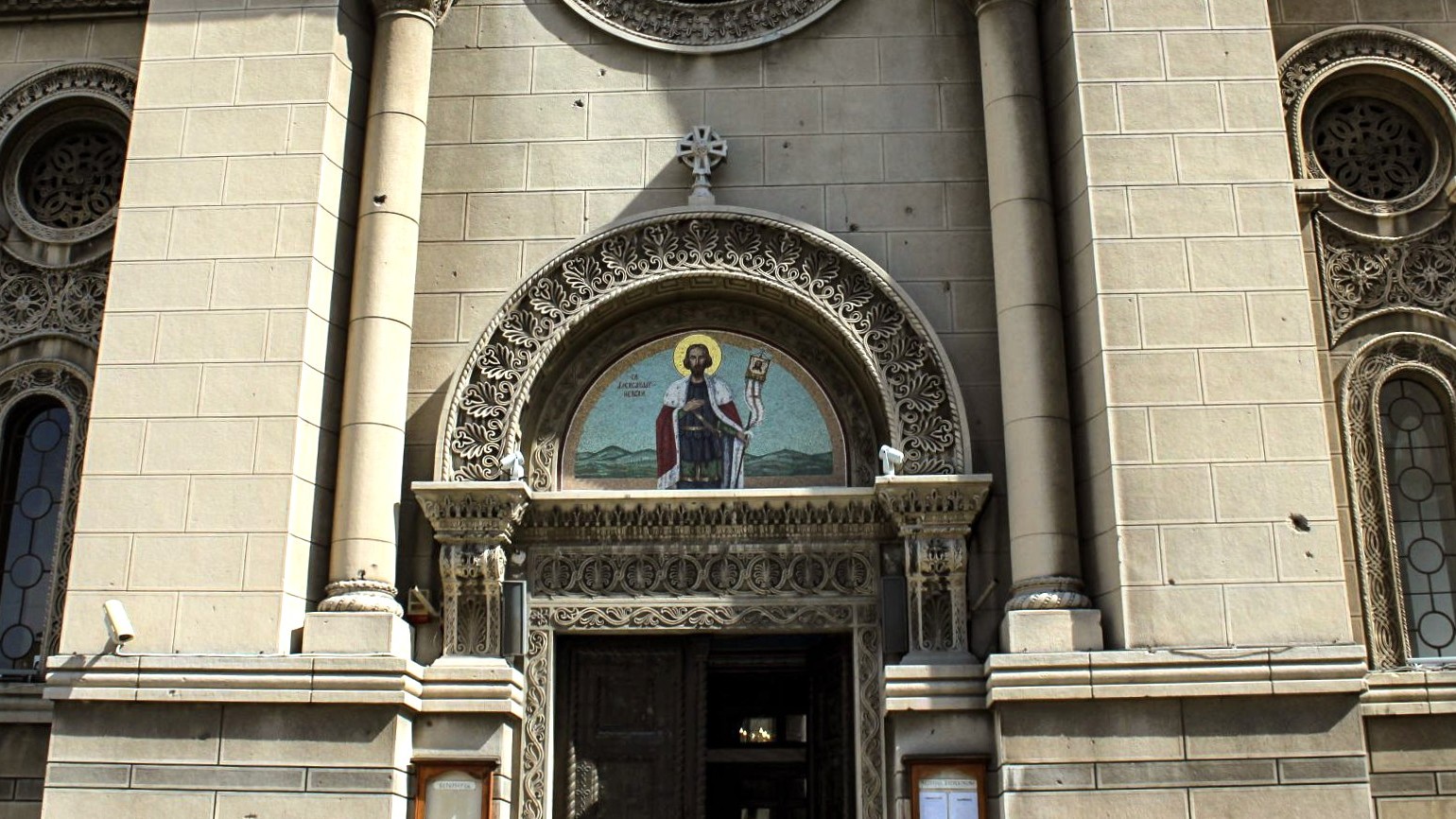
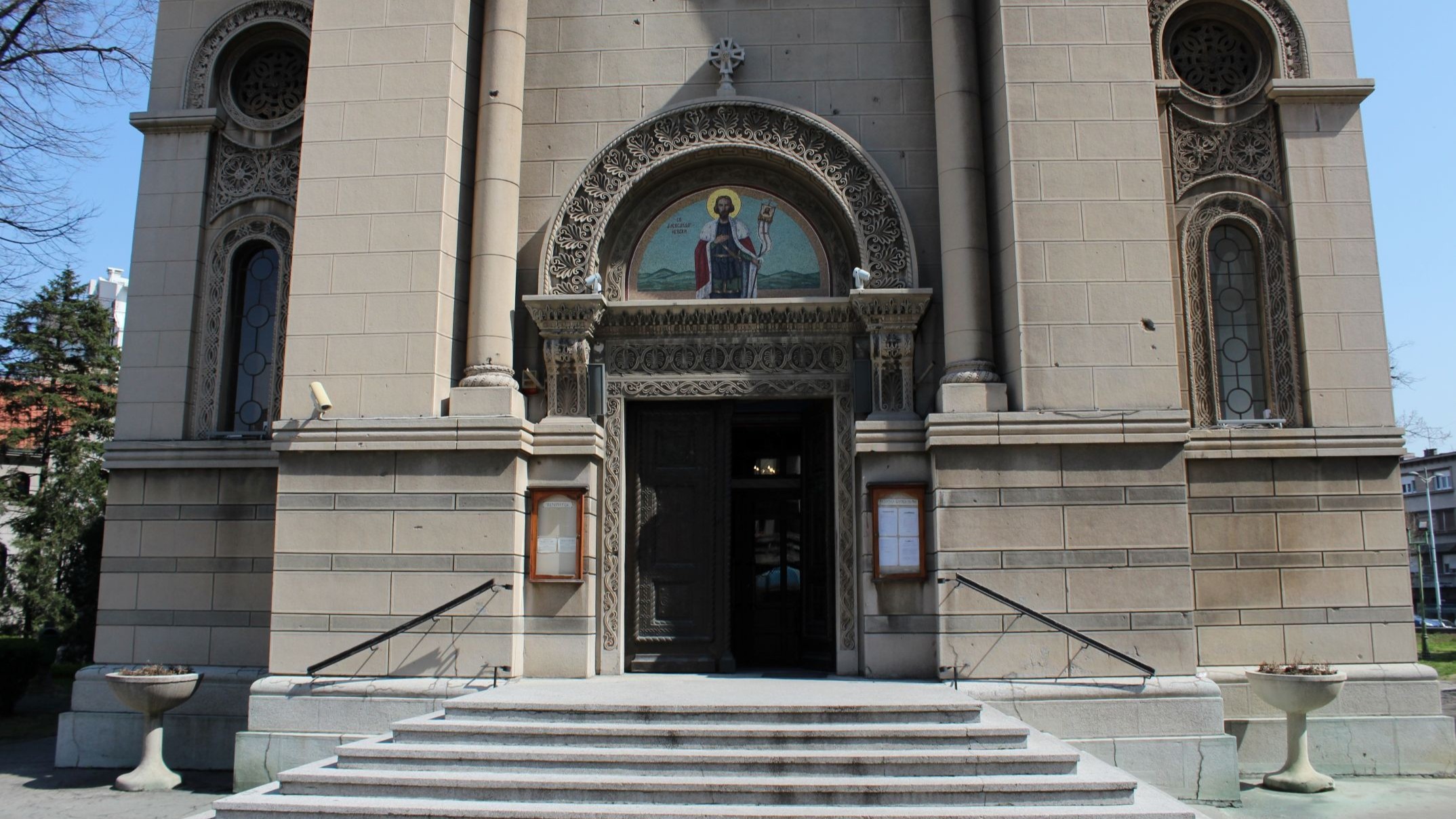
The Church of Saint Alexander Nevsky is designed in the Serbian-Byzantine style, which draws on the revival of medieval Serbian church architecture, with a particular influence from the Morava School. The church has a trefoil plan, with three semicircular apses and a narthex on the west side. Above the central space, supported by four columns and arches, rises an octagonal dome, while a bell tower is positioned above the narthex.
The iconostasis was not created specifically for this church but was a gift from the church at Oplenac. Made of white marble, it reflects the style of the Morava School. The icons on the iconostasis were painted by Boris Seljanko in 1930 in Belgrade.
The wall paintings in the church were executed in the al-secco technique between 1970 and 1972 by Hieromonk Naum Andrić, in the spirit of medieval Serbian ecclesiastical painting traditions.
The church also houses several individual icons, including a prominent icon of Saint Alexander Nevsky from the first half of the 19th century, created by the renowned Polish painter Jan Matejko (circa 1890). This icon was gifted to King Alexander Karađorđević by the President of Poland, Józef Piłsudski, and was later donated by the king to the church.
The cult of Alexander Nevsky, as demonstrated by the example of the Belgrade church, has surpassed the boundaries of religious devotion and become a political symbol, highlighting the historical and spiritual connection between Serbia and Russia.

A bronze bust of Prince Alexander Nevsky was installed in the church courtyard in 2021, on the occasion of the 800th anniversary of his birth. It was a gift from the city of Saint Petersburg to Belgrade. The Mayor of Belgrade drew a parallel between Alexander Nevsky and the Serbian hero Prince Lazar, while the Governor of Saint Petersburg and the Patriarch of the Serbian Orthodox Church emphasized the monument as a symbol of friendship, spiritual unity, and historical ties between the two nations.
The fact that identical bronze busts of Alexander Nevsky exist in several cities across Russia—at the Alexander Nevsky Lavra in Saint Petersburg, on Cathedral Square in Krasnodar, and in Astrakhan—points to a politically constructed memorial practice. Such formal uniformity suggests the presence of a standardized narrative of remembrance that favors ideologically desirable interpretations of the past.